
Thinking of putting up a steel building like a garage, barn, or workshop? You’ll likely need to navigate the permit process first. Even for small or prefabricated steel buildings, many U.S. cities and counties require one or more permits before construction can begin.
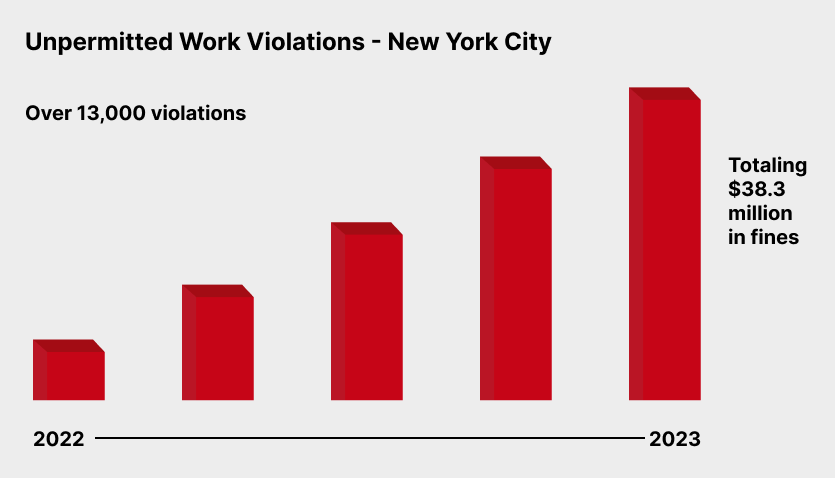
Many people assume that “temporary” or DIY steel buildings don’t need approval but in most cases, local building departments treat them like permanent structures. Skipping the permit process can lead to serious consequences. For example, in 2022–2023 alone, New York City issued over 13,000 violations for unpermitted work, totaling $38.3 million in fines. A missing permit today could cost thousands in penalties or even force you to tear down the building later.
To make sure you don’t get into that trap this guide will walk you through:
- When you need a permit for a steel building
- When a permit might not be required
- The different types of permits required
- Agricultural and rural permitting exemptions
- What documents are needed to apply
- The step-by-step process to get approved
- Common mistakes that delay your permit
- What happens if you skip permits
- State-by-state differences and tribal land rules
- And a free Permit Checklist PDF you can download
Let’s get into it.
Do I Need a Permit for a Steel Building?
Quick Answer: In Most Cases, Yes. But Not Always.
If you’re building a prefab steel garage, barn, storage unit, or commercial workshop, there’s a good chance you’ll need a permit, especially if the structure is large, permanent, or includes utilities.
Rule of Thumb: If your steel building has a fixed foundation, power, water, or is intended for occupancy, you’ll likely need a permit.
Common Myths About Steel Building Permits:
- Myth: Small or rural buildings don’t need permits
- Reality: In some areas, yes. But in others, even small sheds are regulated. Always check your local AHJ.
Common Permit Scenarios:
| Steel Building Type | Permit Required? | Notes |
| Small garden shed (under 120 sq. ft.) | Maybe not | Often exempt if no utilities; check locally |
| Detached steel garage | Yes | Almost always requires a permit |
| Commercial steel structure | Yes | Full compliance typically required |
| Agricultural barn (non-habitable) | Sometimes not | May be exempt in rural/agricultural zones |
| Temporary tent for events | Usually not | Must be truly temporary with no utilities |
Projects on federally recognized tribal lands follow tribal permitting processes, which can differ significantly from IBC or local code.
When a Permit Is Not Required
Many states, counties, and rural zones have exemptions for certain steel structures. You may not need a permit if your building fits into one of the following categories:
- Agricultural use buildings in exempt states/counties
- Non-habitable structures under 120 sq. ft. (check local size threshold)
- Utility-free buildings (no electric, plumbing, HVAC)
- Temporary structures not anchored to a permanent foundation
- Projects in unincorporated counties or rural zones without an active building department
- Projects on tribal land, governed by tribal code (not local IBC)
Important: Always confirm with your Authority Having Jurisdiction (AHJ), whether city, county, or tribal government to know for sure.
Authority Having Jurisdiction (AHJ): Who Approves Your Permit?
In the U.S., permits are enforced by the Authority Having Jurisdiction, or AHJ. This might be:
- Your city or municipal government
- Your county government (in unincorporated areas)
- A tribal building authority (on tribal land)
Understanding who your AHJ is will determine:
- What code is enforced (e.g., IBC, state code, tribal code)
- Whether a permit is required at all
- Who reviews and inspects your plans
Permits in Unincorporated & Rural Areas
In many parts of the U.S., such as rural Texas, Arizona, Wyoming, Montana, the Dakotas, and Tennessee, there may be:
- No building department
- No enforced code at the county level
- Minimal or no permit requirements
This doesn’t mean you shouldn’t build safely but in some unincorporated areas, especially with no utilities or residential use, permits may not be required at all.
Tip: Always call your county planning office. If they say “we don’t issue permits,” you’re likely in an unregulated zone.
Permit Rules for Agricultural Steel Buildings
One of the largest customer segments for steel buildings is agricultural. Fortunately, many U.S. states and counties offer exemptions for non-habitable farm buildings used for:
- Storage of feed, hay, or equipment
- Livestock shelters
- Pole barns with no utilities
Notable States with Agricultural Exemptions:
- Texas: Many counties allow agricultural buildings without permits
- Idaho, Montana, Nebraska: Common ag exemptions for non-residential use
- Florida: Farm building exemption under Florida Statute 604.50
- Georgia, Tennessee, Kansas: County-by-county ag exemptions
Warning: To qualify for an agricultural exemption, the building must be used strictly for bona fide agricultural purposes. Structures used as garages, workshops, rentals, or those with utilities or habitation features typically do not qualify.
States That Leave Building Code Enforcement to Local Jurisdictions
The following U.S. states do not enforce a statewide building code. In these cases, code adoption is left to individual counties, municipalities, or tribal authorities:
| State | Code Enforcement Overview |
| Wyoming | Code adoption is optional; many rural counties have no enforced building codes. |
| Missouri | No statewide building code; cities and counties adopt codes individually. |
| Colorado | The state does not enforce a building code, except for plumbing and electrical; local AHJs govern all else. |
| South Dakota | Counties and municipalities determine their own code enforcement; rural areas often exempt. |
| Kansas | No state-mandated building code; permitting is handled at the county or city level. |
| Arkansas | Minimal statewide enforcement; building codes are adopted at the local level. |
In these states, code and permitting rules vary widely. Some counties are strict; others may not enforce codes at all.
Types of Permits You May Need for a Steel Building
Steel buildings can be used for many purposes from garages and barns to workshops and commercial spaces. Your intended use will directly impact the types of permits you’ll need. Here’s a quick look at the most common permits required:
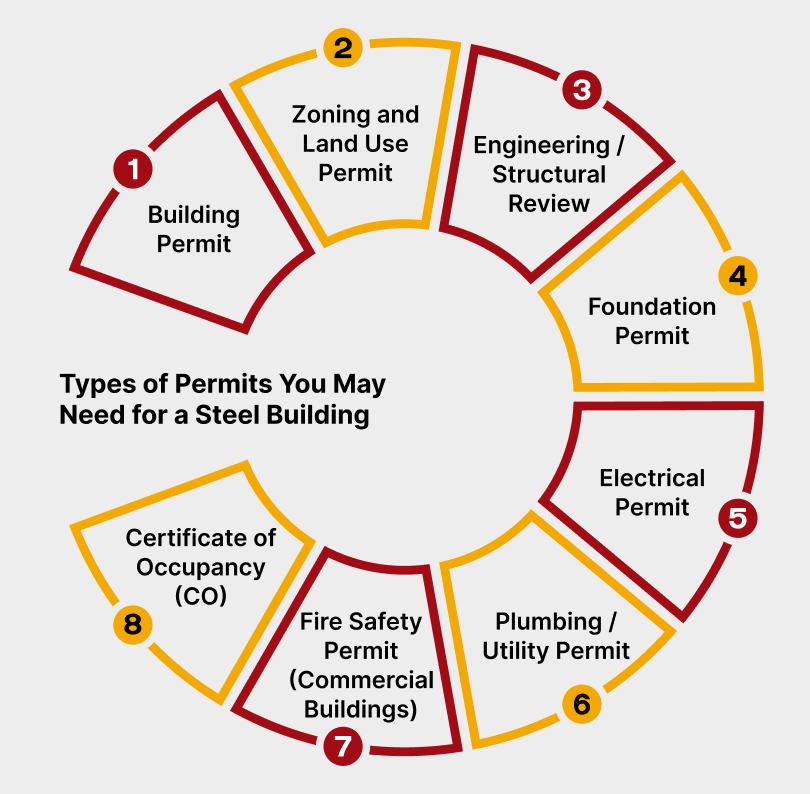
1. Building Permit
This is the standard construction permit required for nearly all steel buildings. A building permit typically covers the following key areas:
- Structural safety, to ensure the building can withstand loads and stresses
- Material specifications, verifying approved and durable construction materials
- Foundation requirements, based on soil, load, and local conditions
- IBC compliance, meeting standards set by the International Building Code
Without this, your building can’t be legally constructed in most places.
2. Zoning and Land Use Permit
Zoning laws control where and what type of structures can be built. You’ll need to show that your building:
- Meets setback requirements (distance from property lines)
- Doesn’t violate easements (areas reserved for utility lines)
- Fits within property coverage limits (e.g., max % of lot built on)
Tip: Zoning issues are one of the top reasons steel building plans get denied. Check this first before buying your kit.
3. Engineering / Structural Review
Even prefab buildings need engineered drawings stamped by a licensed professional. This is critical for ensuring safety and code compliance, especially regarding:
- Wind loads, especially in coastal or hurricane-prone areas
- Snow loads, required in regions with heavy winter snowfall
- Seismic safety, crucial for buildings in earthquake zones
- IBC code compliance, ensuring alignment with national building standards
4. Foundation Permit
If your local authority treats the foundation as a separate structure (which many do), you may need an individual foundation permit. Here are common foundation types that may require a separate permit:
- Slab-on-grade foundations, often used for garages and workshops
- Pier or perimeter footings, typically for uneven or soft ground
- Post-tensioned concrete, used for added structural strength in larger buildings
5. Electrical Permit
Adding power to your steel building? Then you’ll need this. Here are common features that usually require an electrical permit:
- Lighting installations inside or outside the building
- Power outlets for general or equipment use
- HVAC systems that require electrical connections
- Dedicated circuits for heavy-duty or specialized equipment
6. Plumbing / Utility Permit
Any water lines, sinks, toilets, or sewer hookups will trigger this requirement. Here are a few examples where plumbing permits are typically required:
- Agricultural wash stations that use water for cleaning equipment or produce
- Steel garages with bathrooms or utility sinks
- Commercial kitchens built inside steel structures
7. Fire Safety Permit (Commercial Buildings)
If your steel structure is for business use, stores flammable materials, or hosts people, a fire safety permit may be mandatory. Here are some common fire safety requirements for steel buildings:
- Clearly marked fire exits for safe emergency evacuation
- Smoke and heat detectors installed in key areas
- Sprinkler systems, especially in commercial or high-occupancy buildings
8. Certificate of Occupancy (CO)
Once your steel building is built and all inspections are passed, the final step is getting a Certificate of Occupancy (CO). This document confirms your building meets all codes and is safe to use. Here’s what to know about the CO:
- Required before you can legally use or occupy the building
- Issued only after final inspections are approved
- Applies to both residential and commercial steel buildings
- Delays can occur if previous permits or inspections were incomplete
Without a CO, your building may be considered illegal, even if it’s finished.
Need a code-compliant steel building? At Buildway, we don’t handle permits directly, but we do provide the engineered drawings, specs, and expert guidance you’ll need to understand the process and meet local building requirements. Explore Buildway Steel Building Kits.
Required Documents for a Steel Building Permit Application
Applying for a permit involves more than just submitting a basic form. To get approved, you’ll need to put together a complete set of documents that show your steel building meets all local requirements. Here’s what’s typically included:
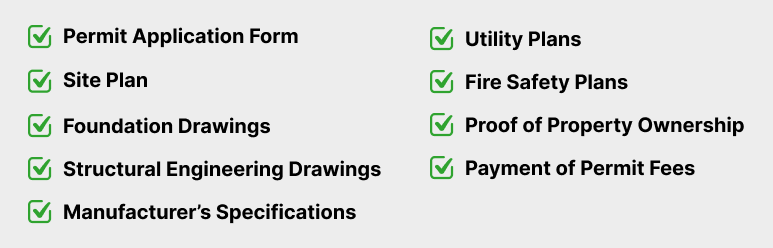
1. Permit Application Form: Start with your city or county’s official application. Many offer online submissions.
2. Site Plan: A detailed drawing showing:
- Building location on your property
- Distances to property lines
- Setbacks, easements, and existing structures
3. Foundation Drawings: Your contractor or engineer must show how your steel building will be supported.
4. Structural Engineering Drawings: Most local building departments require:
- Load calculations (wind, snow, seismic)
- Roof and frame layout
- Stamped engineering approval
5. Manufacturer’s Specifications: Especially for prefab kits, include:
- Assembly instructions
- Structural details
- Compliance documentation
6. Utility Plans: If adding electricity, plumbing, or HVAC, show where these systems will go.
7. Fire Safety Plans: Required for any commercial or large-scale steel structure.
8. Proof of Property Ownership: Or written authorization from the landowner if you’re building on leased land.
9. Payment of Permit Fees: Every city has different fee schedules. You’ll likely pay per square foot or per permit type.
Submitting a complete and accurate permit package not only speeds up approval but also helps you avoid costly delays or rejections. Local building departments are far more likely to approve your application if everything is in order from the start.
Want a ready-to-go checklist of all these documents? Download our Steel Building Permit Checklist and stay one step ahead in your project.
Step-by-Step Steel Building Permit Process
Before you can break ground on your steel building, you’ll need to follow a specific process to get everything approved. It might seem like a lot at first, but taking it step by step makes the journey much smoother and helps you avoid costly delays. Here’s how to go from an idea to a fully permitted steel structure:
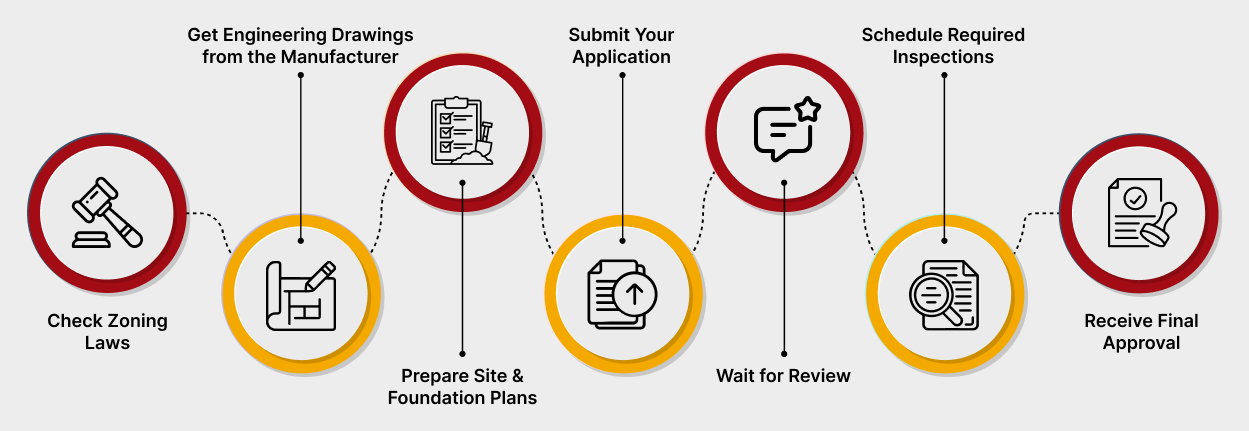
Step 1: Check Zoning Laws
Start by confirming that your property is zoned for the type of building you want to construct. This is often overlooked but crucial.
Why it matters:
- Prevents legal issues or denied applications
- Ensures your project aligns with land-use rules
- Lets you confirm size, height, and placement limits
Tip: Contact your local planning or zoning department first, before you buy or design anything.
Step 2: Get Engineering Drawings from the Manufacturer
If you’re using a prefab steel kit, your manufacturer should provide key technical documents needed for permit approval.
Typically includes:
- Stamped structural drawings
- Load calculations (wind, snow, seismic)
- Material specifications and compliance info
These documents show that your building is safe, code-compliant, and engineered for your local conditions.
Step 3: Prepare Site & Foundation Plans
You’ll need a licensed contractor or engineer to create detailed site and foundation drawings.
These plans should cover:
- Site layout and grading
- Foundation type and specs
- Placement relative to property lines
The plans must match the specs of your steel kit and meet local code requirements.
Before you finalize your foundation plans, make sure your site is ready for construction. From grading to access routes, proper site preparation is essential for a smooth building process. Read our full guide to metal building site prep before your kit arrives.
Step 4: Submit Your Application
Once you’ve gathered all required documents, submit your permit application to your local building department.
What to include:
- Site and foundation plans
- Structural and engineering drawings
- Manufacturer specs
- Permit application form
- Applicable fees
Many cities now accept digital submissions, but some still require in-person filing.
Step 5: Wait for Review
Your application will go through multiple reviews by various departments.
What they’ll check:
- Zoning compliance
- Structural safety
- Fire code, environmental, or utility reviews (if applicable)
Typical timeline: 2–8 weeks depending on your city and the complexity of your project.
Stay available during this period, officials may request additional info.
Step 6: Schedule Required Inspections
Once construction begins, you’ll need to pass a few mandatory inspections to move forward.
Common inspections include:
- Foundation inspection checks footing depth, rebar, and formwork
- Framing/structural inspection ensures the steel frame is installed correctly
- Final occupancy inspection confirms the building is complete and safe to use
You must pass all required inspections before moving to the final step.
Step 7: Receive Final Approval
After all inspections are passed, the city will issue your:
- Building Permit: giving you the green light to build
- Certificate of Occupancy (CO): allowing legal use of the building
Without these, your steel structure can’t be legally used, even if it’s finished.
Following each step carefully ensures a smoother, faster permitting process. The more complete and accurate your documents are, the fewer delays you’ll face. A well-planned application gets approved faster and gets you building sooner.
Common Mistakes That Delay Your Permit
Want to avoid weeks of frustration and resubmissions? Watch out for these common errors:
- Submitting incomplete or missing drawings
- Using wrong wind/snow load values
- Ordering your building before checking code
- Foundation design that doesn’t match your steel kit
- Ignoring local setbacks or zoning limits
- Failing to schedule inspections on time
Pro Tip: Always have your application reviewed by a contractor or engineer before submitting.
What Happens If You Build Without a Permit?
Skipping the permit process might seem like a way to save time or money but in reality, building without a permit can lead to serious legal, financial, and safety consequences. Local authorities take code enforcement seriously, and unpermitted steel structures are often flagged through complaints, property sales, or insurance claims. Here’s what can happen if you proceed without proper approval:
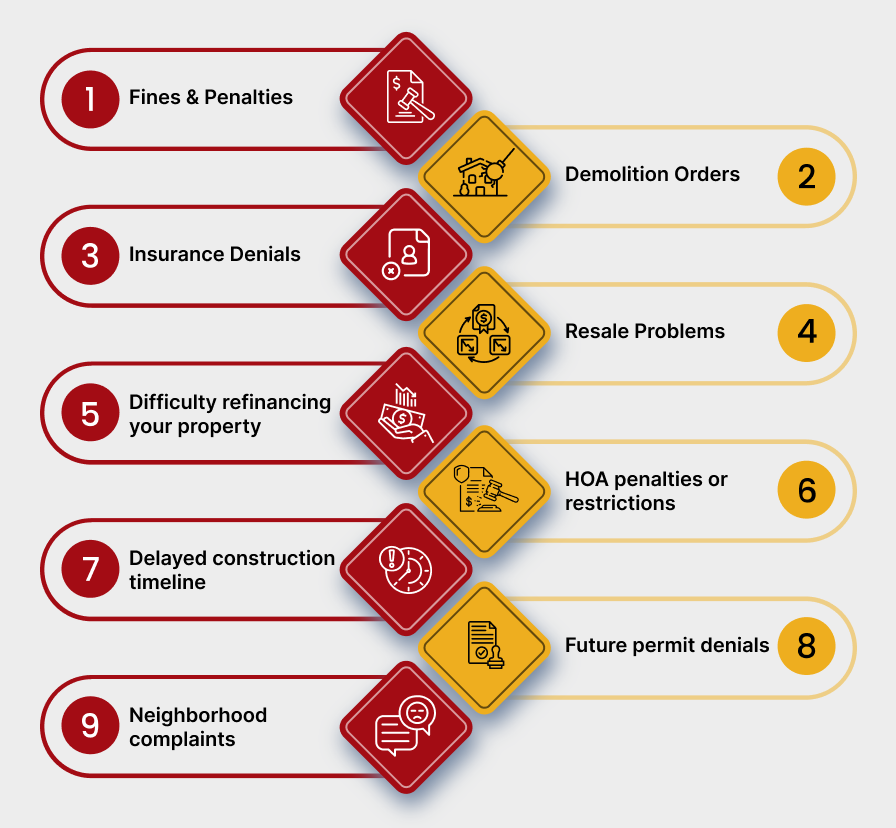
- Fines & Penalties: Daily or flat fines can be issued by your local city or county until the structure is permitted or removed.
- Demolition Orders: If the structure violates code or zoning laws, you may be forced to tear it down or bring it into compliance, both expensive fixes.
- Insurance Denials: Unpermitted buildings are often not covered by insurance, and any claim related to the structure could be denied.
- Resale Problems: Unpermitted structures can delay or ruin a home or property sale. They must often be permitted retroactively or removed.
- Difficulty refinancing your property: Banks may flag unpermitted work during appraisal or title checks.
- HOA penalties or restrictions: If you’re in a community with a homeowners’ association, they may fine you or require removal.
- Delayed construction timeline: Getting retroactive permits or bringing a structure up to code can cause major project delays.
- Future permit denials: Repeated violations can lead to stricter scrutiny or denial of future building permits.
- Neighborhood complaints: Unpermitted buildings often trigger 311 or code enforcement complaints from nearby residents.
What seems like a shortcut can quickly turn into a long and expensive problem. Permits are in place for your safety, your property’s value, and your long-term peace of mind.
Avoid costly surprises, always secure the proper permits before building. It’s not just about following the rules; it’s about protecting your investment.
Conclusion
Navigating the permit process for a steel building may seem overwhelming at first but with the right preparation, it’s completely manageable. By understanding what’s required, gathering the correct documents, and following your local regulations, you can avoid costly delays, rejections, or fines. More importantly, you’ll ensure your project is built to last and ready for whatever conditions it may face.
Final Checklist Before You Apply for a Steel Building Permit
Before you submit your permit application, make sure the following items are checked off:
- Zoning requirements have been confirmed with your city or county
- Stamped engineering drawings have been obtained from your manufacturer or engineer
- Site and foundation plans are complete and accurate
- All supporting documents (e.g., load calculations, utility plans) are prepared
- Permit fees have been calculated and inspections are scheduled
Download the Complete Steel Building Permit Checklist (PDF)
- Save time
- Avoid costly rework
- Get permitted faster and start building sooner
Need expert guidance with your steel building project? We can help you with:
- Stamped engineering drawings for permit approval
- Permit application support and zoning insights
- Choosing the right steel kit based on your local code requirements
We work with thousands of customers across different permit jurisdictions and help them get approved faster with code-ready documentation. Talk to our building code experts today or request a free consultation to get started on the right path.
Steel Building Permit FAQ’s
1. Do small metal sheds need permits?
In most cases, small metal sheds under 120 square feet do not require a permit, especially if they are non-habitable and do not have electricity or plumbing. However, permit requirements can vary based on your city or county’s zoning laws, so it’s essential to verify with your local building department. Some areas may require a permit regardless of size, especially in HOAs or urban zones.
2. Are metal garages exempt from permits?
No, metal garages are not usually exempt from permits. Most metal garages exceed the square footage threshold for exemption and involve permanent foundations, making a permit mandatory. If the garage will include electrical wiring, insulation, or plumbing, additional permits may also be required.
3. Do prefab steel buildings need engineered drawings?
Yes, all prefab steel buildings require engineered drawings. Even though they are pre-manufactured, you must submit stamped structural drawings to show compliance with local building codes. These drawings must confirm the building’s ability to withstand wind loads, snow loads, seismic activity, and must comply with IBC (International Building Code) standards.
4. How long does permit approval take for a steel building?
Steel building permit approvals typically take between 2 to 8 weeks. The exact timeline depends on the complexity of your project, the accuracy of your submitted documents, and the processing time of your local building department. Rural areas may be quicker, while urban regions often experience longer delays.
5. When do I need electrical or plumbing permits for a steel building?
You need electrical or plumbing permits any time your steel building includes wiring, water lines, HVAC systems, or fixtures. These are considered separate trades and usually require their own inspections and approvals. Even for basic installations like lighting or a utility sink, local codes often mandate specific permits for safety and code compliance.