
When you’re planning to build a steel structure, one of the biggest choices you’ll face is picking the right steel building foundation. It’s not just about keeping the building standing, it plays a major role in how durable your structure is, how much it costs, and whether it meets local building codes. Get it wrong, and you could be looking at costly repairs or worse, serious structural problems down the line.
In this blog, we’ll walk you through the three main types of foundations used in steel buildings: slabs, piers, and footers. We’ll explain how each one works and help you figure out which option makes the most sense for your site, your budget, and your building goals.
Key Takeaways: Steel Building Foundations
- Choosing the right steel building foundation is essential for safety and durability.
- The three main types are slab, pier, and footer foundations.
- Slabs work well on flat, stable ground and offer a built-in floor.
- Piers are best for sloped or soft soil and provide great frost resistance.
- Footers offer strong perimeter support, especially in cold climates.
- Soil conditions, frost depth, and building load affect foundation choice.
- No single foundation fits all. Get professional advice if not sure.
Why Does the Right Steel Building Foundation Matters for Steel Buildings?
A steel building foundation does a lot more than just hold your building up, it’s the critical link between your structure and the ground beneath it. It handles the heavy lifting when it comes to distributing loads, keeping the building stable, and ensuring everything lasts over time.
Key Functions:
- Transfers structural loads to the ground: The foundation takes the weight from the steel columns and safely spreads it into the soil, preventing stress on any one point and reducing the risk of settling or failure.
- Balances forces from wind, earthquakes, and live loads: A well-designed foundation absorbs and redirects dynamic forces like wind gusts, seismic shifts, and changing interior loads, helping the building stay stable under real-world conditions.
- Manages soil movement, frost heave, and settlement: It compensates for natural soil shifts and freeze-thaw cycles, which can cause cracks or uneven floors if not properly addressed in the foundation design.
- Keeps the structure aligned and square: A strong foundation ensures that steel columns stay plumb and level, which is crucial for proper assembly, performance, and long-term structural integrity.
Skipping or undervaluing proper foundation design might save upfront costs, but long-term damage, uneven floors, cracked walls, or structural compromise can cost far more.
Choosing the Right Foundation: Slab, Pier, or Footer?
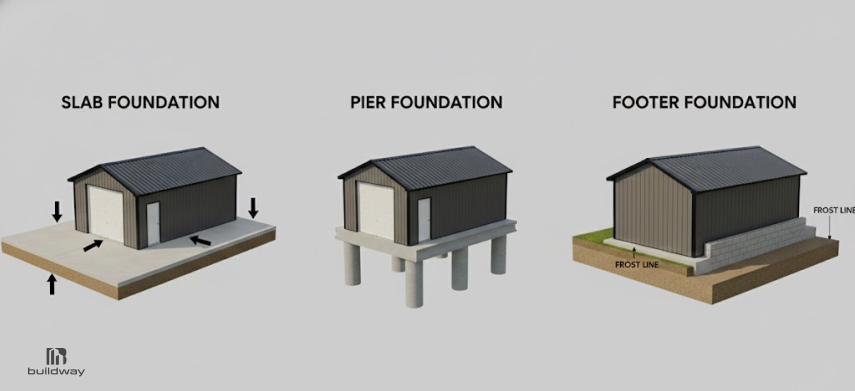
Picking the right foundation is one of the most important decisions you’ll make for your steel building. The wrong choice can lead to structural issues, delays, and added costs. The right one sets your project up for long-term success.
Each foundation type: slab, pier, and footer offers unique benefits depending on your site conditions, climate, and building load.
Here’s a quick overview:
- Slab foundations are ideal for flat, stable ground and include a finished floor.
- Pier foundations are perfect for sloped sites, soft soil, or deep frost lines.
- Footer foundations provide strong perimeter support and are great for colder regions with heavy loads.
Now, let’s take a closer look at how each option compares, so you can make the best choice for your steel building project.
1. Concrete Slab Foundation
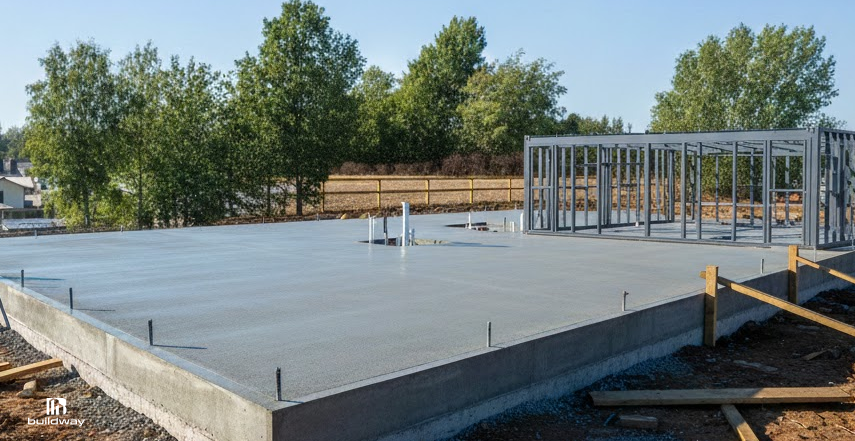
The concrete slab is one of the most popular types of steel building foundation due to its simplicity and effectiveness on stable soil. A concrete slab is a flat, reinforced concrete pad poured directly on prepared soil. It’s the most commonly used foundation for steel buildings especially in warehouses, garages, and workshops.
Use Cases for Concrete Slab Foundations
- Concrete slabs work best on flat sites with stable, well-compacted soil, where minimal ground movement is expected.
- They are a popular choice for warehouses, auto shops, and garages, especially when a built-in floor is needed.
- Slabs are ideal for buildings that don’t require basements, as they provide a clean, level surface right at ground level.
Pros of Using a Concrete Slab Foundation
- A concrete slab serves as both the foundation and the finished floor, which helps reduce construction time and material costs.
- Installation is relatively quick, especially when the site is already level and clear of obstacles.
- On flat terrain, slabs are one of the most cost-effective foundation options, making them great for budget-conscious builds.
Cons of Using a Concrete Slab Foundation
- Slabs are not recommended for sloped lots or areas with soft, shifting soil, as they lack flexibility and can crack under uneven pressure.
- If the soil beneath the slab shifts or settles, it can lead to cracks, uneven floors, or even structural issues.
- In colder climates, slabs require proper insulation and frost protection to prevent damage from freezing and thawing cycles.
Average Cost: $6–$14 per square foot (site-dependent)
When Concrete Slabs Can Fail
- If the soil beneath the slab isn’t properly compacted, the foundation can settle unevenly, leading to cracks and structural instability over time.
- Poor drainage or lack of proper waterproofing can allow water to accumulate under or around the slab, weakening the soil and increasing the risk of foundation movement.
- In cold climates, repeated freeze-thaw cycles can cause the slab to expand and contract, eventually leading to cracking if the slab isn’t properly insulated or protected against frost.
2. Pier Foundation (Drilled or Helical)
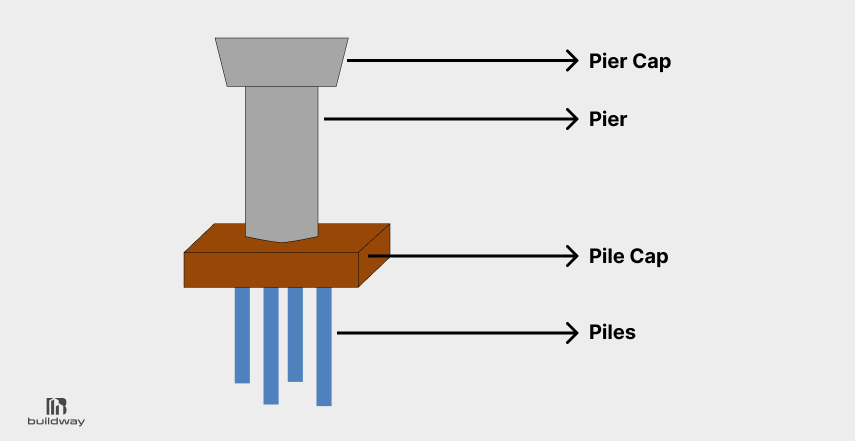
Pier-style steel building foundations involve vertical columns (piers) drilled or screwed deep into the ground. The building is anchored to these piers, which support structural loads without a continuous slab.
Ideal Situations for Using Pier Foundations
- Pier foundations are a smart choice for sloped or uneven terrain where traditional slabs or footers would be difficult or expensive to install.
- They’re commonly used for agricultural structures, open sheds, and buildings without finished floors, especially where function and durability matter more than appearance.
- This type of foundation is also ideal for areas with deep frost lines, where deeper support is needed to prevent frost heave.
Types of Pier Foundations
- Drilled piers involve boring holes into the ground and filling them with reinforced concrete to support the building’s weight.
- Helical piers are large steel anchors that are mechanically screwed into the ground, providing solid support in soft or shifting soils.
Pros of Pier Foundations
- They require minimal excavation, making them faster and less disruptive to install on rough or hard-to-access sites.
- Pier systems offer excellent frost resistance since they extend below the frost line, avoiding freeze-thaw damage.
- These foundations are well-suited for remote or rural areas, where heavy equipment access may be limited.
Cons of Pier Foundations
- Pier foundations don’t include a built-in floor, so a separate concrete slab or deck will need to be added later if required.
- They often require more engineering and planning, especially for larger or more complex buildings.
- Costs can vary significantly depending on soil conditions and how deep the piers must be installed.
Average Cost: Pier foundations typically range from $7 to $12 per square foot, depending on soil quality, depth, and site accessibility.
3. Continuous Footing / Footer Foundation
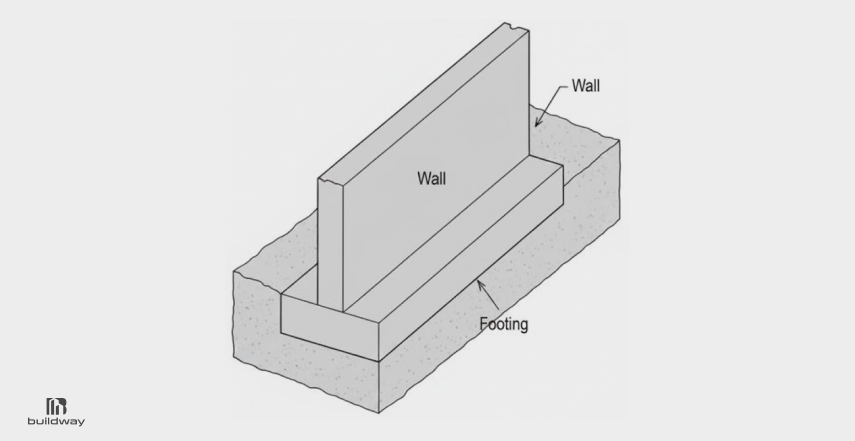
A continuous footing, also known as a footer foundation, is another type of steel building foundation that distributes load around the perimeter. It’s created by digging a continuous trench around the building’s base and filling it with reinforced concrete. In many cases, it’s paired with stem walls to elevate and support the structure above ground level.
Best Suited For:
- This foundation type is ideal for colder climates, where frost protection is required by code.
- It works especially well for buildings with heavy loads along the outer walls, such as commercial structures or large garages.
- It’s commonly used in areas where frost-depth compliance is strictly enforced and soil movement is a concern.
Pros of Continuous Footing Foundations
- Offers strong frost resistance, especially when placed below the frost line and paired with insulation or stem walls.
- Provides robust support along the entire perimeter, making it suitable for buildings with significant weight on exterior walls.
- A great option for heavy or complex steel structures that require stable, continuous load distribution.
Cons of Continuous Footings
- Installation requires excavation and careful forming, which can increase labor time and complexity.
- These foundations tend to be more concrete- and labor-intensive than slabs or piers.
- Depending on the building’s design, you may still need to install interior piers or footings to support central column loads.
Average Cost: You can expect to pay between $9 and $15 per square foot, depending on site conditions, excavation needs, and concrete pricing.
In colder regions, concrete slabs require proper insulation to prevent heat loss and frost-related damage. Choosing the right insulation can significantly lower energy costs over time. Learn more about how to insulate a metal building for maximum energy efficiency and what materials work best for steel structures.
Key Factors That Determine the Best Steel Building Foundation Type
The best steel building foundation depends on more than just preference. Factors like soil type, climate, building weight, and local codes all play a role. Let’s look at what really matters when making the right choice.

1. Soil Conditions
- Sandy or rocky soil typically supports slab and footer foundations well.
- Soft or shifting soil often requires a pier foundation for added stability.
- Soil testing should always be done before selecting a foundation type.
2. Frost Depth
- Cold regions require frost-resistant foundation designs.
- Piers and footers must extend below the frost line to prevent heaving.
3. Building Load and Design
- Heavier buildings with tighter column spacing need stronger, continuous foundations.
- Lighter structures can be safely supported by isolated piers.
4. Local Codes
- Most states require foundations to meet frost-depth and structural code requirements.
- A licensed engineer must verify seismic, wind, and snow load compliance.
5. Budget vs. Lifecycle Cost
- Slab foundations are generally the most affordable upfront.
- Piers offer better long-term performance on poor soil, which can reduce future costs.
- Footers have higher initial costs but offer excellent durability over time.
Need help deciding which foundation fits your site? Start with a professional consultation today, or check out our Clearance Sale page to buy a steel building kit directly at a discounted price.
Slab vs Pier vs Footer: Side-by-Side Comparison
| Feature | Concrete Slab | Pier Foundation | Footer Foundation |
| Cost (avg/ft²) | $6–$11 | $8–$20 | $10–$18 |
| Soil Suitability | Stable, flat soil | Sloped, poor soil | Moderate to stable |
| Frost Resistance | Poor (unless insulated) | Excellent | Very good |
| Load Capacity | Moderate–High | High | High |
| Construction Speed | Fast | Moderate | Slower |
| Acts as Floor | Yes | No | Sometimes |
Real-World Scenarios: What Foundation Type Works Best?
Every building site is different, and the right foundation often depends on real-world factors like location, terrain, and building use. Below are three common scenarios that show how foundation type can vary depending on conditions:
Scenario 1: Rural Agricultural Building (Use Pier Foundation)
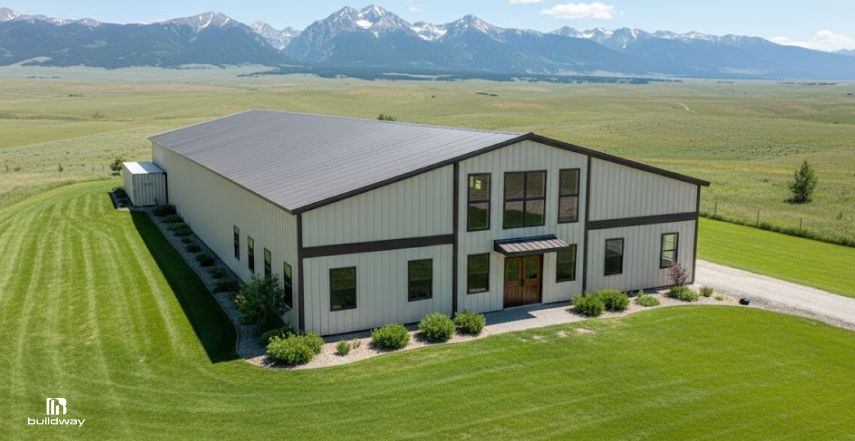
- Pier foundations are ideal for rural or agricultural settings with minimal grading.
- They perform well on sloped or uneven ground.
- Installation is cost-effective and less labor-intensive than slab or footer options.
- Piers allow for natural drainage and airflow, helping protect farm equipment or livestock shelters.
Scenario 2: Commercial Warehouse (Use Concrete Slab Foundation)
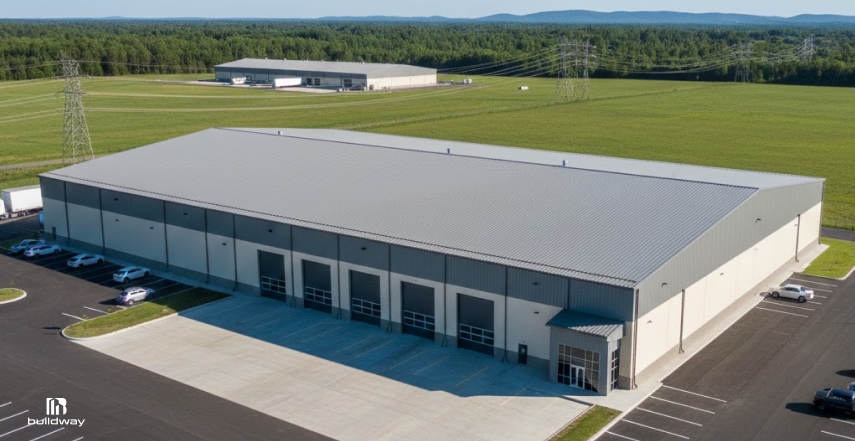
- Concrete slabs are perfect for flat, stable sites like urban or industrial lots.
- They provide a smooth, finished floor ready for high-traffic use and equipment.
- Installation is typically fast and efficient, which helps keep construction timelines on track.
- Slabs are low maintenance and easy to clean, making them ideal for warehousing operations.
Scenario 3: Sloped Site with Poor Soil (Use Helical Pier Foundation)
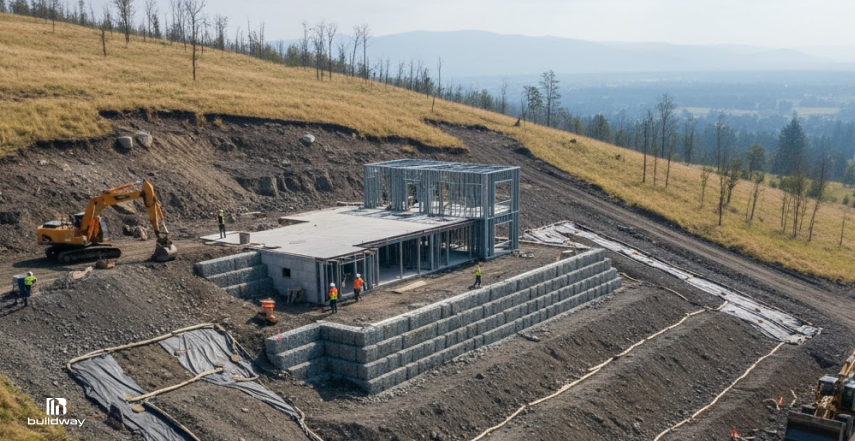
- Helical piers are best suited for unstable or shifting soil conditions.
- They are installed with minimal excavation, reducing site disturbance and cost.
- The screw-like design allows for deep anchoring, giving excellent vertical and lateral support.
- Ideal for remote or hard-to-access sites, especially where heavy equipment is limited.
Decision Checklist: How Engineers Choose the Right Foundation
Before finalizing a foundation type, engineers work through a series of critical questions to ensure the design matches the site conditions and project requirements. Here’s a simplified version of the same process you can use to evaluate your own build:
- Have you conducted a soil test to understand ground stability and composition?
- What is the frost depth in your area, and does your design account for it?
- What types of loads will your building need to handle including live, dead, wind, and seismic loads?
- Is your site flat, sloped, or uneven, and how will that impact foundation choice?
- Do local codes or permitting requirements affect your foundation design or depth?
- What’s your project budget, and how does it align with the expected lifespan of the building?
Not sure which foundation is right for your site? Talk to a licensed structural engineer to get expert guidance tailored to your project.
When You Must Involve a Structural Engineer
Some foundation decisions carry too much risk to handle on your own. In the following situations, it’s essential to consult a licensed structural engineer:
- If your area is subject to frost, seismic activity, or heavy snow loads, professional calculations are required to meet code and ensure safety.
- If soil tests show soft, loose, or expansive soils, an engineered solution is needed to prevent future settlement or structural failure.
- If you’re building a structure larger than 5,000 square feet, engineering oversight ensures proper load distribution and code compliance.
- If your foundation cost is expected to exceed $25,000, an engineer can help optimize the design for both safety and cost efficiency.
- If you want to avoid costly mistakes or future repairs, having an expert involved early in the process is a wise investment.
Bringing in a structural engineer at the right time doesn’t just protect your building, it protects your budget, timeline, and peace of mind.
Many projects also require permits before you break ground, especially in areas with strict frost, seismic, or load-bearing regulations. Not sure what’s required in your area? Read our full guide to steel building permits before moving forward.”
Conclusion
When it comes to steel building foundations, there’s no one-size-fits-all answer. Each foundation type: slab, pier, or footer offers unique advantages depending on your site conditions, climate, building design, and budget.
While this guide can help you understand the basics, only a professional evaluation can determine the right steel building foundation for your specific project. The best decisions are always made with accurate data, engineering insight, and a clear understanding of long-term performance.
Want to Make the Right Call for Your Foundation?
- Request a Foundation Review: Get expert input tailored to your site and building requirements.
- Download the Steel Building Foundation Checklist: Use this free resource to prepare for your consultation and avoid common mistakes.
FAQ: Steel Building Foundations
1. Do all steel buildings need a steel building foundation?
Yes. Every steel building no matter how small requires a stable foundation to transfer structural loads to the ground and to resist shifting caused by wind, frost, or soil movement.
2. Can you pour a slab foundation without soil testing?
No. Skipping soil testing can lead to major problems like cracking, uneven settling, or even structural failure. A soil test ensures the ground can properly support your slab and identifies any necessary design adjustments.
3. Are pier foundations cheaper than slab foundations?
Not always. While piers are ideal for poor soil or sloped terrain, they can be more expensive per square foot depending on depth, soil conditions, and installation complexity. Slabs are generally more cost-effective on flat, stable sites.
4. How deep do footer foundations need to be?
Footer depth depends on your local frost line. In most areas, footers must be placed 12 to 48 inches below ground to prevent frost heave and comply with code requirements.
5. Can you change your foundation type after construction starts?
No, not easily. Foundation types should be finalized before construction begins. Switching later can be costly, time-consuming, and may require redesigning the entire structure.