
Nearly a fifth of Americans now rent self-storage with millennials leading the way, according to recent reports. Whether it’s for tools, seasonal items, vehicles, or hobbies, extra space has become a modern necessity, especially for those working from home or pursuing DIY side projects.
Instead of paying monthly fees for off-site storage, more homeowners are turning to residential steel buildings such as backyard steel sheds, small steel garages, and home workshop kits to create durable, customizable, and permanent space on their own property.
In this guide, you’ll learn everything you need to know about steel buildings for residential use. From what they are, why they’re beneficial, how to choose the right one, and even what real homeowners are saying. Why wait then? Let’s get started.
What is a Residential Steel Building?
Before we dive into the benefits, let’s clarify exactly what we mean when we say “residential steel building.”
Definition and Use Cases
A residential steel building is a structure made primarily from steel framing materials, designed for use in residential settings. These buildings aren’t limited to industrial spaces. They’re becoming increasingly common for home applications such as:
- Backyard steel sheds for storage or hobbies
- Small steel garages for cars and tools
- Home workshop kits for DIY builders and creators
- Steel home additions or even full homes
How Do Steel Building Kits Work?
Many residential steel buildings come in the form of pre-engineered building kits. These are prefabricated and shipped with all the necessary components, allowing for faster and easier assembly.
What’s usually included in a steel building kit?
- Pre-cut steel framing components
- Steel wall and roof panels
- Hardware (screws, bolts, etc.)
- Assembly instructions
- Optional upgrades: insulation, windows, doors, finishing materials
You can choose to build it yourself or hire a contractor. Either way, steel kits are designed to simplify construction.
Why Steel Buildings Make Sense for Modern Homeowners?
Steel buildings are becoming a smart solution for homeowners who need extra space without the hassle of traditional construction. With their durability, low maintenance needs, and flexible design, steel structures are ideal for everything from storage and workshops to garages and home additions. Let’s look at the key benefits.
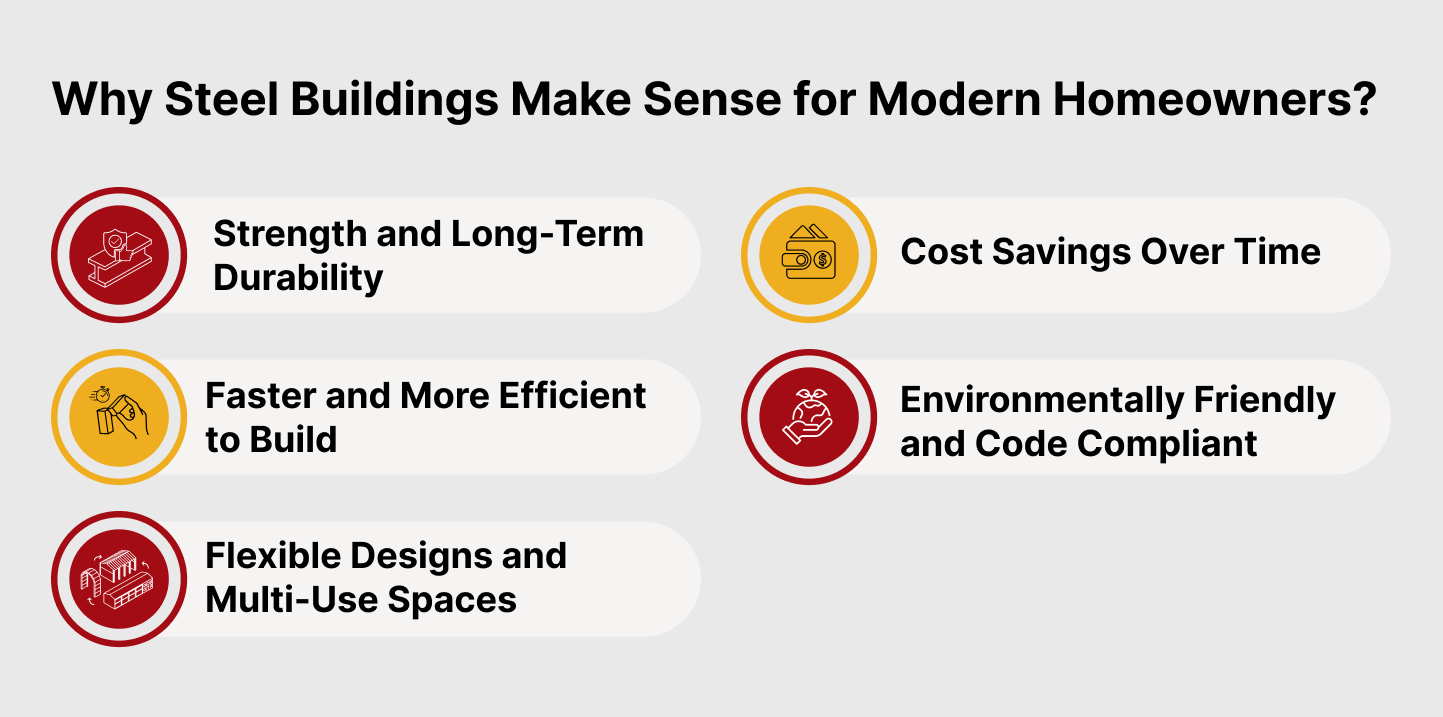
1. Strength and Long-Term Durability
Steel is incredibly strong, and that strength translates into a structure that lasts for decades.
Key advantages:
- Steel resists warping, cracking, mold, and pests, unlike traditional wood structures, which are more vulnerable to environmental damage.
- It is naturally fire-resistant, adding an extra layer of safety for residential applications.
- Steel buildings perform exceptionally well in extreme weather conditions, including intense heat, heavy snow, and high winds.
- With minimal maintenance, a well-built steel structure can typically last 40 to 70 years or more, making it a long-term investment.
If you live in a region prone to storms, pests, or seismic activity, a steel building is often a more resilient choice than wood.
2. Faster and More Efficient to Build
Steel building kits are designed for speed and simplicity.
Time-saving benefits:
- Components are pre-engineered and pre-cut, which means there are minimal adjustments required during on-site assembly.
- Steel building kits generate less construction waste compared to traditional wood or brick builds, making them a cleaner and more efficient option.
- These structures can be assembled quickly, often by smaller crews, with many completed in under a week depending on size and preparation.
- Steel kits are an excellent option for homeowners who want to take part in the building process and manage portions of the project themselves.
For a small garage or workshop, installation might take just 3–7 days with proper planning.
3. Flexible Designs and Multi-Use Spaces
One of the major appeals of steel is its design versatility. It allows for wide open spans without interior load-bearing walls, which creates highly adaptable interiors.
Common residential applications:
- Garage + workshop combos
- Hobby spaces (crafts, painting, woodworking)
- Home gyms or garden rooms
- Outdoor storage units or pool houses
Steel buildings can be customized in shape, size, finish, and roof style to fit your home’s aesthetics.
4. Cost Savings Over Time
While the initial investment for a steel building might be slightly higher than a basic wooden structure, the long-term savings can be substantial.
How steel saves money:
- Steel buildings typically require fewer repairs over time, thanks to their strength and resistance to common forms of damage.
- They are not susceptible to termites or mold, which are frequent issues in wood-framed structures.
- Maintenance is minimal, with no need for repainting, sealing, or replacing rotted beams, saving time and costs in the long run.
- Many homeowners benefit from lower insurance premiums, as steel buildings offer superior fire resistance compared to traditional materials.
5. Environmentally Friendly and Code Compliant
If sustainability matters to you, steel is a solid choice.
Eco benefits and compliance:
- Steel is 100% recyclable and is often manufactured using recycled materials, making it an environmentally responsible choice.
- It is fully compatible with solar panels and modern, energy-efficient HVAC systems, allowing for sustainable upgrades.
- Steel buildings are designed to meet or exceed current energy and building codes, ensuring compliance and long-term performance.
- For indoor use, many manufacturers offer low-VOC (volatile organic compound) materials, promoting healthier indoor air quality.
Common Use-Cases: Where Steel Buildings Fit in Residential Life
Steel buildings are becoming a practical solution for a variety of residential needs. Homeowners use them to add secure storage, create dedicated workshop space, protect vehicles, or set up hobby rooms. With their flexible designs and long-lasting materials, these structures are well-suited for everyday use around the home. Here’s how homeowners are using them.
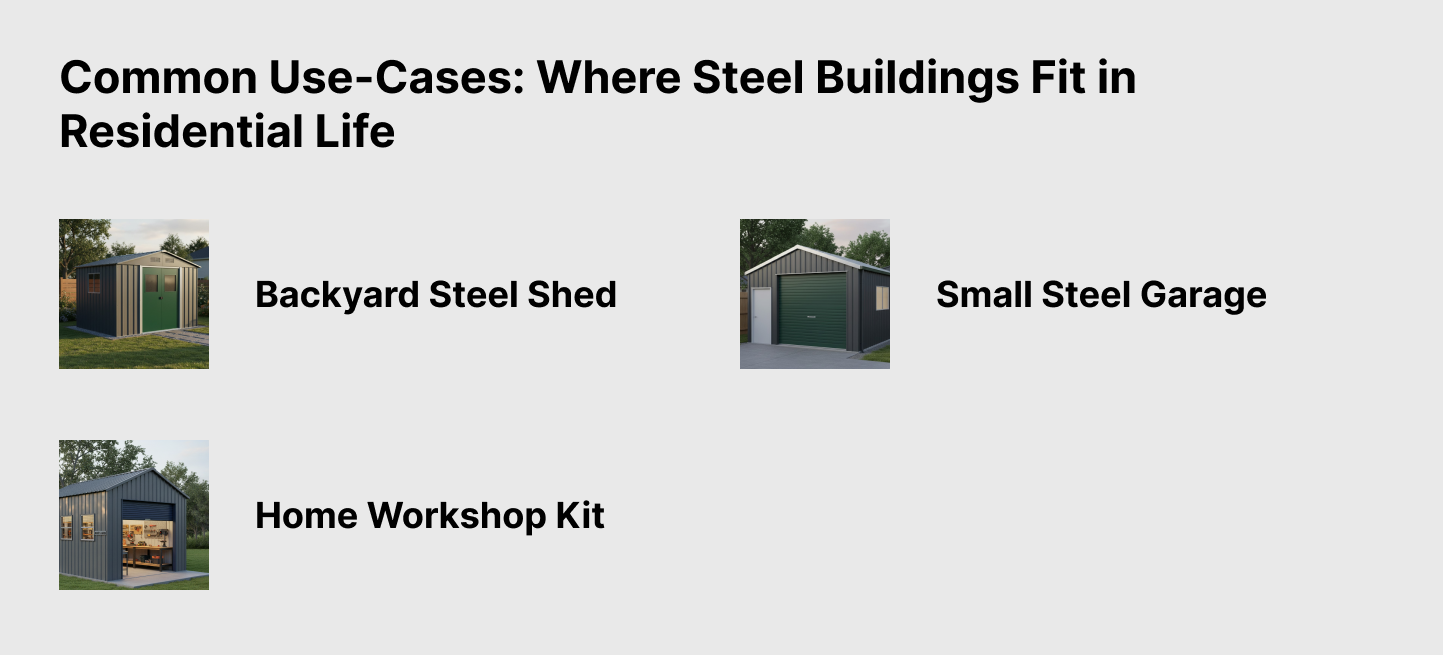
1. Backyard Steel Shed
A popular option for homeowners needing extra storage without eating up garage space.
Typical uses:
- Gardening tools and supplies
- Lawn equipment
- Hobby room or small office
- Seasonal décor and storage bins
Add ventilation and insulation to make your shed usable year-round.
2. Small Steel Garage
Perfect for one-vehicle storage or a multi-use garage/workshop combo.
Ideal for:
- Cars, motorcycles, and bikes
- Tool storage
- Workspace for small repairs or DIY projects
- Secure storage for valuables
Ensure local zoning compliance before starting your build.
3. Home Workshop Kit
A dream come true for DIY builders, makers, and hobbyists.
Applications:
- Woodworking or metalworking
- Art and craft studio
- Startup workshop for small business
- At-home mechanic space
“I built a 20×20 workshop kit in my backyard and use it to restore vintage bikes. Took a weekend to build and cost way less than a brick garage.” – Paul, NC
Key Considerations and Potential Drawbacks
While steel buildings offer plenty of advantages, it’s important to understand a few key factors and limitations before making a decision. Being aware of these considerations will help you plan more effectively and ensure the building meets your needs without surprises later on. Here’s what you need to know before buying.
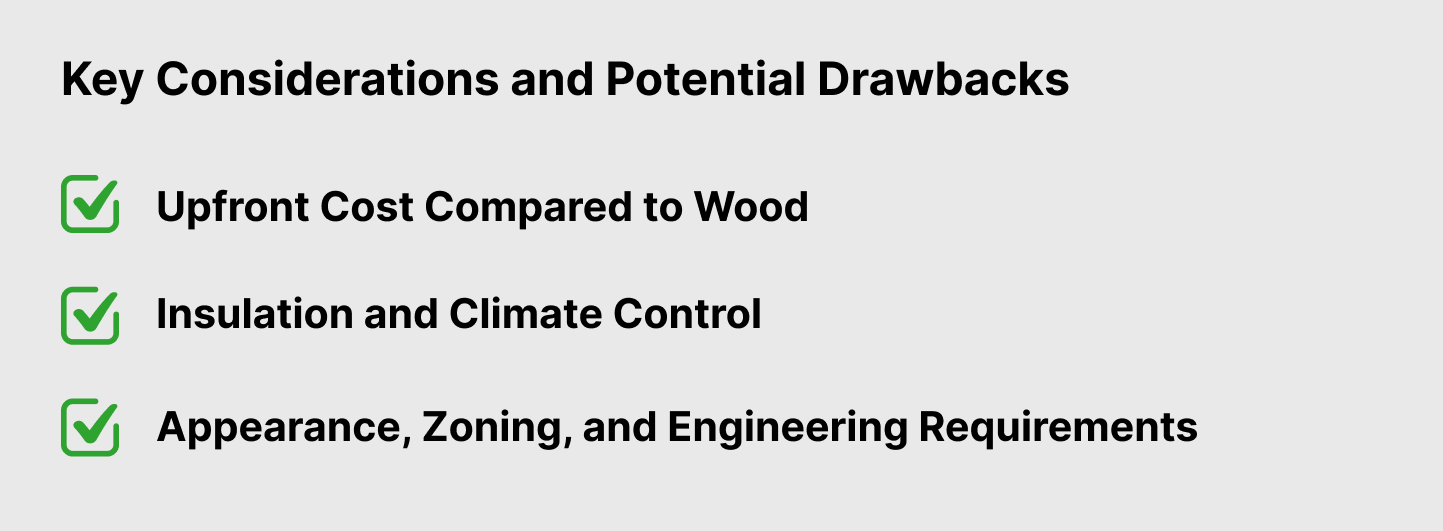
1. Upfront Cost Compared to Wood
Steel buildings can cost more upfront than wood, especially when you include things like concrete foundations or insulation.
However, these costs are typically offset over time due to:
- Minimal maintenance
- Longer lifespan
- Reduced repair costs
- Greater resistance to damage
2. Insulation and Climate Control
Steel conducts heat and cold, so without proper insulation, you may face:
- Excessive heat in summer
- Cold interiors in winter
- Condensation buildup
Solution: Use spray foam insulation or insulated panels. Add ventilation to improve airflow and humidity control.
3. Appearance, Zoning, and Engineering Requirements
Steel buildings can look “industrial” if left unfinished. But you can make them look great by:
- Adding siding to match your home
- Painting panels with weather-resistant finishes
- Installing landscaping to soften the structure’s look
Also ensure your kit includes:
- Stamped engineering drawings
- Wind and snow load certifications
- Compliance with local building codes and zoning laws
How to Choose the Right Steel Building Kit for Your Home
Choosing the right steel building kit is not only about picking the first size or style that looks good but, it’s about ensuring the structure meets your current needs, fits your property, and performs well in your specific climate. From defining your purpose to comparing quotes, there are several key steps to take before you make a purchase.
Below is a step-by-step guide to help you make an informed and confident decision when selecting a residential steel building kit:
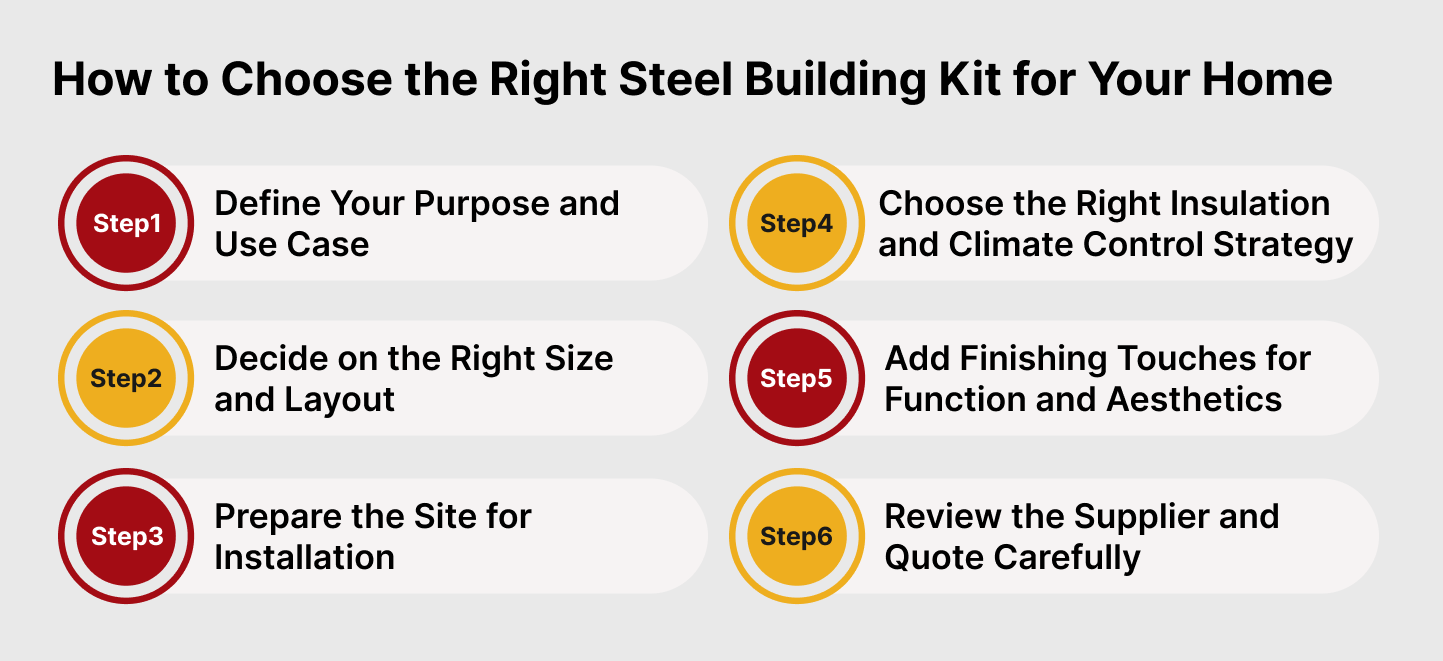
1. Define Your Purpose and Use Case
Start by identifying exactly what you’ll use the building for, as this will influence everything else: size, features, layout, and insulation.
Common use cases include:
- A storage shed for tools, seasonal items, or garden equipment
- A home workshop for woodworking, DIY projects, or crafts
- A small garage to protect a vehicle or store outdoor gear
- A livable space like a guest house, home office, or studio
Each use case will come with its own requirements in terms of insulation, ventilation, foundation, and finishes.
- Decide on the Right Size and Layout
Once the purpose is clear, you’ll need to determine the size and interior layout that works for you now and in the future.
Key questions to ask yourself:
- How much square footage do you actually need?
- Do you expect to expand the space later on?
- Do you prefer a wide open interior or partitioned sections for different uses?
Planning this upfront will save time, money, and redesign headaches later.
3. Prepare the Site for Installation
Your building is only as strong as the foundation it’s built on, so proper site preparation is critical to the success and lifespan of your steel structure.
Preparation steps include:
- Selecting a level, accessible location on your property.
- Choosing the right foundation type: usually a concrete slab or pier system.
- Clearing obstacles such as tree roots, slopes, or buried utilities.
- Planning for water drainage to avoid future flooding or erosion issues.
Site prep is also where local zoning, setbacks, and permit considerations come into play.
4. Choose the Right Insulation and Climate Control Strategy
Depending on your climate and intended use, you’ll need to plan for insulation, ventilation, and temperature control to keep the space comfortable and energy efficient.
Best practices by climate type:
- Cold climates: Use thicker wall and roof insulation (like spray foam or insulated panels) to retain heat.
- Hot climates: Opt for radiant barriers, reflective roof coatings, and proper ventilation to reduce heat buildup.
- Humid climates: Install vapor barriers and active ventilation systems to control condensation and prevent moisture-related issues.
These factors are especially important if the building will be used as a workshop, office, or living space.
5. Add Finishing Touches for Function and Aesthetics
Customizing your steel building not only makes it more functional, but also helps it blend seamlessly with your home or landscape.
Finishing options to consider:
- Adding windows, skylights, and entry doors for natural light and access.
- Installing exterior siding, custom paint, or trim packages to match your home’s look.
- Choosing a roof style and color that complements your property.
- Setting up gutters and downspouts for water management.
These additions also improve curb appeal and can increase your property’s value.
6. Review the Supplier and Quote Carefully
Before finalizing your purchase, it’s essential to evaluate the supplier and understand what’s included in your quote. Not all steel kits are created equal.
Questions to ask your supplier:
- Are engineering drawings and certifications included for permit approval?
- Is the kit rated for your area’s wind and snow loads?
- What is the warranty period (look for at least 25–50 years)?
- Are delivery costs included, and is installation support available if needed?
Getting clear answers upfront will help you avoid costly surprises down the road.
Ready to explore your options? Request Your Free Home Kit Quote Here.
Homeowner Questions from Real Forums
Many homeowners considering residential steel buildings have real, practical concerns, often discussed in forums like Reddit, Houzz, and DIY communities. Below are some of the most common questions asked by people just like you, along with expert answers.
1. Can I build a steel building kit myself, or do I need a contractor?
Yes, many steel building kits are designed with DIY homeowners in mind. With basic tools and clear instructions, a small to medium-sized building (like a workshop or shed) can often be assembled by two people in a few days. That said, hiring a contractor may be helpful for:
- Pouring the concrete foundation
- Ensuring code compliance
- Installing electrical or plumbing if converting into a livable space
Tip: Always check local building codes before starting, even if you’re doing it yourself.
2. What insulation works best for a steel building?
The best insulation for steel buildings is typically spray foam insulation. It provides:
- A high R-value per inch, improving energy efficiency
- A vapor barrier that helps prevent condensation and moisture buildup
- An airtight seal for better climate control
Other options include rigid foam panels, fiberglass batts with vapor barriers, or insulated metal panels, depending on your budget and climate zone.
- How can I make my steel shed or garage look less industrial?
Worried your steel building will look like a warehouse? Don’t be. You can easily customize its appearance to match your home or landscape.
Ways to make your steel building look residential:
- Add lap siding, vinyl, or wood-style cladding
- Use custom paint colors to match your home’s palette
- Install windows, skylights, and flower boxes
- Add porches, overhangs, and trim kits for a finished look
- Use landscaping (bushes, fencing, pavers) to integrate the structure visually
Modern steel buildings can be finished to look just like any traditional backyard structure.
- Are residential steel buildings energy efficient?
Yes, steel buildings can be very energy efficient with the right materials and planning. Key elements include:
- High-performance insulation (spray foam, insulated panels)
- Energy-efficient windows and doors
- Proper ventilation to reduce humidity and improve airflow
- Reflective or cool roof coatings to deflect sunlight in hot climates
- Integration with solar panels or passive design strategies
With the right setup, a steel workshop or garage can be just as comfortable and energy-efficient as a traditional space.
Conclusion
Residential steel buildings offer durability, flexibility, and cost-effective solutions for homeowners who need more usable space. Whether you’re looking to build a small garage, set up a DIY workshop, or add a backyard storage shed, steel gives you:
- Faster construction
- Long-term value
- Versatile design options
- Peace of mind from durability and resistance to weather or pests
Thinking of building one yourself? Request Your Free Home Kit Quote Today.
Frequently Asked Questions (FAQs)
1. Is a steel-framed home more expensive than a wood home?
A steel-framed home typically costs more upfront than a wood-framed home, but it offers greater long-term savings. Thanks to its durability, resistance to pests and weather, and lower maintenance needs, a steel home can be more cost-effective over time.
2. Can a steel garage be converted into a livable space?
Yes, you can convert a steel garage into a livable space. By adding insulation, ventilation, electricity, plumbing, and interior finishes, a steel garage can be transformed into a guest house, office, or studio.
3. How long does it take to install a steel building?
A small steel building, such as a shed or workshop, can typically be installed in 3 to 7 days, especially if the foundation is prepped and you have help. Larger buildings may take longer depending on complexity.
4. Do steel buildings rust over time?
Modern steel buildings are made with galvanized or coated steel, which is designed to resist rust and corrosion. With minimal maintenance such as periodic touch-ups or paint, they can last for decades without significant deterioration.
5. Do steel buildings require a foundation?
Yes, most residential steel buildings require a concrete slab or pier foundation to provide stability, proper drainage, and compliance with local building codes. The foundation type depends on the building’s size and intended use.
Disclaimer: The information provided in this article is intended for general guidance and educational purposes only. While we strive to ensure accuracy, we recommend consulting with local professionals or suppliers for project-specific details. Any external links provided are for convenience only. We do not take responsibility for the accuracy, content, or reliability of third-party websites or resources referenced within this blog.