
If you’re thinking about ordering a metal building kit, whether for a garage, workshop, barn, or business, you’re probably already facing a wave of decisions: sizing, pricing, permits, installation… and maybe a few confusing quotes that don’t quite match up.
At Buildway, we’ve helped hundreds of first-time buyers navigate this process, and the truth is, buying a metal building kit isn’t as plug-and-play as it seems. That’s exactly why we built this metal building kit checklist: to help you avoid common mistakes, compare suppliers fairly, and buy with confidence.
We often hear customers say:
- “I had no idea permits would take that long.”
- “The quote looked good until I saw what wasn’t included.”
- “I wish I’d sized it bigger from the start.”
Let’s walk you through our Ultimate Metal Building Kit Buying Checklist, based on real-world builds, Reddit discussions, and years of experience working with everyday builders like you.
Why You Need a Metal Building Kit Checklist Before Buying?
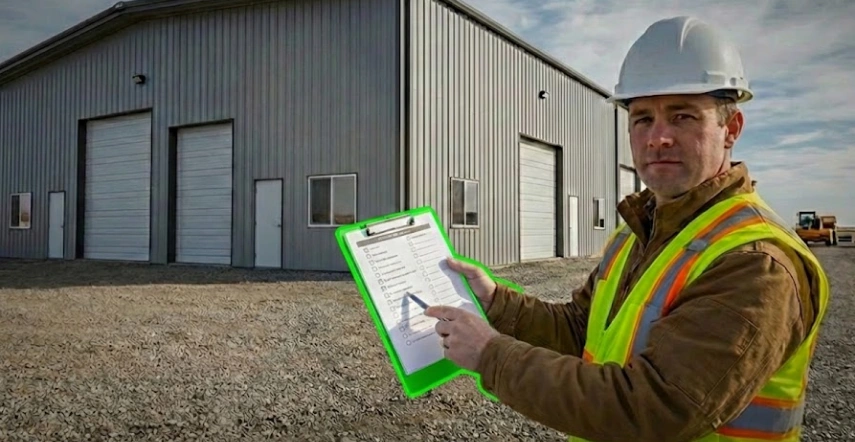
Metal building kits seem simple until you’re actually buying one. The sales brochures make it look turnkey, but the reality involves far more planning, coordination, and understanding of what’s actually included.
Common First-Time Mistakes
At Buildway, we work with a lot of first-time metal building buyers, and most of them come to us with the same concerns after doing a bit of research on their own. On the surface, metal building kits look straightforward, but once you dig in, it’s easy to miss important details that can cost you time, money, or both.
Based on what we see every day and what customers often tell us they wish they’d known sooner, these are the most common mistakes that tend to trip people up early in the process.
We regularly see people get tripped up by:
- Wildly different quotes for what seems like the “same” building.
- Overlooking permits and site prep, which can delay installs by months.
- Assuming “pre-engineered” means fully complete, when it often doesn’t.
- Underestimating the tools and crew needed for DIY installation.
From Reddit: “What exactly do I look for when quotes range so wildly?”
Our answer: A proper checklist that breaks it all down.
These mistakes are exactly why having a detailed metal building kit checklist, similar to a traditional home building checklist or building a house checklist, is crucial for a smooth project. If you want a deeper breakdown of the most expensive and time-consuming missteps buyers make, we’ve laid them out in detail in our guide on metal building kit buying mistakes to avoid. Many of these issues don’t show up until after the order is placed, which is exactly why a checklist like this matters.
Planning Stage Metal Building Kit Checklist: Before You Look at Quotes
Before you start requesting quotes or talking to suppliers, it’s important to have a clear picture of what you’re building and how you plan to use it. A little upfront planning goes a long way and helps you avoid confusion, mismatched quotes, and costly changes later on. Here are the key things you should have sorted out first:
Define Your Purpose & Use Case
Start by getting clear on what the building is actually for. Your intended use will shape everything from size and layout to door types and insulation needs.
Are you building a:
- Workshop?
- Equipment storage barn?
- Home garage or hobby space?
Think about vehicle/equipment clearance, temperature control, and access points. One customer came to us needing tractor storage but didn’t account for the height of their roll bar. That changed the whole building spec.
Determine Size, Layout & Future Expansion
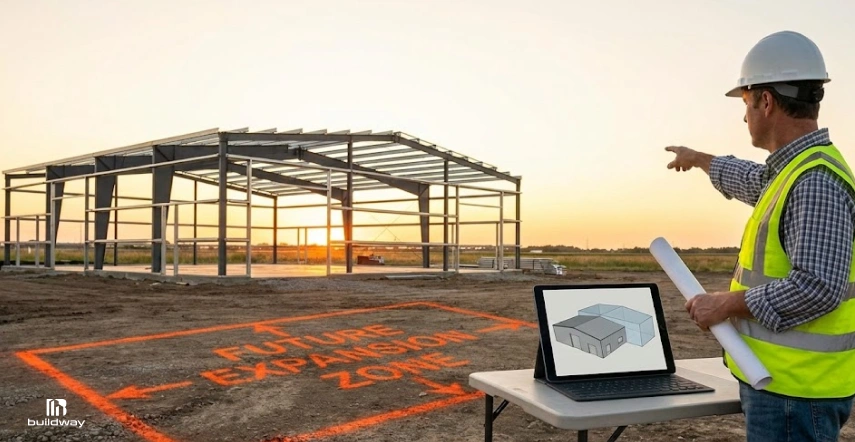
Don’t underestimate how much space you’ll need. A few extra feet can make your building far more functional. Think about clear-span space, door placement, and how you might want to expand in the future. Sizing up a bit now is usually cheaper than adding on later.
- Clear-span designs are great for open space, with fewer interior supports.
- Consider door placement (rolling, overhead, walk-in). It affects flow.
- Going a little bigger now often costs less than expanding later.
Set a Realistic Budget (Beyond the Kit Price)
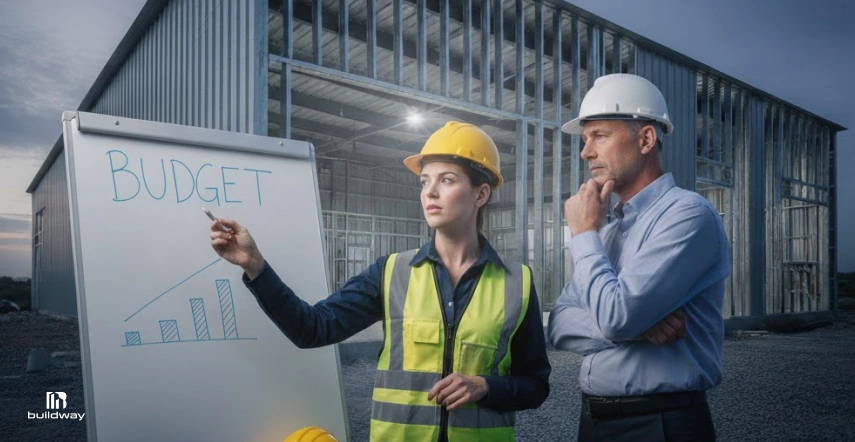
The kit is just one piece of the total cost. You’ll also need to budget for permits, foundation, site prep, labor, and tools, especially if you’re going the DIY route. Planning for the full picture upfront helps avoid surprises down the line.
- You’ll also need: foundation, permits, labor, and maybe rental equipment.
- Even DIY installs require helpers, lifts, and tools.
We often say: “Plan for the kit and everything around it.”
Quick Planning Checklist:
- Purpose & use case defined
- Rough size and floor plan
- Budget includes site work, tools, permits
- HOA / zoning rules checked
Because requirements vary so widely by location, having a clear process matters. Our steel building permits guide and checklist walks through what most jurisdictions require, how engineered drawings factor in, and how to avoid common approval delays.
Product Features Checklist: What’s Actually in the Kit?
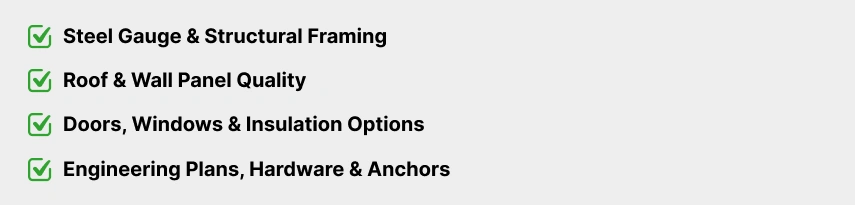
Not every kit includes the same components. Some suppliers bundle in key items like doors or insulation, others leave them out. Knowing exactly what’s included (and what’s not) helps you avoid unexpected costs later. Part of the confusion comes from the fact that metal building kits are designed for different uses. A simple garage, an agricultural barn, and a commercial workshop all have very different requirements. That’s why it helps to understand the different types of metal buildings and how their intended use affects what’s included in the kit.
Steel Gauge & Structural Framing
- Thicker steel gauge = stronger building.
- Check for wind and snow load ratings based on your local codes.
- A 26-gauge roof in Texas might not cut it in Minnesota.
Roof & Wall Panel Quality
- Panel thickness and coatings matter for longevity.
- Consider roof pitch, lower pitches save money but may reduce runoff.
Doors, Windows & Insulation Options
- Roll-up vs framed doors. Each has pros and cons.
- Think about ventilation and climate. Condensation can be a real issue.
- Insulation isn’t always included in “turnkey” quotes.
Engineering Plans, Hardware & Anchors
- Your kit should come with detailed engineered drawings.
- Look for anchor bolts, fasteners, trim, and bracing in the package.
- Vague kit descriptions? Red flag.
Product Checklist:
- Structural steel gauge confirmed
- Roof & wall panel specs reviewed
- Doors/windows/insulation included or quoted
- Engineered drawings included
Site Prep & Installation Checklist: Where Most Delays Happen
This is the stage where most projects hit snags. Without proper planning, permits, or a ready site, delays and extra costs pile up fast. A little prep now saves a lot of stress later.

Permits, Codes & Inspections
- In almost every location, permits are required.
- Some suppliers help with this; others leave it to you.
- Check with your local code office before ordering.
Site Prep & Foundation Planning
- The site must be cleared, leveled, and drained properly.
- Foundation type depends on your use: slab vs piers.
- Get quotes from local concrete contractors early.
Tools, Equipment & Crew Requirements
Even with a DIY kit, you’ll need:
- Lifts, ladders, and scaffolding
- Multiple helpers for raising frames safely
- Safety gear and basic tools (impact drills, torque wrenches, etc.)
Even experienced DIYers often call in help for final installs.
Site & Install Checklist:
- Site cleared, leveled & graded
- Foundation planned & contracted
- Permits submitted/approved
- Tools, lifts & manpower confirmed
Site preparation is one of the most common reasons metal building projects get delayed or go over budget. If you want a clearer picture of what needs to happen before delivery day, our metal building site preparation guide walks through grading, drainage, access planning, and foundation coordination in detail.
How to Compare Quotes Properly: Ordering & Supplier Checklist
This is where careful buyers can save big. Comparing quotes the right way helps you spot what’s missing, understand real costs, and avoid getting stuck with surprises after you order.
How to Compare Quotes Apples-to-Apples
A quote might look cheaper at first glance but could be missing key items like insulation, thicker steel, or hardware. Make sure you’re comparing the same specs across the board. Quotes often use different formats. One may seem cheaper, but it might:
- Skip insulation
- Use lighter steel
- Exclude doors or anchors
Ask each supplier for a line-item quote to make comparisons fair.
Warranty, Support & Return Policies
- Look for both structural warranties and finish warranties.
- Ask what happens after the sale. Do they support installs?
Delivery, Lead Times & Logistics
- Can a full-length truck access your property?
- Where will you store the kit before installation?
One customer had to delay for weeks because the truck couldn’t reach their rural lot.
Ordering Checklist:
- Multiple detailed quotes
- Warranty & support terms reviewed
- Delivery logistics confirmed
- Installation help verified
Final Pre-Purchase Checklist Before You Click “Order”
You’re nearly at the finish line. Before placing your order, double-check that everything’s lined up: dimensions, permits, site prep, and supplier terms. A quick review now can prevent big headaches later:
Last-Minute Questions? Use This Building Construction Checklist as Backup
- Final dimensions and layout approved
- Budget aligns with full scope
- Permits fully approved
- Foundation ready or scheduled
- Delivery scheduled and site accessible
- Support and warranty confirmed
This is your confidence checkpoint. If anything still feels vague, pause and ask more questions.
Ready to start your build the right way? Download the FREE Checklist PDF and take the stress out of buying your metal building kit.
- Includes every section from this guide
- Space to write notes, compare suppliers
- Easy to print or save on your phone
Download the Checklist PDF Now and build smarter with Buildway.
Why Buildway?
At Buildway, we’ve walked through this process with hundreds of customers. From first-timers on 5-acre homesteads to small business owners expanding their workshop space, we know where things go wrong, and how to get them right.
- Real Support: We help you plan beyond the kit.
- Transparent Quotes: No surprises, no fluff.
- Installer Network Access: DIY or pro, we’ll connect you.
- Used Nationwide: Trusted by first-time builders across the U.S.
“We didn’t know what we didn’t know, until Buildway’s checklist laid it all out for us.”
Our step-by-step metal building kit checklist ensures your entire project is covered, just like a building a house checklist, but designed for steel structures. Get a Quote or Talk to a Pro Now. We’re ready when you are.
FAQs
1. What is the most common mistake buyers make with metal building kits?
Most buyers assume the quote includes everything. In reality, key items like permits, foundation work, insulation, and installation tools are often left out. Always request a detailed, itemized quote so you know exactly what you’re getting and what you’ll still need. Using a detailed metal building kit checklist can help ensure nothing gets overlooked, similar to a checklist for building a house.
2. Do I really need permits for a metal building?
Yes. In most areas, permits are required, even for non-residential or rural builds. Skipping this step can delay your project or lead to fines. Always check with your local building department early in the planning process.
3. Can I install a metal building kit myself?
You can, but it’s more involved than many expect. You’ll need tools, equipment, and a few helping hands. While many customers DIY part of the build, they often hire pros for the foundation or frame to save time and ensure safety.
4. What is the average delivery time for a metal building kit?
Delivery typically takes 4–10 weeks, depending on supplier load and customizations. Timelines can stretch longer during peak seasons, so confirm estimated delivery windows before placing your order.
5. Are all metal building kits the same quality?
Not at all. Quality varies in steel thickness, panel specs, and what’s included (like engineering plans or hardware). Cheaper kits often leave out key items. Use a standard checklist to compare apples to apples before buying.
6. What costs are not included in most kit prices?
Most kits don’t include the foundation, permits, site prep, labor, or tools. These can add significantly to your total cost. Always budget for the full project, not just the kit itself.
7. How do I compare quotes fairly?
Make sure each quote is for the same size, specs, and features. A kit that looks cheaper may be missing insulation, thicker steel, or necessary hardware. Ask for detailed, line-item quotes to compare accurately.
8. Do kits come with engineered drawings?
They should. Reputable suppliers include stamped engineered drawings, which are often required for permits. If they’re missing or “optional,” that’s a red flag.
9. Is a metal building a good long-term investment?
Yes. Metal buildings are durable, low-maintenance, and adaptable. When properly planned and installed, they offer strong long-term value and versatility for many types of use.
10. How does Buildway help?
Buildway supports you through every step, from sizing and site prep to quote reviews and install planning. Our checklist, planning tools, and expert team help you build smarter and avoid surprises.