
Metal buildings are among the most durable, cost-effective, and versatile structures for residential, agricultural, and commercial use. But one area where metal structures require special attention is insulation. Unlike traditional wood or concrete buildings, steel is a highly conductive material, meaning it quickly transfers heat or cold, resulting in uncomfortable interior temperatures, moisture issues, and skyrocketing energy costs if left uninsulated.
Metal Building Insulation is the core barrier protecting your building from the effects of condensation, corrosion, mold growth, and thermal inefficiency. Whether you’re planning a garage, storage facility, home, or workshop, your insulation strategy will impact comfort, durability, operating costs, and even long-term resale value.
In this detailed blog, we as a trusted provider of high-quality insulation-ready metal building kits, share expert insights into:
- Choosing the right insulation type
- Strategies for maximizing energy efficiency
- How to prevent costly moisture issues
- Maintenance best practices to preserve performance for years
Understanding Insulation for Metal Buildings
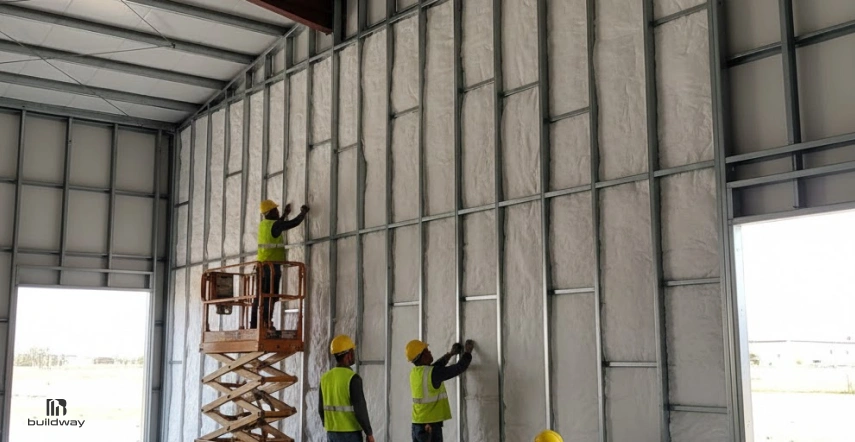
Steel buildings are thermally conductive, they amplify heat gain in summer and heat loss in winter. Without metal building insulation, the temperature difference between interior and exterior surfaces creates a harsh and often unusable indoor environment.
Here’s what proper metal building insulation accomplishes:
- Reduces Heat Transfer: Insulation for metal buildings slows down the movement of heat into or out of the structure, maintaining more stable internal temperatures.
- Lowers Energy Costs: By reducing HVAC demand, insulation decreases your electricity and gas usage, leading to significant annual savings, sometimes 20–40% in heating and cooling costs.
- Prevents Condensation: “Metal sweating” occurs when warm air contacts cool metal surfaces. This results in internal dripping, which can damage insulation, corrode framing, and lead to mold or mildew.
- Improves Structural Durability: Moisture-resistant insulation helps protect the frame and panels from premature rust or decay.
- Enhances Livability: Insulated metal buildings are quieter and more comfortable, supporting uses like homes, workshops, and commercial spaces.
Without insulation, a metal building may suffer:
- Structural damage due to corrosion
- Mold and mildew buildup
- Sky-high HVAC expenses
- Unusable interiors for part of the year
Insulation plays a vital role in every building. It’s a key element of sound construction, not an optional extra.
Types of Insulation for Metal Buildings
Installing metal building insulation is only half the battle, strategic planning ensures it performs at its best. To maximize efficiency, you need to consider your building’s purpose, climate zone, insulation materials, and installation methods. This section covers how to design an insulation system that delivers long-term comfort, energy savings, and moisture control.
1. Fiberglass Blanket / Batt Insulation
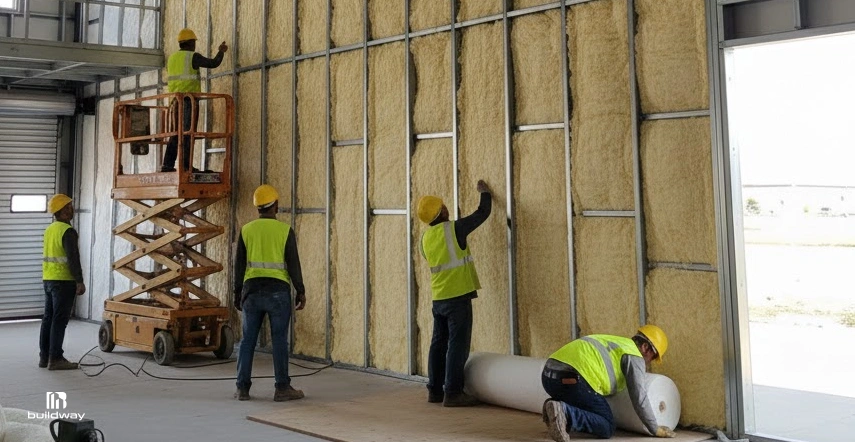
Fiberglass blanket or batt insulation for metal buildings is one of the most common and cost-effective types used in residential and commercial buildings. It comes in pre-cut panels or rolls and is designed to fit snugly between wall studs, floor joists, and ceiling rafters.
- Best for: Basic climate control in barns, garages, storage buildings
- R-Value: ~R-3.2 to R-3.8 per inch
- Cost: $0.40–$1.00/sq. ft. (materials only)
Pros:
- Inexpensive and widely available
- DIY-friendly
- Works well with standard purlin framing spacing
Cons:
- Requires separate vapor barrier to avoid moisture absorption
- Prone to sagging over time if not installed with proper support
Pro Tip: Use reinforced vinyl facing to add durability and create a built-in vapor barrier for fiberglass batts.
2. Spray Foam Insulation (Open-Cell & Closed-Cell)
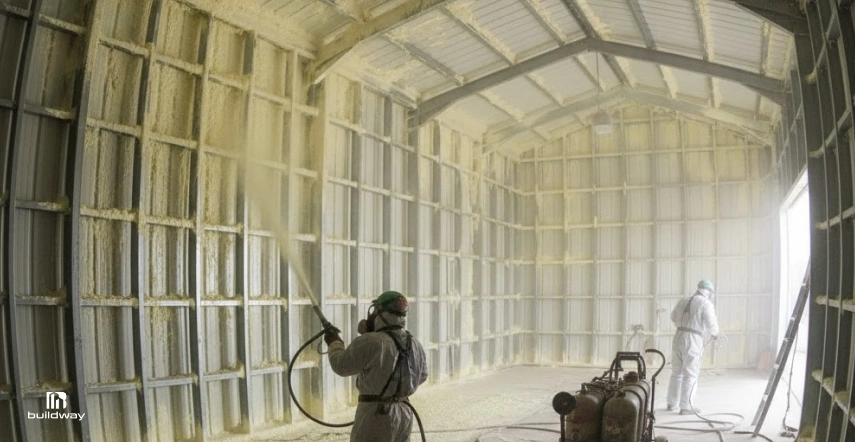
Spray foam insulation for metal buildings is a high-performance option that expands on application to seal gaps and create an airtight barrier. Available in open-cell and closed-cell forms, it offers excellent thermal resistance and moisture control for a wide range of building types.
- Best for: Sealing air gaps, high R-value performance, moisture resistance
- Closed-Cell R-Value: R-6.0 to R-7.0 per inch
- Open-Cell R-Value: R-3.5 to R-4.0 per inch
- Cost: $1.00–$2.50/sq. ft. installed
Closed-cell:
- Acts as vapor and air barrier
- Adds strength to the wall structure
- Best for humid or cold climates
Open-cell:
- Lower cost
- Excellent sound dampening
- Not recommended for high-moisture areas
Cons:
- Professional metal building installation required
- Difficult to retrofit
- Can separate over time if surface prep is poor
Pro Tip: Closed-cell spray foam is ideal for metal buildings in climates with large temperature swings or high humidity.
3. Rigid Foam Board Insulation
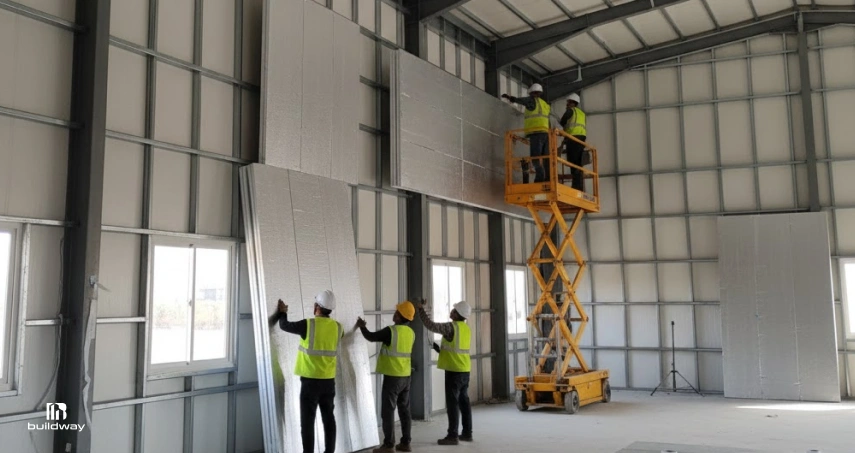
Rigid foam board insulation for metal buildings is a durable and versatile solution, commonly used for insulating walls, roofs, and foundations. It provides a high insulating value with minimal thickness and helps reduce thermal bridging in construction.
- Best for: Continuous insulation (walls, ceilings), thermal bridging reduction
- R-Value: R-4 to R-6.5 per inch
- Cost: $0.70–$1.75/sq. ft.
Rigid foam boards (EPS, XPS, polyiso) are ideal for creating a continuous metal building insulation layer over framing or roof sheathing. Their high compressive strength and durability make them perfect for walls, roofs, and even below slab insulation.
Pro Tip: Use in combination with fiberglass or spray foam for high-performance wall systems.
4. Reflective Foil / Radiant Barrier
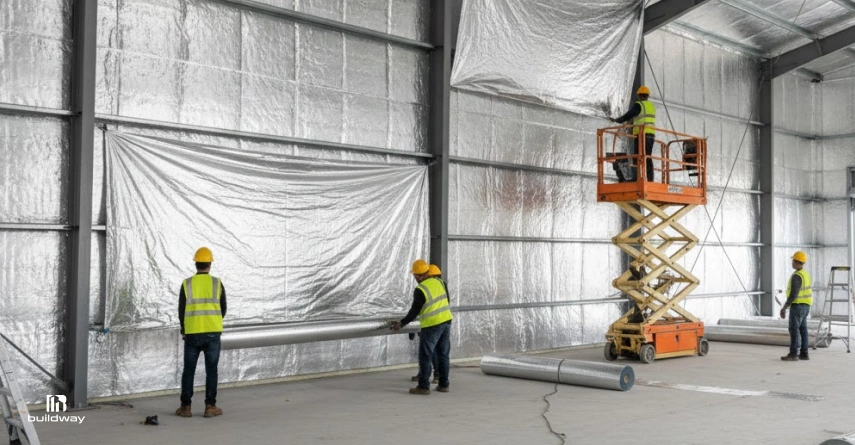
Reflective foil, also known as a radiant barrier, is designed to reflect heat rather than absorb it. Commonly used in attics and warm climates, it helps reduce cooling loads by minimizing radiant heat transfer.
- Best for: Roof insulation in hot climates
- R-Value: Reflects radiant heat; minimal standalone R-value
- Cost: $0.10–$0.50/sq. ft.
This reflective barrier redirects solar radiation, reducing interior heat gain. It is often used in conjunction with other materials like fiberglass to boost roof performance in sunny regions.
Pro Tip: Always leave an air gap between foil and the roof deck for effectiveness.
Strategizing Metal Building Insulation for Maximum Efficiency
Installing insulation for metal buildings is only half the battle, strategic planning ensures it performs at its best. To maximize efficiency, you need to consider your building’s purpose, climate zone, insulation materials, and installation methods.
Planning Insulation for Metal Buildings Based on Use & Climate
Choosing the right metal building insulation should be matched to your building’s purpose and the local climate. Effective planning ensures optimal energy efficiency, comfort, and long-term performance tailored to the specific needs of your space.
Insulation should be chosen based on:
- What your building is used for
- Your regional climate zone
- Budget and performance expectations
Here’s a quick reference:
| Use Case | Suggested Insulation | Considerations |
| Storage Shed | Fiberglass or foil barrier | Minimal HVAC; prioritize low cost |
| Workshop | Spray foam or hybrid system | Moisture control and soundproofing matter |
| Metal Home | Closed-cell + rigid combo | High efficiency and noise reduction |
| Barn / Stable | Fiberglass with reinforced liner | Ventilation critical to animal health |
Climate-Based R-Value Recommendations (U.S.)
| Climate Zone | Wall R-Value | Roof R-Value |
| Zone 1–2 (Hot) | R-13 | R-19–R-30 |
| Zone 3–4 (Mixed) | R-13–R-19 | R-30–R-38 |
| Zone 5–7 (Cold) | R-19–R-25 | R-38–R-49 |
Source: DOE Climate Zones
Pro Tip: Don’t over insulate in humid areas without adequate ventilation. This traps moisture and can backfire.
Designing for Condensation Control
Condensation is a major threat to metal building performance. Preventing it requires smart metal building insulation, vapor barriers, and ventilation to stop moisture before it causes damage.
Why does condensation happen?
- Warm air meets cold metal panels and condenses into droplets
- Leads to water stains, wet insulation, mold, and rust
Condensation Control Checklist:
- Install vapor barriers on the warm side of insulation
- Use closed-cell spray foam or vinyl-faced fiberglass
- Maintain consistent indoor temperatures
- Add ridge vents, louvers, or exhaust fans
- Dehumidifiers for sealed buildings
Pro Tip: Always install insulation with a vapor retarder rating of Class I or II to control moisture movement.
Metal Building Installation Best Practices
The effectiveness of insulation depends not only on the material chosen but also on how well it’s installed. Even the best insulation for metal buildings can underperform if it’s poorly fitted, making proper installation essential for maximizing energy efficiency and comfort.
Best Practices:
- Insulate during initial building erection to avoid gaps
- Seal all penetrations (windows, doors, conduit) with caulk or tape
- Use thermal spacers or breaks to reduce metal-to-metal transfer
- Choose mechanical fastening systems that won’t compress the insulation
- Apply vapor barriers facing the heated side of the structure
Pro Tip: If installing fiberglass, use banding systems or mesh to keep batts from sagging over time.
Maintenance Tips to Preserve Metal Building Insulation & Efficiency
Insulation for metal building isn’t a one-time install-and-forget feature. It requires occasional checks to ensure it continues performing as intended. Regular maintenance helps prevent energy loss, extends the lifespan of the insulation, and maintains overall efficiency.

1. Regular Inspections
Check your metal building insulation and building envelope twice a year, especially after seasonal changes or storms.
Look for:
- Sagging insulation or separation
- Moisture stains or mildew
- Signs of rodent activity
- Drafts near doorways or windows
Pro Tip: Use a thermal imaging camera to detect air leaks or cold spots inside walls or roof cavities.
2. Cleaning & Structural Upkeep
Protect your metal building insulation investment by maintaining the outer shell of your building:
- Clean gutters regularly to prevent overflow
- Tighten fasteners and check panel seals
- Apply anti-rust coatings or touch-up paint where needed
- Keep the interior dry. Watch for puddles, roof leaks, or ice damming
Pro Tip: Schedule post-winter and post-summer inspections to catch seasonal wear early.
3. Addressing Insulation Wear Over Time
Even the best insulation systems degrade. Watch for:
- Wet fiberglass batts? Replace immediately. They lose R-value and grow mold.
- Spray foam pulling away? May need re-application or sealing.
- Damaged foam boards? Replace sections or reinforce with secondary insulation.
Pro Tip: Upgrade insulation when retrofitting with HVAC or siding for added efficiency.
4. HVAC & Moisture Control Strategies
Metal Building Insulation works best when paired with effective HVAC and moisture control systems. Proper ventilation, air circulation, and humidity management are essential to prevent mold, maintain indoor air quality, and ensure your insulation performs at its highest level.
Your insulation is only as good as your ventilation:
- Install fresh air intakes or HRV systems
- Use programmable thermostats to maintain even temps
- Set up zoned HVAC for large buildings
- Place portable dehumidifiers in sealed units or basements
Pro Tip: Building too tight? Add trickle vents to reduce humidity buildup without compromising insulation.
Real-World Insights from Metal Building Owners
Real Buildway customer testimonials, metal building forums, and Reddit threads, offer valuable insights:
- “I insulated with fiberglass but skipped the vapor barrier—big mistake. Within a year, everything was soaked. Had to redo it with spray foam.” — Trevor, shop owner in Missouri
- “Our prefab barn was delivered insulation-ready. We installed a radiant barrier plus foam board. Works great in our Texas heat.” — Kimberly, horse stable owner
Takeaways:
- Don’t skip the vapor barrier
- Match insulation to climate and building function
- DIY is doable, but hire pros for spray foam or HVAC planning
- Hybrid systems (fiberglass + foil or foam board + radiant barrier) offer superior performance
Conclusion & Next Steps
Proper insulation for metal buildings is essential to the performance and longevity of any metal building. It ensures year-round comfort, protects against moisture issues, improves energy efficiency, and supports long-term structural health.
Insulating your metal building is critical for:
- Year-round comfort
- Moisture protection
- Energy efficiency
- Long-term structural health
Buildway’s experts are ready to help you select the right insulation system based on your building’s purpose, budget, and climate. Whether you’re planning a new build or upgrading an existing structure, thoughtful insulation choices can deliver significant savings and lasting value over the life of your building.
- Download the Free Insulation Planning Checklist
- Request a Quote for Your Insulation-Ready Metal Building Kit
Build smarter. Build stronger. Build with Buildway.
FAQ’s
1. How to insulate a metal building and what is the best insulation for a metal building?
Closed-cell spray foam is widely considered the best insulation for metal buildings because it provides a high R-value, excellent moisture resistance, and acts as both an air and vapor barrier. It’s especially effective in climates where condensation control and energy efficiency are top priorities. For more affordable builds, fiberglass insulation can be a practical choice when paired with a vapor barrier.
2. How thick should insulation be in a metal building?
The ideal insulation thickness depends on your climate zone and the building’s purpose. Generally, wall insulation ranges from 3.5 to 6 inches, while roof insulation may require between 6 to 12 inches. Areas with colder temperatures will need higher R-values to maintain thermal comfort and energy efficiency.
3. Does metal building insulation require maintenance?
Yes, insulation in metal buildings should be checked regularly. Over time, it can become damaged by moisture, pests, or air leaks. Annual inspections help identify sagging fiberglass, mold, or gaps that could reduce the insulation’s effectiveness and lead to higher energy costs or structural issues.
4. How does insulation help control condensation in metal buildings?
Insulation works by keeping interior surfaces warm, which reduces the chance of condensation forming when warm, humid air comes into contact with cold metal. When combined with vapor barriers and proper ventilation, insulation prevents moisture buildup that can cause rust, mold, and damage to the structure.
5. Can you insulate a metal building after it’s built?
Yes, metal buildings can be insulated after construction, though it’s more complex and often more expensive than insulating during the initial build. Retrofitting typically requires cutting access points or working around existing installations, but it can still significantly improve comfort and energy performance.
6. What’s the cheapest way to insulate a metal building?
Fiberglass batt insulation is the most cost-effective option, especially when used in simple storage or utility buildings. To make it effective long-term, it must be installed with a proper vapor barrier to prevent moisture damage and insulation degradation.
7. Do all metal buildings need a vapor barrier?
Yes, especially if you’re using fiberglass or other permeable insulation. A vapor barrier is essential to prevent moisture from passing through the walls or roof and soaking into the insulation, which can lead to mold, rust, and reduced insulation performance.
8. Is spray foam worth the cost in a metal building?
Spray foam insulation often justifies its higher upfront cost due to its superior performance. It offers a high R-value per inch, seals air leaks, and provides moisture control, all of which contribute to long-term energy savings and reduced maintenance issues.
9. Can metal building insulation help with soundproofing?
Yes, certain insulation types, like open-cell spray foam and fiberglass batts, also reduce sound transmission. This can be especially useful in buildings used as workshops, studios, or living spaces where noise reduction enhances comfort and usability.