
Did you know that a high-quality metal garage kit can last up to 80 years with minimal maintenance? That’s decades of reliable, weather-resistant space, whether you need it for your cars, your tools, or a full-blown home workshop.
If you’re a homeowner looking for an affordable, practical way to expand your storage or workspace, you’re in the right place. In this guide, we’ll show you how to design a metal garage kit that fits your property layout perfectly, with tips on layout, design, sizing, and even a free downloadable checklist to make sure you’ve covered everything.
Why a Metal Garage Kit Just Makes Sense
As of 2021, nearly two-thirds of all U.S. homes included a garage or carport. This proves that having a dedicated vehicle or workshop space is a standard feature for most homeowners. And today, more people are moving away from traditional brick-and-mortar garages toward metal garage kits. The reason is simple: they’re more durable, cost-effective, and much quicker to install than conventional builds.
With Buildway’s modern designs, you can get the look and function of a residential steel garage or prefab workshop, without the hassle and high costs of conventional construction.
And the best part? You can customize everything from size and roof style to color, doors, and windows with us. Book a call with us today and start building your future garage.
Step 1: Define Your Needs and Property Constraints
Before you start sketching or choosing materials, take a moment to clearly define what you need from your metal garage kit. Think about how you’ll actually use the space. At the same time, consider your property’s layout. Understanding these factors early will help you design a garage that fits seamlessly into your property and avoids costly adjustments later. Here’s how to break it down step by step.
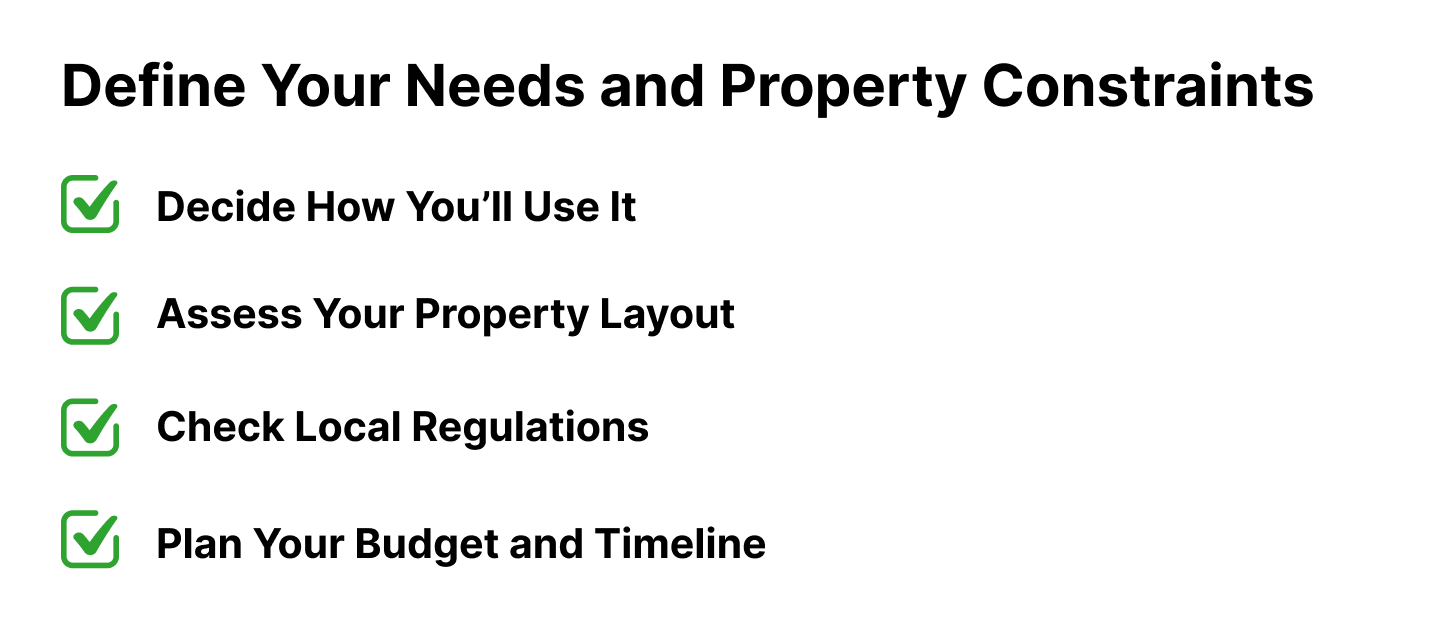
1. Decide How You’ll Use It
Ask yourself: what’s the main purpose of your new garage?
- Just car storage? (e.g. two cars or one truck)
- A combined garage and workshop?
- Or maybe storage plus a shaded lean-to area?
Your purpose will influence everything from the width and height to the number of doors and windows.
2. Assess Your Property Layout
Every property is different. Look at:
- How close you are to boundaries or neighbors
- Access and turning space for vehicles
- The slope of your land
- Sunlight and shade during the day
Good orientation and drainage planning can save you serious time and cost later.
3. Check Local Regulations
Before you order a DIY garage kit, make sure it complies with local rules. Most areas require building permits, and you’ll need to confirm zoning, setback requirements, and height limits so your garage meets code from day one.
Verify whether your project needs a building permit
Check zoning rules to confirm the garage is allowed on your property
Review setback requirements to avoid boundary violations
Confirm height limits so your chosen kit meets local restrictions
If applicable, check HOA rules for design, placement, or appearance
4. Plan Your Budget and Timeline
Remember, the kit is only one part of the total cost. Include:
- Site preparation and concrete slab
- Electrical and lighting
- Doors, insulation, and ventilation
- Finishing touches like paint or storage racks
A clear budget helps avoid mid-project surprises. Be sure to account not just for the metal garage kit itself, but also for site preparation, foundation work, insulation, electrical wiring, and interior finishing. Setting realistic cost expectations upfront will keep your project on track and ensure you can prioritize quality materials without stretching your finances later.
Step 2: Plan the Size and Layout
Now comes the fun part: figuring out how big your metal garage kit should be and where it’ll fit best on your property. This step is where your vision starts taking shape: balancing functionality with available space, access, and aesthetics. The goal is to find the sweet spot between what you need and what your property allows. Here’s what to consider as you plan your garage’s size and layout:
Typical Sizing Guidelines
Here are some general starting points:
- Two-car garage: 20–24 ft wide
- Three-car garage: 30+ ft wide
- Eave height: 9–13 ft, depending on vehicle type (cars, trucks, or RVs)
If you want to include a workspace or tool area, add extra depth (for example, a 24×30 ft garage gives you two car bays plus rear storage).
Layout and Placement
Think about how your garage will flow with your property:
- Align the doors with your driveway for easy access
- Avoid placing doors on a steep slope
- Consider drainage and where rainwater will run off
- If you’re adding a prefab workshop, ensure natural light reaches your workspace
A good rule of thumb: sketch your property, mark access points, and play with different placement options before finalizing.
Step 3: Choose the Right Design Features
When it comes to designing your residential steel garage, attention to detail can make all the difference between a space that simply works and one that truly fits your lifestyle. Every choice from the foundation type to the roof style impacts durability, comfort, and long-term value. With that in mind, here are the key design factors to focus on before finalizing your garage kit:
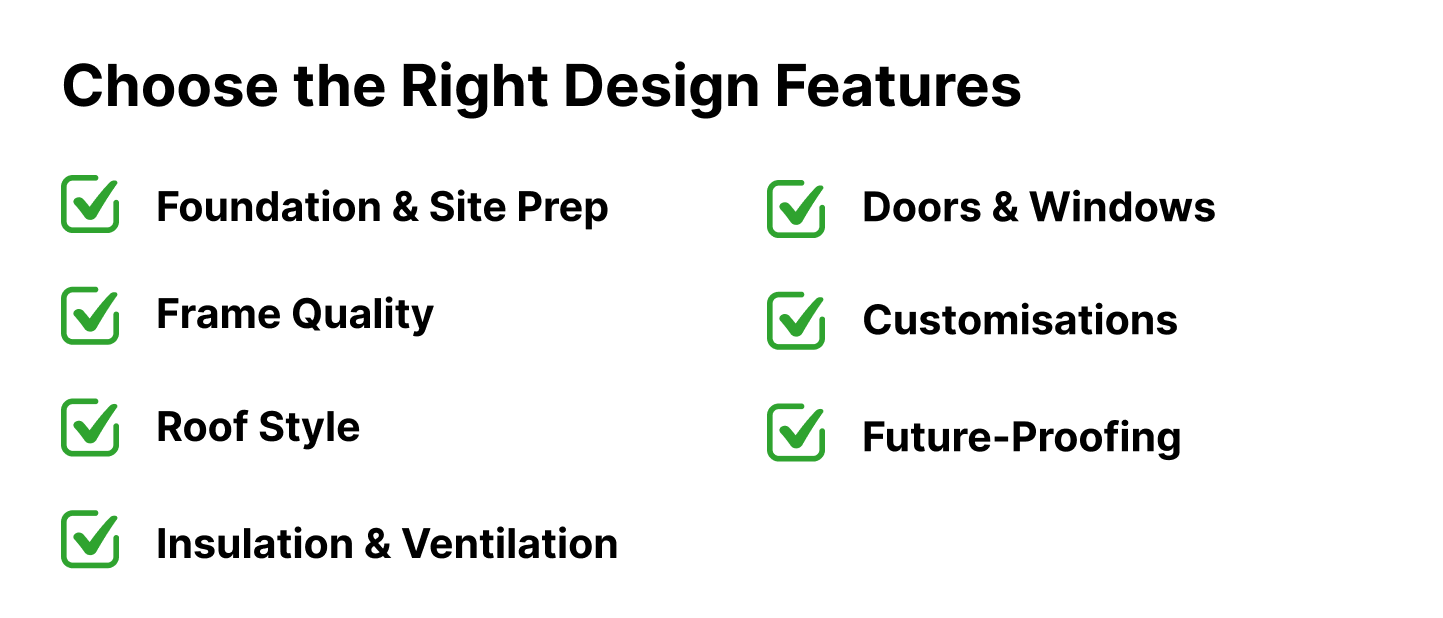
- Foundation & Site Prep: Level, compacted soil with good drainage is essential.
- Frame Quality: Choose the right steel gauge and check wind or rain load ratings for your region.
- Roof Style: Vertical or A-frame roofs look great and handle rain better.
- Insulation & Ventilation: A must for workshops to control heat, moisture, and condensation.
- Doors & Windows: Decide how many you need for convenience, light, and air circulation.
- Customizations: Lean-tos, skylights, color finishes: design it the way you want.
- Future-Proofing: Plan for potential expansions or add-ons in the future.
By planning these ahead, you’ll create a garage that’s both functional and flexible for years to come.
Step 4: Visualize Your Garage Design
Visualizing your metal garage design is about turning your ideas into a clear, workable plan. Instead of guessing how it might look, start by mapping out your property and noting where the garage will fit best in relation to your home, driveway, and landscape. This helps you identify space constraints early and refine details like door placement, access angles, and ventilation needs.
Once you have a rough layout, you can fine-tune it with expert guidance to ensure the structure complements your property and long-term goals. Here are a few things to focus on as you visualize your design:
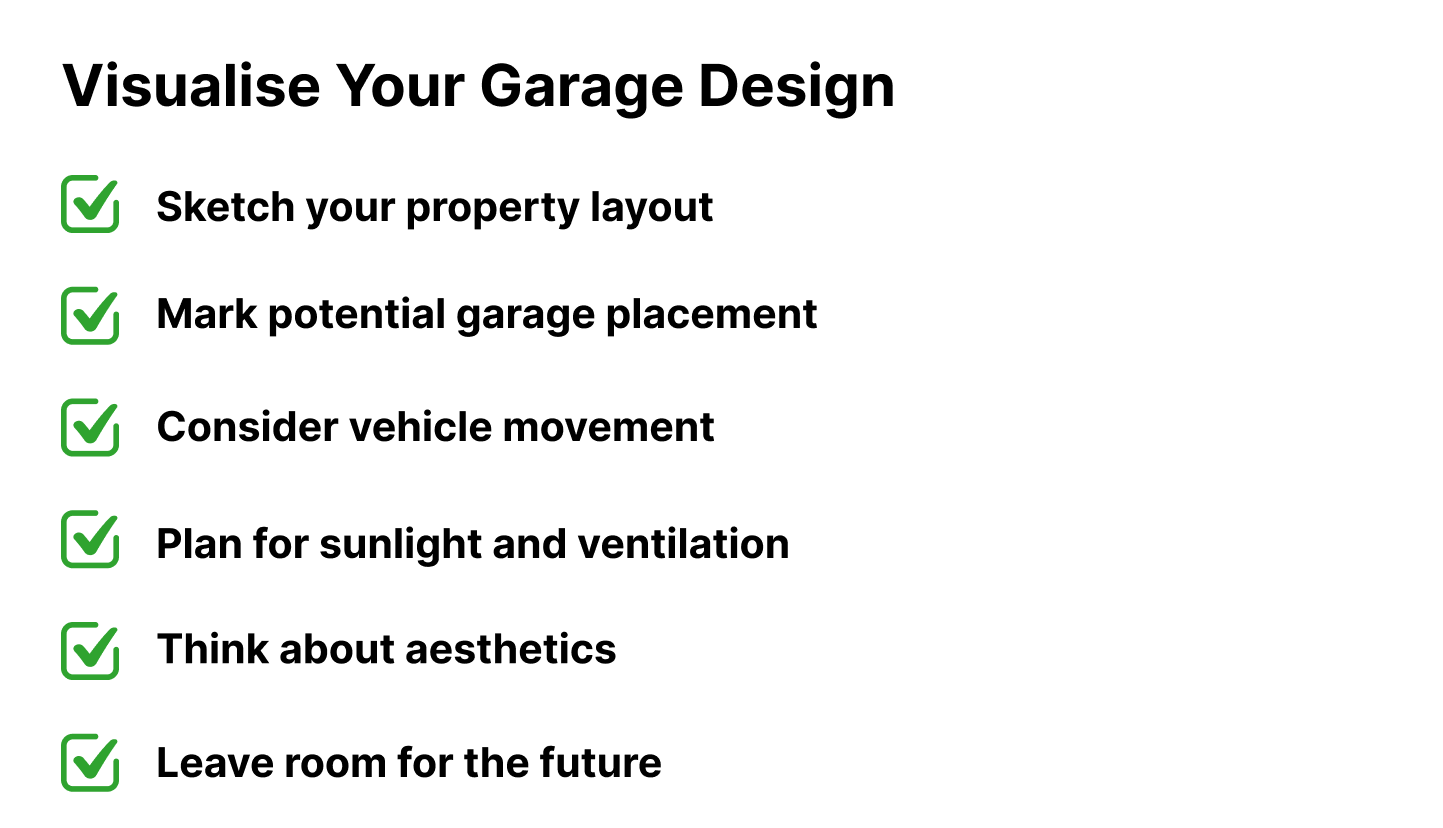
- Sketch your property layout: Include driveways, pathways, existing structures, and boundaries.
- Mark potential garage placement: To see how it affects accessibility and overall flow.
- Consider vehicle movement: Make sure turning space and entry angles are practical.
- Plan for sunlight and ventilation: Position doors and windows for natural light and airflow.
- Think about aesthetics: Choose roof styles, colors, and finishes that blend with your home.
- Leave room for the future: Allow space for possible expansions, lean-tos, or storage areas.
Once you’ve got a rough layout in hand, you can request a free quote or book a quick design consultation with our team to truly visualize how your building will look and function on your property.
Step 5: Avoid Common Design Mistakes
Even the best metal garage kits can fall short if the planning isn’t done right. Many homeowners on Reddit and DIY forums share the same hard-earned lessons: small oversights that end up costing extra time, money, or comfort later. But, you can easily avoid most of them with a little foresight and research.
Here are some of the most common design mistakes to watch out for, along with how to prevent them:
| Common Mistake | What Usually Happens | How to Avoid It |
Ordering a garage that’s too small (especially door widths or ceiling height) | Vehicles don’t fit comfortably; no room for tools or storage. | Always measure your largest vehicle with clearance; add extra space for doors and movement. |
Ignoring ventilation or insulation | Moisture and condensation lead to rust, mold, or discomfort in extreme weather. | Add ridge vents, louvres, or insulation panels to regulate temperature and airflow. |
Skipping drainage and site prep | Water pools near the foundation, causing corrosion and uneven settling. | Ensure proper site grading and install a concrete pad or gravel base with drainage slope. |
Choosing low-quality or unverified kits | Misaligned panels, poor wind resistance, or long-term durability issues. | Work with reputable suppliers like Buildway that meet engineering and regional load standards. |
Forgetting local building codes or setbacks | Risk of fines, reconstruction, or permit rejection. | Always check zoning regulations and submit your plan for approval before ordering materials. |
Overlooking access and turning space | Tight driveways or awkward parking angles make the space frustrating to use. | Map out your driveway and vehicle turning radius during the planning stage. |
A few hours of research upfront can save weeks of frustration later. Double-check your layout, materials, and compliance before you build and if you’re unsure, our team at Buildway can review your plan and help you fine-tune the details.
Step 6: Review, Refine & Start Your Garage Design
Before you start the construction, take a moment to review your plan and make sure every detail is covered. A little extra preparation now saves major time and expense later. That’s why we’ve created the Buildway Property Layout & Design Checklist: a simple, printable guide that helps you verify all key factors before you build.
Use it to double-check things like:
- Site preparation: Is the ground level and properly drained?
- Access & movement: Is there enough turning radius for vehicles and clear driveway entry?
- Structure sizing: Do the width, height, and door placements suit your needs and vehicle types?
- Ventilation & insulation: Have you planned airflow and temperature control, especially for workshop use?
- Lighting & orientation: Does your layout make the most of natural light while avoiding glare or heat buildup?
- Expansion readiness: Have you left space for future storage or additional bays?
- Compliance: Have you checked setbacks, local permits, and load ratings for your region?
Download the Buildway Property Layout & Design Checklist.
Once you’ve ticked everything off, you’re ready to turn your plan into a real design. Whether you already have a basic sketch or just an idea, Buildway’s experts can help you refine it into a complete, build-ready concept that matches your property and budget.
Here’s what you can do next:
- Request a free quote based on your preferred size and configuration.
- Book a design consultation with our team to review your site plan and get layout guidance.
- Explore real-world examples of successful garage builds for inspiration and ideas.
Ready to get started? Bring your layout to life with Buildway, where smarter design meets stronger steel. Start your project.
Conclusion
Designing your own metal garage kit is easier than you might think, especially when you have the right guidance from a trusted supplier.
At Buildway, we help you:
- Clarify your needs based on usage, space, and long-term goals.
- Navigate local codes and site requirements with expert support.
- Customize your building kit with flexible options that match your vision.
- Get transparent, all-inclusive quotes. No surprises, no upsells.
Whether you’re building a personal garage, a workshop, or a storage space, our team ensures you make informed decisions and walk away with a kit that’s functional, future-proof, and long-lasting.
Frequently Asked Questions
1. What size metal garage do I need for two cars and a workshop?
A 24×30 ft metal garage with a 10–12 ft eave height is ideal for most homeowners. It provides comfortable parking space for two vehicles plus extra room for a small workshop or tool area. If you plan to store larger vehicles or equipment, consider increasing the width to 30 ft or more.
2. Do I need a building permit for a metal garage kit?
Yes in most areas, a building permit is required, even for prefab or DIY garage kits. Local councils often have specific rules on height, setbacks, and wind or snow load ratings. Always check with your local building department before purchasing or installing your garage.
3. Can I expand my metal garage later?
Absolutely. Buildway’s modular steel garage kits are designed for flexibility, making it easy to add extra bays, lean-tos, or storage extensions later. Planning your layout with future expansion in mind helps avoid costly modifications down the road.
4. What’s the best insulation for a metal garage?
The best options are reflective foil insulation or foam board panels, which help regulate temperature and reduce condensation. Pair these with ridge vents or exhaust fans for proper airflow, especially if you’ll be using the space as a workshop.
5. How much extra budget should I plan for beyond the kit?
Expect to spend 30–50% more than the kit price to cover additional costs like the foundation, site preparation, utilities, doors, insulation, and interior finishing. Setting a clear budget upfront ensures a smoother build and helps prioritize quality materials.