
With material prices climbing, insurance requirements tightening, and maintenance costs eating into profits, traditional wood barns and pole buildings are starting to fall short. Today’s farmers need structures that last, protect valuable assets, and don’t require constant upkeep. That’s why agricultural steel buildings are gaining traction. Not because of trends, but because they deliver where it counts.
Based on what we see most often on working farms, especially buildings we’re asked to repair, reinforce, or replace: failure usually isn’t sudden. It’s slow, expensive, and predictable. Rotting posts, snow-loaded trusses sagging out of spec, doors that no longer square up after a few seasons of wind. These aren’t edge cases. They’re patterns we see repeatedly across different regions and farm types.
Let’s take a practical, farmer-to-farmer look at how steel stacks up against traditional building options in terms of cost, durability, and long-term value.
Why Are Farmers Re-Evaluating Building Materials?
Over the last decade, the landscape has shifted for agricultural buildings. It’s not just about what’s cheapest upfront anymore, it’s about longevity, insurance, and return on investment. Here’s what’s driving the change:
- Lumber Prices Have Skyrocketed: After pandemic-era volatility, wood prices remain unpredictable. A simple pole barn kit that used to cost $20,000 can now run 30–50% higher, with no guarantees on durability.
- Maintenance Fatigue is Real: Painting, patching leaks, replacing rotting posts, it adds up. Steel buildings require far less hands-on upkeep, giving farmers more time in the field and less on the ladder. This is especially true on farms where we revisit the same buildings every 5–10 years to address rot at grade, fastener failure, or post settlement: issues that rarely show up in year one but become unavoidable over time.
- Insurance Is Tightening Up: Carriers are increasingly hesitant to insure aging wood barns, especially those without engineering certification. Agricultural steel buildings, on the other hand, often meet or exceed code requirements, helping with premiums and claims.
We’re increasingly seeing insurers request engineering documentation after storm claims, particularly on older wood-framed barns that were never designed for today’s snow or wind loads. This blog is a practical, side-by-side comparison for farmers who want to make an informed decision.
What Is an Agricultural Steel Building?
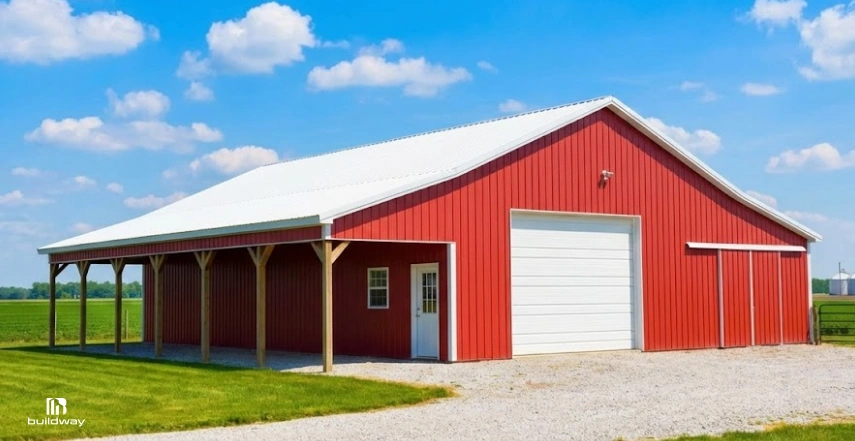
An agricultural steel building is a fully engineered structure made primarily of cold-formed or rigid steel components. Unlike a steel-clad pole barn, the entire frame is made from steel, offering enhanced structural integrity.
What Qualifies as a Steel Agricultural Building?
When evaluating farm building options, not every metal structure qualifies as a true steel agricultural building. The difference comes down to engineering, framing, and functionality. A genuine steel agricultural building is built to handle heavy farm use and meet local code requirements, not just look the part. Here’s what to look for:
- Fully engineered to meet local snow and wind load codes
- Steel framing throughout (not just metal siding on wood)
- Pre-fabricated parts assembled on-site
- Customizable for farm-specific needs
Are Steel Buildings the Same as Pole Barns?
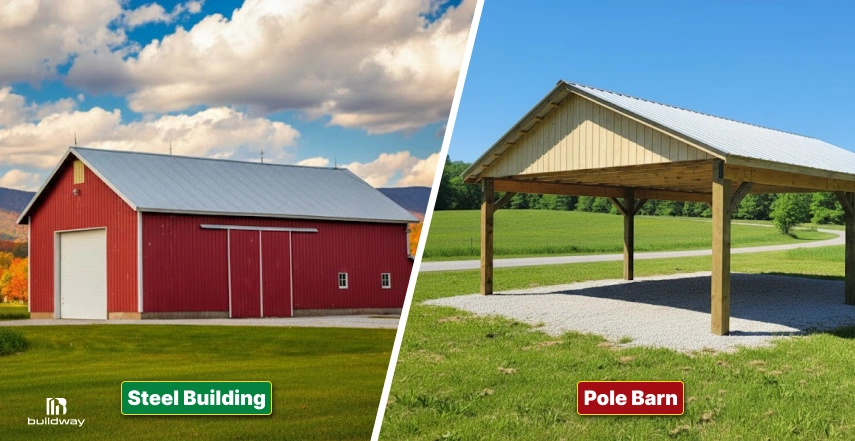
No. A pole barn is typically a wood-framed structure with posts set directly in the ground and covered in metal panels. A steel building, by contrast, uses steel frames anchored to concrete foundations. This difference in framing changes everything, especially when it comes to lifespan, insurance, and structural strength.
Common Farm Uses for Steel Buildings
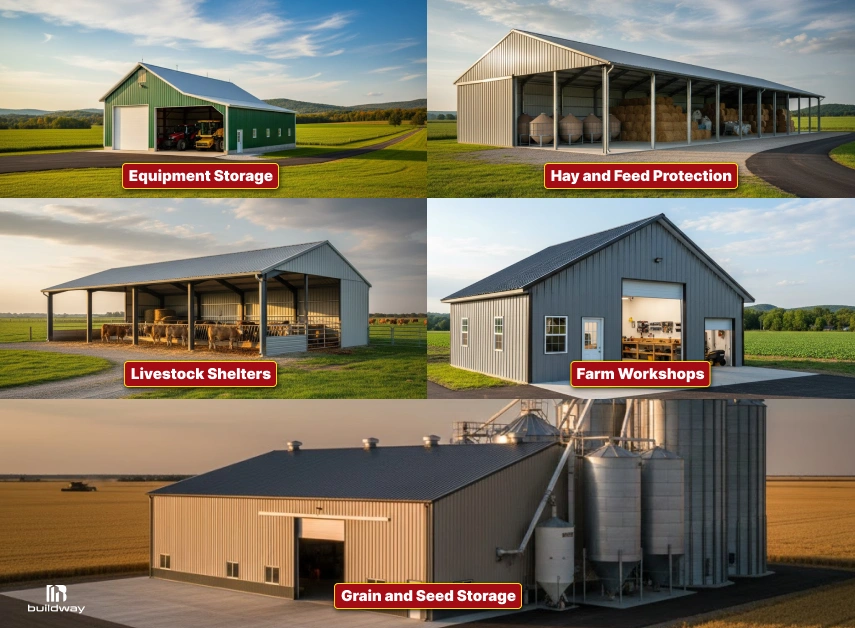
Steel buildings are a versatile solution for a wide range of farming needs. Here are some of the most common agricultural uses:
- Equipment Storage: Protect tractors, combines, and machinery from weather and theft.
- Hay and Feed Protection: Keep feed dry and safe from moisture damage and pests.
- Livestock Shelters: Provide durable, low-maintenance housing for cattle, horses, and other animals.
- Farm Workshops: Create functional spaces for repairs, fabrication, and daily maintenance tasks.
- Grain and Seed Storage: Safeguard your harvest with weather-tight, rodent-resistant storage options.
Steel Buildings vs Steel-Clad Wood Barns
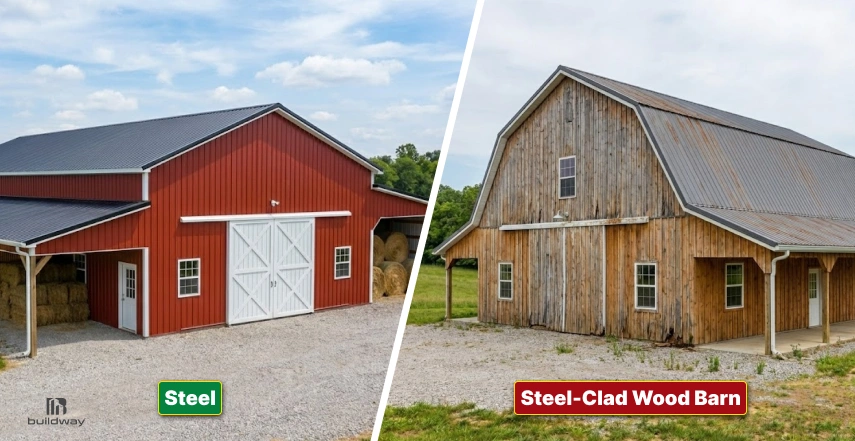
One of the most common misconceptions we encounter on farms is the assumption that metal siding equals a steel building. Many of the structures we’re asked to assess after storm damage look solid from the outside, until the wood framing underneath tells a very different story.
Agricultural Steel Buildings vs Other Farm Building Options
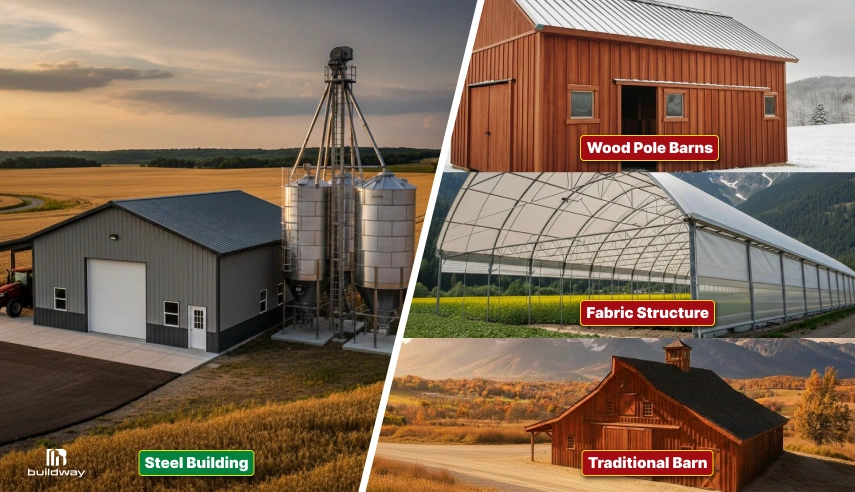
Building choices can have a big impact on how your farm runs, now and for years to come. From upfront costs to long-term upkeep, the type of structure you choose needs to deliver real value and hold up to daily farm demands.
Here’s a straightforward look at how steel buildings compare to traditional options where it really counts.
Steel Buildings vs Wood Pole Barns
| Feature | Steel Building | Wood Pole Barn |
| Lifespan | 40–60+ years | 15–30 years |
| Structural Strength | Engineered for loads | Depends on builder |
| Fire Risk | Non-combustible | High risk |
| Maintenance | Low | Moderate to high |
| Long-Term Cost | Lower over time | Higher due to repairs |
When Wood Still Makes Sense:
- Wood buildings can be a good choice for short-term use, especially if the structure isn’t expected to last for decades.
- They’re often more suitable for farms working with a limited budget and needing a lower upfront cost.
- For those with DIY building experience, wood may be easier to work with using basic tools and locally sourced materials.
When Steel Wins:
- Steel is the better option for farms looking to make a long-term investment in a durable, low-maintenance structure.
- It performs well in harsh climates, offering superior protection in areas with heavy snow, strong winds, or extreme temperatures.
- Steel buildings are often easier to get approved by insurance providers, thanks to their strength, fire resistance, and lower risk profile.
Steel Buildings vs Fabric / Tension Structures
| Feature | Steel Building | Fabric Structure |
| Snow & Wind Ratings | Certified per region | Often uncertified |
| UV Resistance | Excellent | Degrades over time |
| Insurance | Generally accepted | Often denied or rated higher |
| Lifespan | 40–60+ years | 10–20 years |
Fabric buildings may work for temporary hay or equipment storage, but long-term reliability and coverage limitations make steel a safer bet.
Steel Buildings vs Traditional Barns
| Feature | Steel Building | Traditional Barn |
| Upfront Cost | Higher | Moderate |
| Lifecycle Cost | Lower | High (upkeep) |
| Aesthetics | Modern, clean | Rustic charm |
| Practicality | Engineered, flexible | Often limited |
Wood barns are beautiful, but rarely practical for modern farm demands unless maintained religiously.
Cost Comparison: Upfront Price vs Lifetime Value
The lowest price upfront doesn’t always mean the best value. While wood may cost less initially, steel often delivers more over time through reduced maintenance, longer lifespan, and better durability. Here’s how the two options compare when you look beyond the sticker price.
Initial Shell & Erection Costs
- Steel agricultural buildings typically range from $10–$25 per square foot for the materials and basic shell.
- Installation or erection adds another $5–$10 per square foot, depending on the complexity of the design and local labor rates.
Important Cost Reality Check: Square footage alone is a poor predictor of final building cost. Two agricultural steel buildings with identical dimensions can vary significantly in price depending on:
- Required snow and wind loads
- Clear-span width and interior column-free design
- Door sizes, quantities, and placement
- Foundation design, soil conditions, and site prep
In our experience, engineering requirements and layout decisions often impact cost more than raw square footage. Pricing should always be evaluated in context, not as a flat per-square-foot comparison.
The real cost of a steel building isn’t just about square footage, it’s also about the foundation. Learn how to avoid expensive mistakes by choosing the right steel building foundation.
Maintenance Over 30–50 Years
- Steel buildings require very little maintenance over the long term.
- There’s no need for frequent painting, and issues like wood rot or post replacement are eliminated entirely.
- Steel roofing also lasts much longer than shingles, reducing future replacement costs.
Insurance Premiums & Risk
- Many engineered steel buildings qualify for lower insurance premiums due to their strength and durability.
- They offer better resistance to fire, wind, and storms, which can lead to fewer claims and better acceptance from insurance providers.
“Cheap Now, Expensive Later”
- That $20,000 pole barn might seem like a great deal today, but when it needs $15,000 in repairs a decade later, the true cost becomes clear.
- Steel buildings may cost more upfront, but they often pay off in longevity, reliability, and fewer surprise expenses over time.
Durability & Performance in Real Farm Conditions
After evaluating agricultural buildings across multiple snow zones, wind exposures, and soil conditions, one thing is consistent: buildings don’t fail because of bad intentions, they fail because they weren’t engineered for how farms actually use them.
Farm environments are demanding and steel buildings are built to take that beating and keep going strong. From weather protection to fire and pest resistance, here’s how steel performs where it really counts:
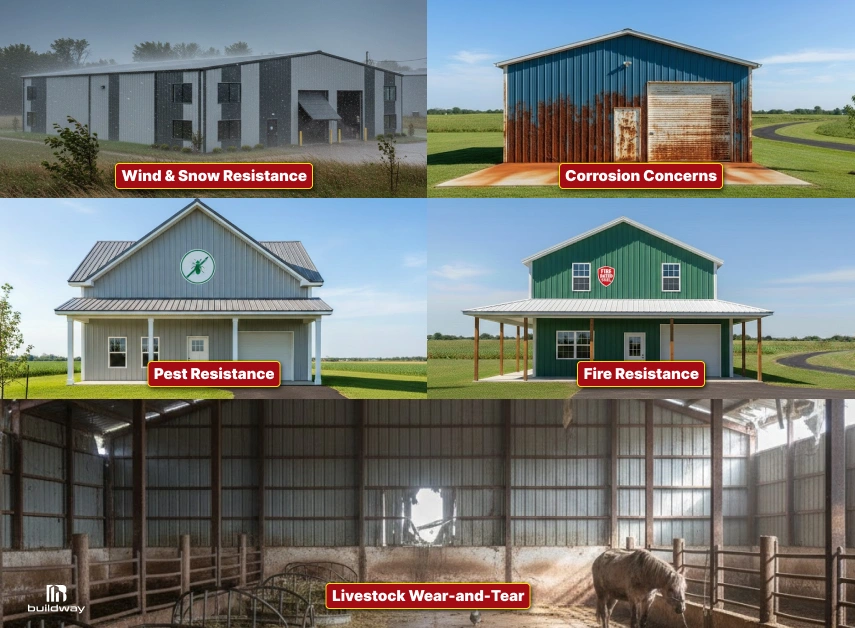
- Wind & Snow Resistance: Steel buildings are engineered to meet local wind and snow load requirements, giving you peace of mind in extreme conditions.
- Corrosion Concerns: Galvanized steel combined with proper site prep and ventilation helps prevent rust and extends the life of your building.
- Pest Resistance: With no wood components, steel buildings naturally resist damage from termites, rodents, and other pests.
- Fire Resistance: Steel is a non-combustible material, making it a safer option for storing hay, housing livestock, or operating equipment.
- Livestock Wear-and-Tear: Interior liners and kick plates can be added to protect steel walls from hooves, horns, and everyday livestock activity.
If you need a building that can handle real farm work and hold up for decades, steel delivers the strength and durability your operation depends on.
Many farmers assume that if a building looks sturdy on day one, it will last the test of time but that’s not always the case. Read more about the common myths that surround steel building durability in this related article.
Customization & Expandability
Modern farms aren’t one-size-fits-all and your buildings shouldn’t be either. Steel structures offer flexibility to grow and adapt with your operation, whether you’re upgrading equipment, adding storage, or changing how a space is used over time.
Here’s how steel buildings make customization and future expansion easy:
Clear-Span Interiors
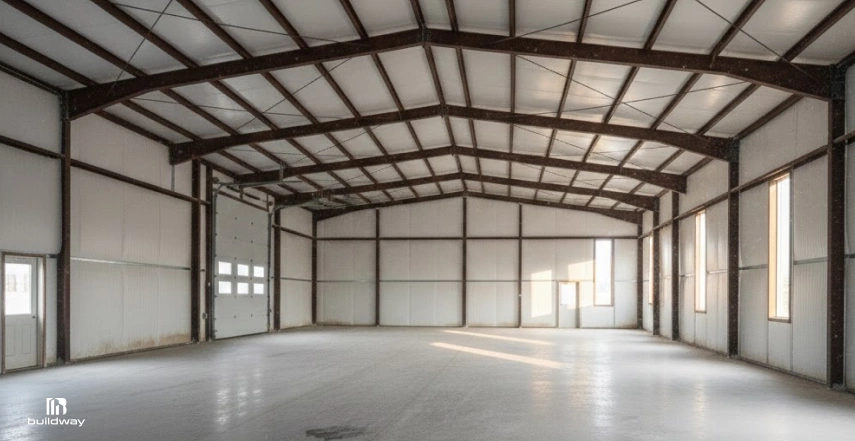
Steel buildings feature wide, open interiors with no interior columns, making it easy to store large machinery or create multi-use spaces.
- Future Expansions: Need more space later? It’s simple to add bays or extend the length of your steel building without starting from scratch.
- Door Sizes for Modern Equipment: Designed with today’s larger farm machinery in mind, steel buildings support oversized roll-up or sliding doors for easy access.
- Interior Retrofits: As your needs evolve, you can add insulation, lighting, pens, mezzanines, and other interior features at any time, without major reconstruction.
Whether you’re planning for today or thinking ahead, steel buildings give you the flexibility to grow and adapt with your farm.
Permits, Zoning, and Insurance Considerations
Navigating permits, zoning regulations, and insurance approvals can be one of the more time-consuming parts of building on a farm. Fortunately, steel buildings are often easier to get approved thanks to their engineered design and code compliance. Here’s how steel buildings help simplify the process:

- Engineered Drawings Included: Steel building kits come with certified engineered drawings, which zoning departments often require for permit approvals, saving time and reducing back-and-forth.
- Code Compliance: These structures are designed to meet IBC and local agricultural building codes, helping you stay compliant with regional requirements from day one.
- Insurance Carrier Preference: Because of their strength, fire resistance, and durability, steel buildings are often preferred by insurance providers, making the underwriting process smoother.
- Faster Permit Approvals: With clear documentation and standardized design, permits are often issued faster than for traditional wood or pole barns.
From permits to insurance, steel buildings help cut down on delays and give you a smoother path from planning to construction.
Pros and Cons of Agricultural Steel Buildings
Like any building option, steel comes with its own set of advantages and trade-offs. Understanding both sides can help you decide if it’s the right fit for your farm’s needs, budget, and long-term plans.
Here’s a quick breakdown of the key pros and cons to consider:
Pros of Agricultural Steel Buildings:
- Long service life: From steel agricultural buildings we’ve inspected and serviced after 20–40 years of daily farm use, properly engineered frames show minimal structural degradation when maintained correctly.
- Low ongoing maintenance: Compared to wood buildings we’re repeatedly asked to repair for rot, post failure, or pest damage, steel structures require far fewer structural interventions over their lifespan.
- Engineered structural reliability: These buildings are designed to meet specific snow, wind, and seismic loads, which is why we see them perform more consistently across different climates and exposure conditions.
- Favorable insurance profile: In projects where insurance requirements are a deciding factor, engineered steel buildings are more consistently accepted by carriers due to their non-combustible construction and documented load ratings.
Cons of Agricultural Steel Buildings:
- Higher upfront investment: Steel buildings often cost more initially than wood alternatives, especially once proper engineering and foundations are included.
- Foundation and site prep required: Unlike post-frame construction, steel buildings typically require concrete foundations, which adds cost and planning upfront.
- Permitting timelines can vary: In some municipalities, engineered buildings move faster. In others, additional reviews can extend approval timelines.
- Erection quality matters: A well-engineered steel building can still fail if improperly installed. Not all installers have the same experience with agricultural steel systems.
- Condensation must be addressed: Without proper insulation and ventilation, steel buildings can sweat. A solvable issue, but one that must be planned for.
Many of the issues we’re called in to troubleshoot on steel buildings aren’t material failures, they’re planning or installation oversights that could have been avoided with the right guidance upfront.
Steel agricultural buildings offer strength, durability, and long-term value, but they’re not perfect for every situation. By weighing the pros and cons, you can make a more informed decision based on what matters most for your farm.
When an Agricultural Steel Building Is the Best Choice And When It’s Not
Steel buildings offer durability, safety, and long-term value, but they’re not always the right solution for every farm or situation. Knowing when steel is the best fit (and when it might not be) can help you avoid unnecessary costs or limitations down the line.
Here’s a closer look at when an agricultural steel building makes the most sense and when another option might serve you better:
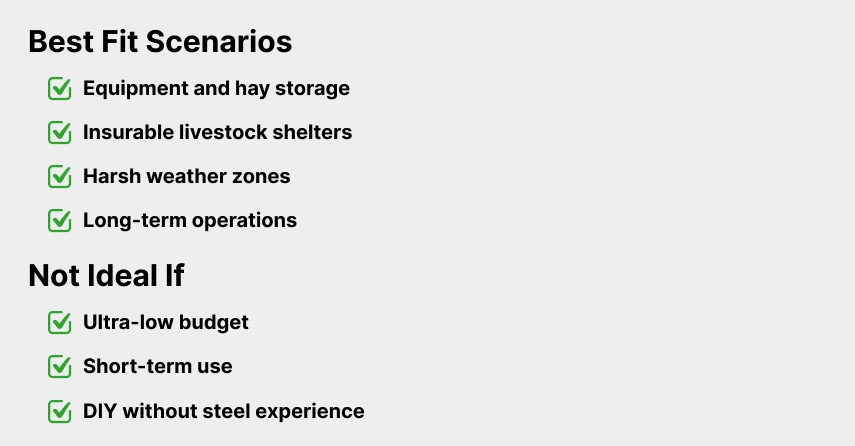
Best Fit Scenarios
- Equipment and hay storage: Large, open interiors make it easy to store bulky machinery and protect feed from moisture.
- Insurable livestock shelters: Steel buildings are often favored by insurers, offering safer, low-risk shelter options for animals.
- Harsh weather zones: Ideal for areas with high winds, snow loads, or wildfire risks thanks to their engineered strength.
- Long-term operations: Perfect for farmers planning to stay on the land for decades and looking for reduced maintenance over time.
Not Ideal If
- Ultra-low budget: If minimizing upfront cost is your top priority, wood or pole barns may be more accessible.
- Short-term use: For temporary setups or short-term land use, steel may offer more durability than needed.
- DIY without steel experience: While some steel kits are DIY-friendly, they often require special tools or contractor support to assemble correctly.
Steel buildings shine when you’re building for the long haul and need strength, safety, and value. But if you’re working on a tight budget, short timeline, or lack construction experience, traditional options might better suit your needs.
Choosing the Right Farm Building for the Long Term
The building you choose today will shape how your farm operates for decades. From protecting valuable equipment to housing livestock or storing hay, your structure needs to hold up to daily use, changing seasons, and long-term goals.
- Plan for the Next 20+ Years: If you’re building with the future in mind, steel buildings offer unmatched durability. They’re engineered to last 40–60+ years with minimal maintenance, making them ideal for long-term operations.
- Focus on Total Value: While the upfront investment may be higher than wood or pole barns, steel buildings often save you more over time with lower maintenance, fewer repairs, and better protection against the elements.
- Built to Adapt: As your farm grows, so can your building. Steel structures are easy to expand, customize, and retrofit, giving you the flexibility to meet your operation’s changing needs.
- Insurance and Peace of Mind: Steel buildings are often favored by insurance providers for their resistance to fire, pests, and extreme weather, giving you better coverage options and fewer risks to worry about.
Ready to Make the Right Choice? Download our Farm Building Comparison Checklist to compare options side by side and choose the structure that fits your farm’s future. Or contact us directly to clear out any queries you might have.
Frequently Asked Questions
1. How long do agricultural steel buildings last?
Agricultural steel buildings can last 40 to 60 years or longer with proper maintenance. Many are still in use after 50+ years, offering long-term durability that outperforms traditional structures.
2. Do steel buildings rust over time?
Modern steel buildings are made with galvanized or coated steel, which significantly reduces the risk of rust. Proper site preparation, drainage, and ventilation also play a key role in preventing corrosion.
3. Are steel buildings suitable for livestock?
Yes, steel buildings are an excellent choice for housing livestock. When outfitted with liners or kick plates, they stand up well to animal wear and tear. Adding proper insulation helps control moisture and reduces condensation, creating a healthier environment for animals.
4. Do steel buildings sweat or get condensation?
Uninsulated steel buildings can experience condensation, especially in humid conditions. This issue is easily resolved with quality insulation and proper ventilation, which prevent moisture buildup and interior sweating.
5. Are steel buildings worth the cost?
Yes, steel buildings are a smart long-term investment. While the upfront cost may be comparable or slightly higher than wood, steel offers lower maintenance, better durability, and potential insurance savings, making them cost-effective over the life of the structure.