
Most buyers underestimate two key factors when planning a steel building: hidden costs and time commitment. On paper, DIY kits often appear far more affordable than hiring a professional crew. However, once you account for equipment rentals, extra labor, permit delays, weather setbacks, and the value of your own time, the savings may not be as significant as they initially seem.
When evaluating a steel building kit upgrade installation, the real question becomes whether the potential cost savings outweigh the added responsibility, risk, and time investment. So how do you decide between a DIY and professional metal building approach?
It comes down to four key factors:
- Total cost (not just kit price)
- Time commitment
- Skill and safety
- Which upgrades you plan to add
There’s also a third option many buyers overlook: a hybrid approach that combines DIY labor with professional support where it matters most.
In this blog, we’ll break down real-world numbers, timelines, and upgrade considerations to help you decide whether a DIY steel building kit or a turn-key metal building solution makes the most sense for your project.
The Core Decision: DIY vs. Professional Steel Building Kit Upgrade Installation
Before understanding costs and timelines, it’s important to clearly define the two installation paths: DIY steel building kits and professional turn-key solutions, so you understand exactly what each option involves.
What Is a DIY Steel Building Kit?
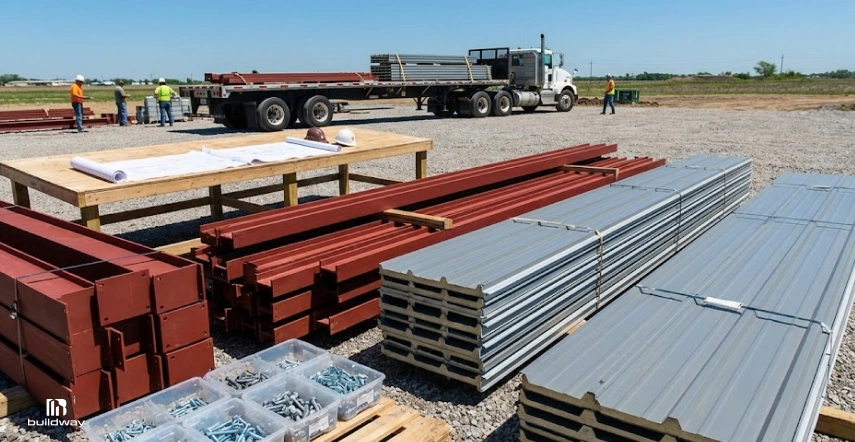
A DIY steel building kit is a pre-engineered structure delivered to your site with all the primary components needed for assembly. Instead of hiring a contractor for full installation, you take responsibility for coordinating the build and completing the construction yourself.
A DIY steel building kit includes:
- Pre-engineered steel components
- Framing, panels, and hardware
- Engineered plans for assembly
You’re responsible for:
- Foundation coordination
- Permits and inspections
- Equipment rental
- Assembly labor
- Scheduling helpers
DIY steel building kits are popular among:
- Homeowners building garages or workshops
- Farmers adding storage structures
- Budget-conscious buyers comfortable with construction
The biggest appeal? Lower upfront labor costs.
What Is a Turn-Key Metal Building?
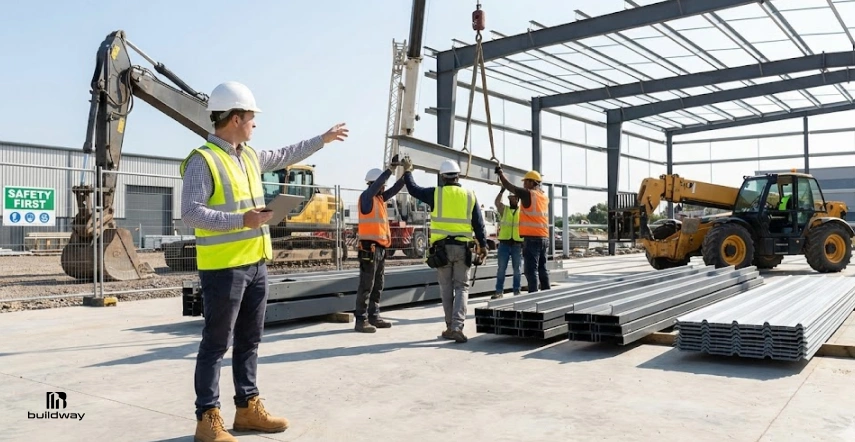
A turn-key metal building is a fully managed solution where a professional contractor handles the project from start to finish. Instead of coordinating labor, equipment, and scheduling yourself, you hire an experienced team to oversee site preparation, construction, and final installation.
A turn-key steel building solution includes:
- Site prep coordination
- Foundation
- Full professional metal building installation
- Crew, equipment, and scheduling
- Often labor warranty coverage
You essentially hire a metal building contractor who handles everything from start to finish.
This route is common for:
- Business owners on tight timelines
- Larger structures (40×60+)
- Buyers prioritizing safety and warranty protection
Here’s how we’ll compare them:
| Factor | DIY | Professional | Hybrid |
| Upfront Cost | Lower | Higher | Moderate |
| Timeline | Slower | Fast | Moderate |
| Skill Required | High | Low | Medium |
| Safety Risk | Higher | Lower | Medium |
Now let’s look at the biggest factor: cost.
Cost Breakdown: Where the Real Differences Show
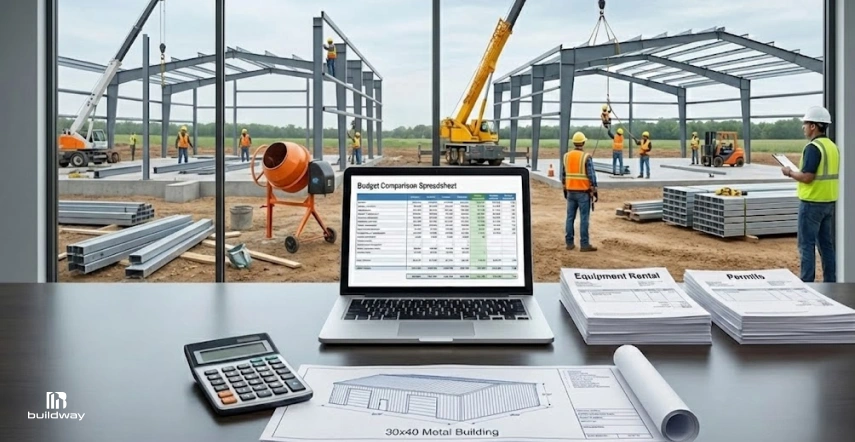
When comparing a DIY metal building install vs professional metal building installation, most buyers focus on labor savings alone. While labor is a major factor, it’s only one part of the total cost equation. Equipment rentals, permits, time investment, potential mistakes, warranty protection, and risk exposure can significantly impact your final budget.
To make an informed decision, you need to evaluate the full financial picture and not just the upfront installation quote.
Upfront Costs
The steel building kit itself usually costs the same whether you choose a DIY metal building install or hire professionals. The real difference in upfront pricing comes from labor, equipment, and project coordination, not the kit materials.
For example:
- A mid-size 30×40 metal building kit might range from $18,000–$25,000 for the kit (depending on gauge, snow load, upgrades).
- Professional installation labor often adds 25%–50% of the kit price.
- So installation labor for that 30×40 may range from $6,000–$12,000.
At first glance, DIY appears to save that entire amount.
But let’s keep going.
Hidden DIY Costs
This is where many DIY builders underestimate the true cost of installation. While skipping professional labor may seem like significant savings upfront, additional expenses often surface during the build and they can quickly narrow the price gap between DIY and professional metal building installation.
i) Equipment Rentals
You may need:
- Scissor lift: $200–$400 per day
- Forklift or telehandler: $300–$600 per day
- Concrete tools (if managing foundation): $100–$300 per day
If your project stretches over multiple weekends, those rental costs add up quickly.
ii) Permits & Inspections
Depending on location:
- Permit fees: $500–$2,000+
- Engineering adjustments if corrections are required
iii) Errors & Rework
Common DIY mistakes:
- Improper anchor bolt placement
- Panels installed out of square
- Misaligned framing
Corrections can mean:
- Delays
- Replacement materials
- Extra rental days
iv) Opportunity Cost
If you take time off work, that has value too. For example, two unpaid weeks off at $1,500/week = $3,000 in lost income. That narrows the “DIY savings” gap quickly.
If you’re specifically trying to determine whether DIY truly delivers meaningful savings, you may also want to review our breakdown of how much DIY metal building kits really save, where we analyze real-world cost scenarios in greater detail.
Warranty & Risk Differences
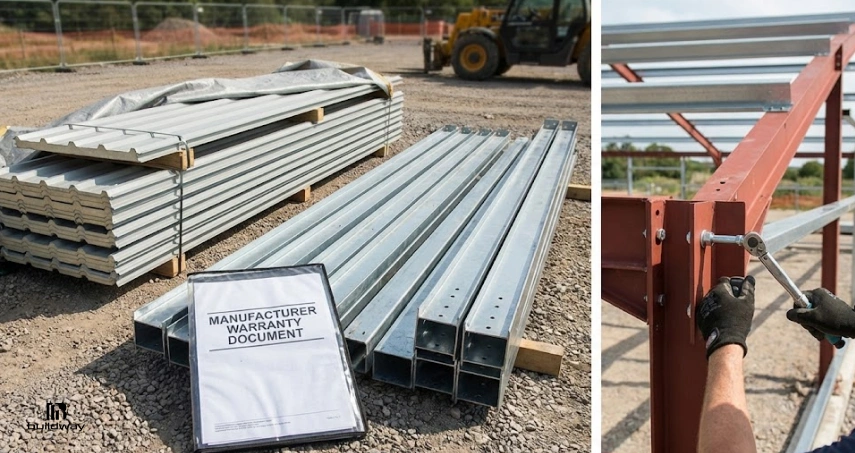
Most steel building manufacturers offer a material warranty covering defects in the components. However, this typically does not cover installation errors or labor issues: a key difference to consider when choosing between DIY and professional metal building installation.
However:
- Professional metal building installation often includes a labor warranty.
- Contractors carry insurance coverage.
- DIY errors may void certain warranties.
That risk factor alone is worth weighing carefully.
30×40 Example Cost Comparison
| Category | DIY | Hybrid | Professional |
| Kit | $22,000 | $22,000 | $22,000 |
| Labor | $0 | $6,000 | $10,000 |
| Equipment | $3,000 | $1,500 | Included |
| Permit/Fees | $1,200 | $1,200 | $1,200 |
| Mistakes/Overage | $2,000 | $1,000 | $0 |
| Total | $28,200 | $31,700 | $33,200 |
DIY installation can lower your total project cost, but once you account for equipment, time, and potential setbacks, the savings are often more modest than they first appear.
Time Commitment: Weekends vs Days
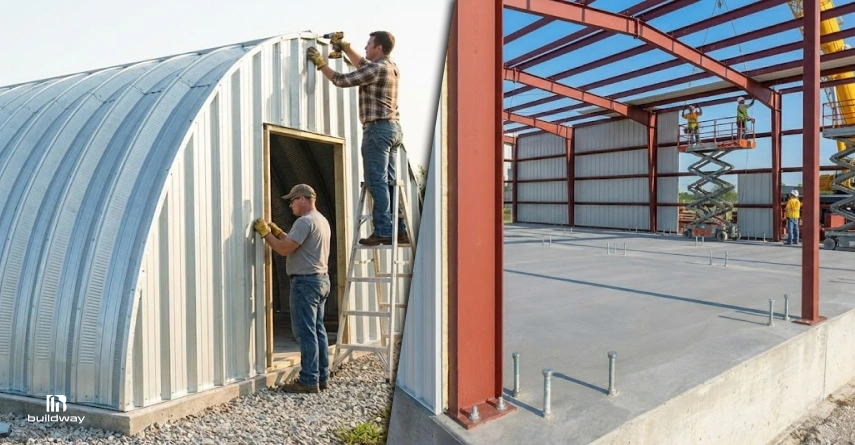
For many buyers, the biggest difference between DIY and professional metal building installation isn’t cost. It’s time. What may take weeks of weekend work for a DIY builder can often be completed in just a few days by an experienced crew with the right equipment and coordination.
i) Typical DIY Timelines
Small building (20×20–24×30):
- 2–4 weekends
- 2–4 helpers required
Medium building (30×40–40×60):
- 4–8+ weeks
- Weather delays common
- Coordination challenges
If you’re learning as you go, expect longer timelines.
ii) Professional Crew Timelines
Experienced crews typically complete:
- Small building: 2–3 days
- Medium building: 3–7 days
They work full days with proper equipment and coordination. If you’re running a business or need fast occupancy, that speed has real value.
Skill Level & Safety: Be Honest About Your Experience
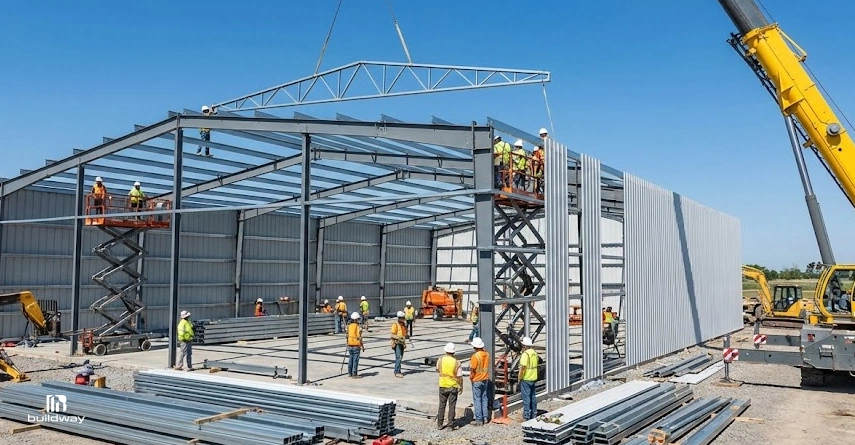
Steel buildings are designed for efficient assembly, but they require precision, proper equipment, and a solid understanding of structural plans. Small mistakes in alignment, anchoring, or panel installation can quickly turn into costly corrections or serious safety risks. Before choosing a DIY metal building install, it’s important to honestly assess your skill level and comfort working in demanding conditions.
Skills Needed for DIY
Building a metal home kit yourself is a structural build that demands precision, planning, and physical capability.
Before choosing the DIY route, you should feel confident with:
- Reading engineered building plans and understanding load requirements
- Squaring, leveling, and anchoring frames accurately to foundation specs
- Operating lifts or working safely at heights during roof and panel installation
- Handling and positioning heavy steel panels without damaging materials
- Following manufacturer installation sequences exactly as specified
This is not the same as assembling a backyard shed. Metal home kits involve structural steel components, code compliance, and engineered tolerances that must be installed correctly the first time.
If you’re unsure about any of these skills, consider a hybrid approach or professional support for critical stages.
Safety Concerns
Metal building components are strong but they’re also heavy, oversized, and difficult to control without proper experience. Steel panels in particular can act like sails in windy conditions, creating serious hazards during installation.
Common risks include:
- Falls from height during roof and panel installation
- Crushed fingers or limbs when positioning structural steel
- Wind lifting unsecured panels, causing loss of control
- Equipment-related injuries involving lifts, cranes, or forklifts
These risks can result in serious injury, project delays, and costly liability.
Professional installation crews are typically trained in:
- OSHA safety protocols
- Proper fall protection systems
- Safe heavy equipment operation
- Team-based lifting and panel control techniques
That level of training significantly reduces injury risk, job-site accidents, and potential liability issues. If you’re considering a DIY or hybrid build, safety planning should be treated as a top priority and not as an afterthought.
When Hiring Pros Makes Sense
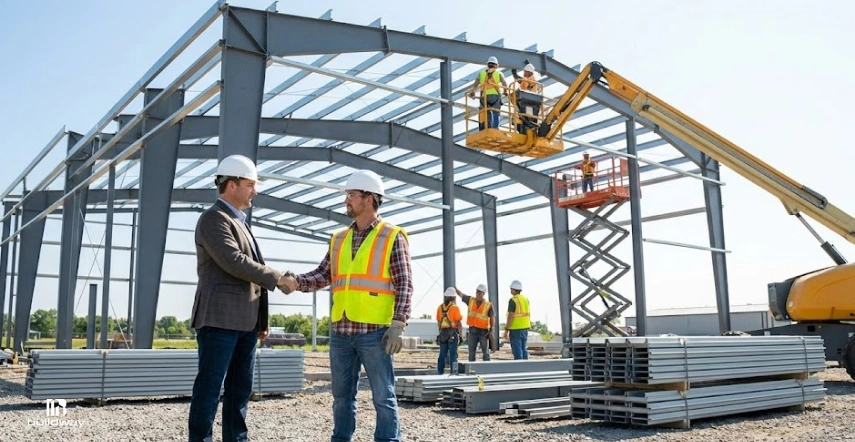
While many owner-builders successfully manage parts of their project, there are situations where professional installation is the smarter and safer choice. Hiring experienced crews is strongly recommended if:
- You have complex rooflines that require precise alignment and advanced framing techniques
- The building span exceeds 40 feet, increasing structural complexity and lift requirements
- You’re installing commercial-grade doors or specialty openings that demand exact measurements
- You’re working on a strict deadline with limited room for delays
- The building will generate revenue, such as rental property, workshop space, or commercial use
In these scenarios, mistakes can be costly. Not just in repairs, but in lost time and income.
A turn-key steel building solution provides coordinated installation, professional oversight, and schedule efficiency. For higher-complexity projects, this approach often protects both your timeline and your long-term investment.
What Upgrades Are Worth It And Who Should Install Them?
Not every metal building upgrade carries the same level of complexity or risk. Some improvements are manageable for experienced DIY builders, while others directly impact structural integrity, energy efficiency, or code compliance and are better handled by professionals.
Understanding which upgrades you can confidently install and which require expert oversight can help you control costs without compromising performance.
1. Insulation
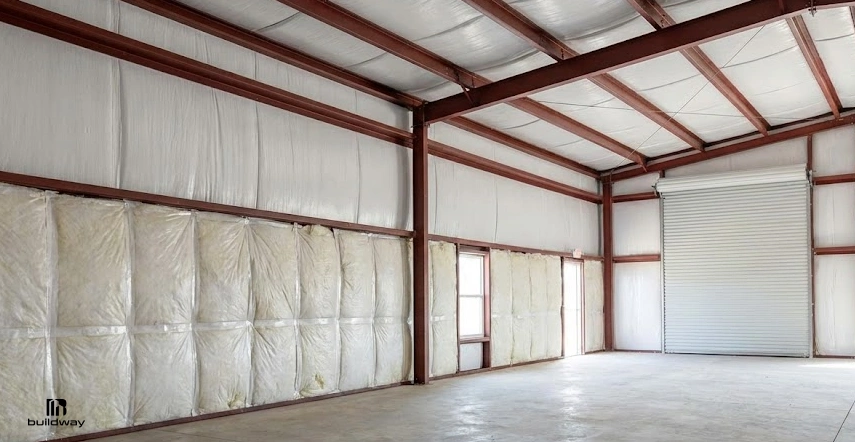
Insulation plays a major role in the comfort, energy efficiency, and long-term performance of your steel building. In fact, many owners underestimate how quickly metal buildings can lose heat without proper insulation. If you’re evaluating insulation options, it’s worth understanding why most metal buildings lose heat fast and the insulation fixes many owners miss before deciding whether to install it yourself.
Choosing the right material and deciding whether to install it yourself or hire a professional depends on your budget, climate, and skill level. There are several steel building insulation options to consider:
There are multiple steel building insulation options:
- Roll insulation (DIY-friendly with patience)
- Rigid board insulation
- Spray foam (professional strongly recommended)
Spray foam requires specialized equipment and expertise. Poor application can trap moisture and reduce performance.
2. Anchoring & Foundation
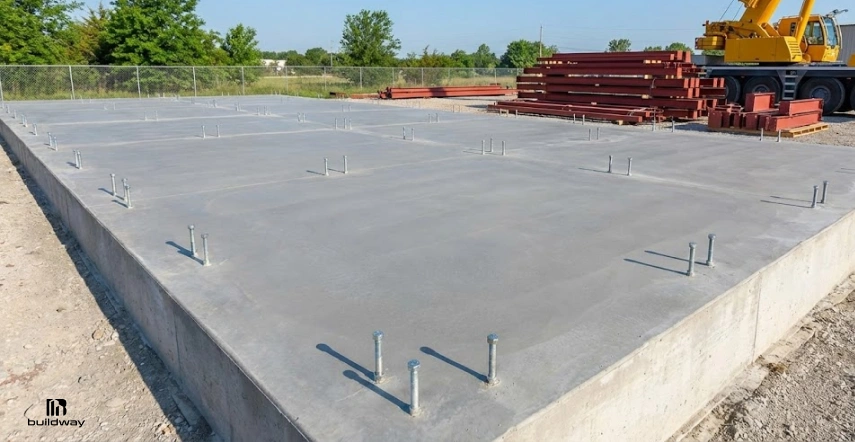
Your foundation is a critical structural component of your metal home. Anchor bolts must align precisely with engineered plans, and even small placement errors can lead to serious consequences, including:
- Failed inspections
- Voided warranties
- Reduced wind resistance and structural integrity
Because of the precision required, many DIY builders choose to hire professionals for foundation and anchoring work, even if they handle the rest of the build themselves.
3. Doors, Windows & Finish Options
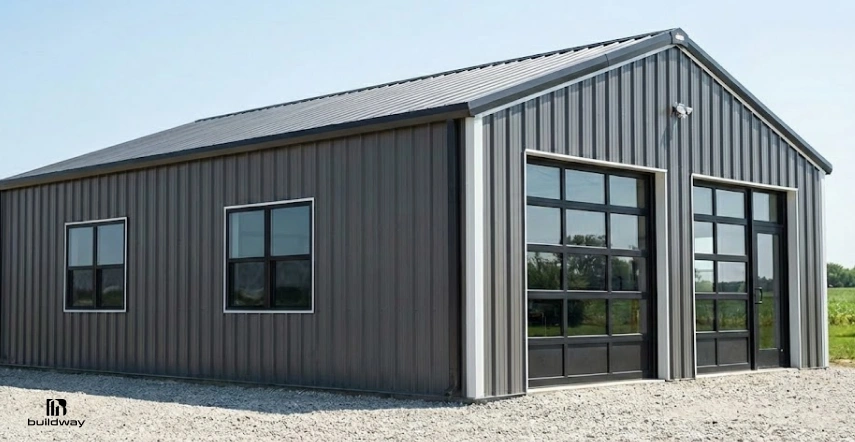
Door, window, and interior finish installations vary widely in complexity. Some components are manageable for experienced DIY builders, while others require professional precision to ensure proper fit, insulation, and long-term performance.
Here’s how they typically break down:
- Roll-up doors: Often manageable as a DIY project if you’re comfortable with measurements, alignment, and hardware installation.
- Framed commercial storefront doors: Professional installation is strongly recommended. These systems require exact framing, structural reinforcement, weather sealing, and precise alignment to meet code and maintain energy efficiency.
- Interior framing and drywall: Many owner-builders handle basic framing, but achieving straight walls, proper insulation, and clean drywall finishing takes experience and patience.
Choosing the right level of professional involvement for these finish elements can improve energy efficiency, appearance, and long-term durability—while still allowing you to manage costs where appropriate.
4. Electrical & Plumbing Add-Ons
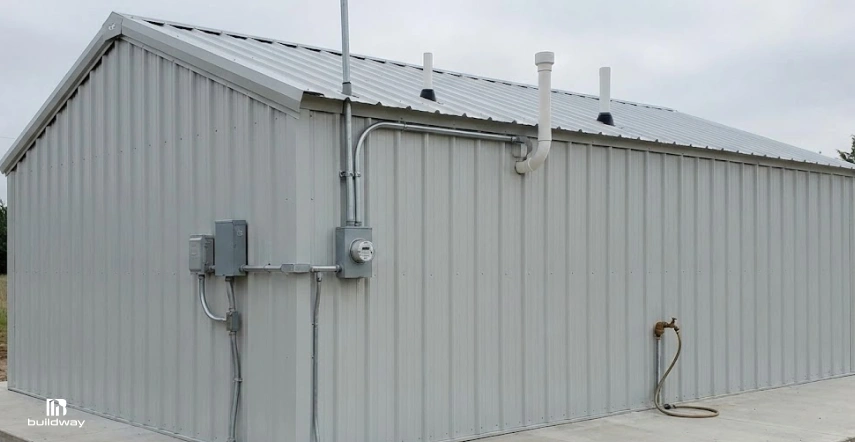
Electrical and plumbing installations are almost always best handled by licensed professionals. These systems are highly regulated and directly tied to safety, inspections, and long-term performance.
They typically require:
- Proper permits and inspections
- Strict code compliance
- Licensed electricians and plumbers
Mistakes in these areas can lead to failed inspections, fire hazards, water damage, or costly repairs down the line. For most metal home builds, professional installation isn’t just recommended, it’s essential.
The Hybrid Approach: Best of Both Worlds
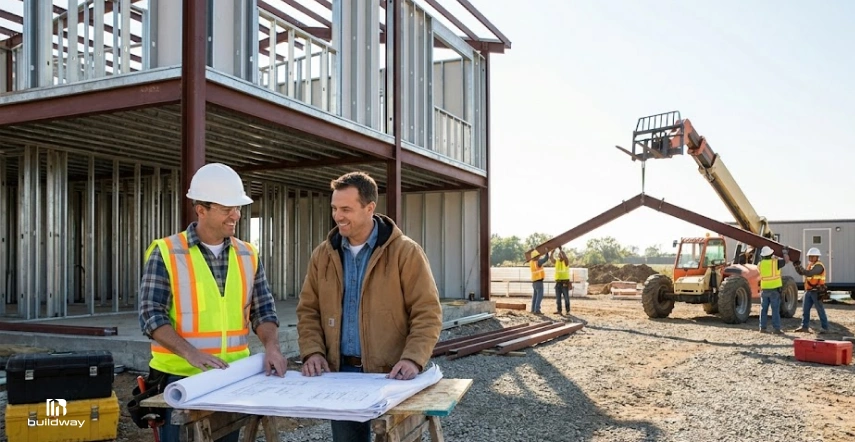
Not every metal home build has to be fully DIY or fully contractor-managed. Many owner-builders choose a hybrid approach, combining professional expertise with hands-on involvement.
This middle-ground strategy allows you to stay in control of your budget while bringing in licensed professionals for high-risk or highly technical phases of the project.
For example, some builders:
- Hire professionals for foundation work but assemble the metal shell themselves
- Handle interior framing personally while bringing in a contractor for spray foam insulation
- Complete most of the build independently but schedule licensed contractors for inspection checkpoints
By strategically dividing responsibilities, you can:
- Reduce labor costs without sacrificing quality
- Maintain structural integrity in critical areas
- Control risk by outsourcing complex or code-sensitive tasks
- Stay actively involved in your project timeline
For medium-sized metal home projects, the hybrid model often delivers the strongest balance of savings, safety, and efficiency. It provides the cost advantages of DIY construction while preserving the confidence that comes from professional oversight where it matters most.
Decision Matrix: Which Option Fits Your Project?
| Factor | DIY | Hybrid | Pro |
| Budget | Lowest upfront | Moderate | Highest |
| Time | Slow | Moderate | Fast |
| Skill Required | High | Medium | Low |
| Safety Risk | Higher | Medium | Lowest |
| Warranty Protection | Limited | Partial | Strongest |
If you’re building a small personal workshop and enjoy construction projects, DIY may be worth it. If you’re constructing a commercial facility or large-span structure, professional metal building installation usually provides better long-term value.
Download the Steel Building Installation Decision Checklist
Still unsure which direction fits your situation? Download our Steel Building Installation Decision Checklist (PDF) to evaluate:
- Budget planning worksheet
- Skill self-assessment guide
- Timeline estimator
- Upgrade priority planner
It’s designed to help you confidently decide between DIY metal building install, hybrid, or a full turn-key steel building solution.
Or, if you’re ready to compare numbers directly, request a Free Installation Quote and see what professional installation would cost for your specific project.
Choosing the Right Installation Path for Your Steel Building
The decision between a DIY vs Pro metal building installation isn’t just about cutting costs. It’s about finding the right balance between budget, timeline, skill level, safety, and long-term performance.
While DIY steel building kits can reduce upfront labor expenses, they require significant time, coordination, and construction experience. On the other hand, professional metal building installation offers speed, safety, warranty protection, and reduced risk, often making it the smarter choice for larger, revenue-generating, or time-sensitive projects.
Before you decide, take a realistic look at your:
- Construction experience and comfort working at heights
- Available time and helper support
- Equipment access and rental costs
- Upgrade plans (insulation, foundation, electrical, doors)
- Tolerance for risk and potential delays
Some projects benefit from a full turn-key steel building solution. Others work well with a hybrid approach that combines DIY effort with professional oversight where it matters most.
In the end, the right choice is the one that protects your investment, keeps your project on schedule, and gives you confidence in the building’s long-term durability. Choose the path that delivers not just savings but peace of mind too
FAQs: DIY vs Professional Metal Building Installation
1. Can DIY really save money on a steel building kit?
Yes, DIY steel building kits can save money, primarily by eliminating professional labor costs. However, savings are often smaller than expected once you factor in equipment rentals, permit fees, potential mistakes, and the value of your time. DIY reduces upfront labor expenses but increases time commitment and risk.
2. How long does DIY steel building installation take?
DIY installation timelines depend on building size and experience level. A small metal building (such as a 20×20 or 24×30) typically takes 2–4 weekends. Medium-sized projects like a 30×40 building often require 4–8+ weeks, especially when accounting for weather delays and limited weekend work schedules.
3. Is professional metal building installation safer?
Yes, professional metal building installation is generally safer. Licensed crews follow structured safety procedures, use proper lifting equipment, and carry insurance coverage. This reduces the risk of injury, structural errors, and liability issues compared to a DIY metal building install.
4. What upgrades should be installed professionally?
Certain upgrades are best handled by professionals. These include spray foam insulation, foundation and anchor bolt installation, large-span structural framing, electrical wiring, and plumbing. These components affect structural integrity, code compliance, and long-term performance.
5. What’s the best option for a 30×40 metal building?
For many buyers, a hybrid approach works best for a 30×40 metal building. Hiring professionals for the foundation and structural components while handling some assembly yourself can balance cost and control. If the building supports business operations or tight deadlines, full professional installation may offer better long-term value.