
At Buildway, we’ve helped hundreds of customers: farmers, commercial developers, warehouse owners, and DIY builders, plan and execute steel building projects. And one trend we’ve seen again and again? People get blindsided by costs that weren’t mentioned upfront. These metal building kit hidden costs are one of the biggest reasons projects go over budget.
It’s no one’s fault, really. Most manufacturers advertise attractive “per-square-foot” pricing that looks super affordable on paper like $18 or $22/sq ft. But here’s the truth: that price only covers the base kit and ignores several hidden building costs that show up later in the project.. What’s not included? The stuff you need to actually build and use your structure like the foundation, insulation, doors, labor, equipment, and more.
Many of our clients tell us, “If I had known about these hidden costs earlier, I would’ve budgeted completely differently.” The most common metal building kit hidden costs that buyers don’t realize until construction begins. That’s why we created this blog, so you can plan smart, avoid costly surprises, and have a building project you’re proud of (and not over-budget on).
Why Sticker Price is not Equal to Final Cost?
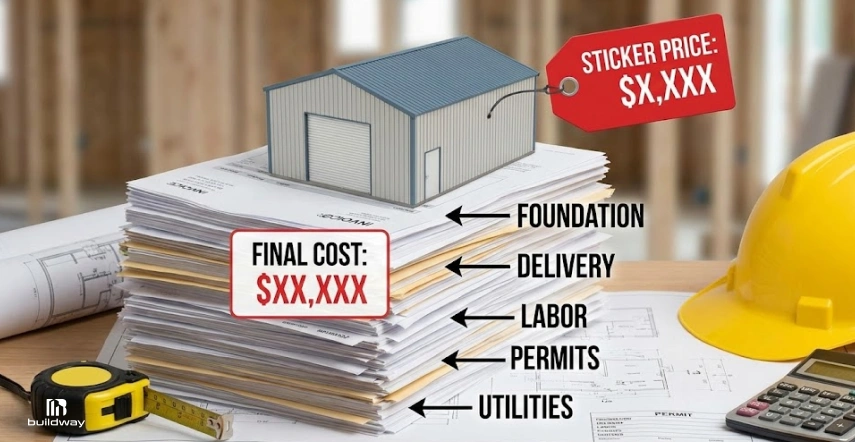
We need to shift the way you look at steel building quotes. If you’re staring at a $40,000 quote for a 2,000 sq ft metal building and thinking, “Wow, only $20 per square foot?.” Pause.
That price typically includes:
- The metal structure (frames, panels)
- Standard fasteners and hardware
- Assembly instructions
What it doesn’t include:
- The concrete foundation it sits on
- The equipment to unload or assemble it
- Labor costs to erect the building
- Permits, drawings, or engineering stamps
- Electrical, plumbing, HVAC, or interior finish
So why do manufacturers do this?
Simple: It makes the price look more appealing and keeps them competitive in a crowded marketplace. It’s not a scam, it’s just partial information.
But what we’ve seen at Buildway is that these “missing” line items can double your budget if you’re not careful. That’s why we educate our clients from day one, not just on what they’re buying, but on everything else they’ll need to complete the build.
Metal Building Kit Hidden Costs That Don’t Show Up in Quotes
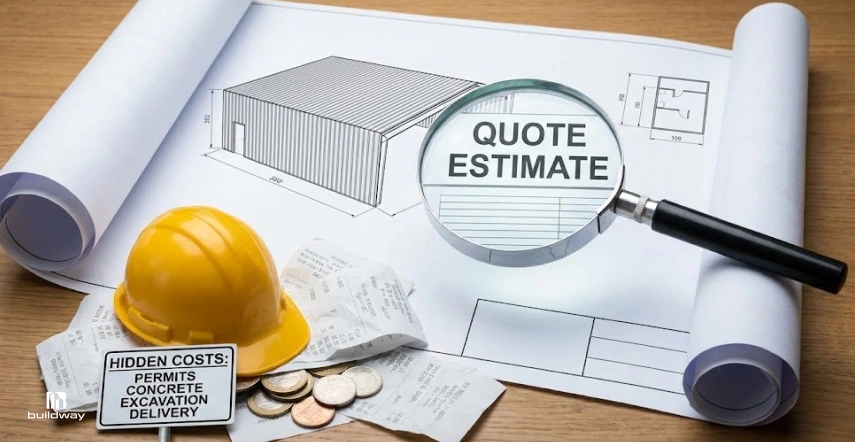
This next section breaks down the hidden and often-overlooked costs you should plan for before you buy a kit. We’ve included examples, industry averages, and real-life insights from Buildway’s day-to-day client interactions.
1. Foundation & Site Preparation Costs
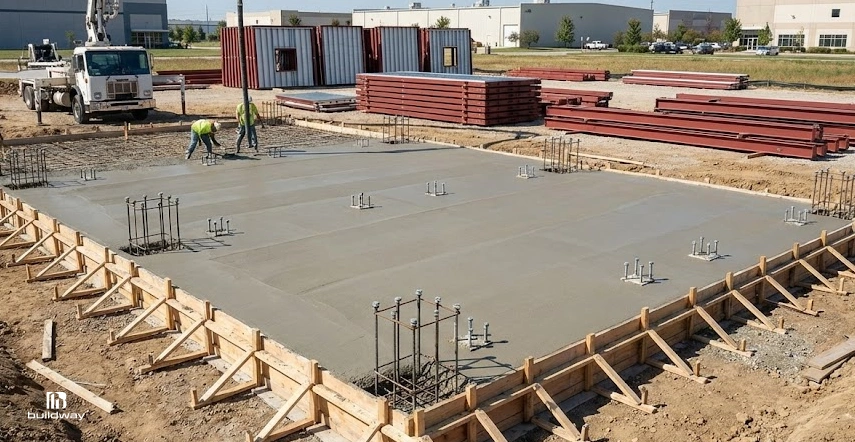
Let’s start at ground level, literally. No matter how great your metal building is, it needs a solid foundation. And that foundation is almost never included in the kit price. Foundation work is often the largest of all hidden costs of steel buildings, especially on uneven or rocky sites.
Costs You Need to Consider:
1. Concrete Slab vs. Pier Footing:
- A full slab foundation is common for garages or warehouses.
- Pier footings are used when building on uneven or rocky terrain.
- Cost: $5–$12/sq ft depending on slab thickness and local rates.
2. Soil Testing & Geotechnical Reports:
- Especially important for larger structures or questionable soil.
- A soil test helps engineers design the proper foundation and avoid settling/cracking later.
- Cost: $800–$2,500+
3. Excavation, Grading & Drainage:
- Uneven land? You’ll need to level it and manage runoff water.
- If your site floods or holds water, that’s a future disaster waiting to happen.
- Cost: Varies widely by site, but often $3,000–$10,000+
4. Rebar, Anchor Bolts, Templates:
- Crucial for anchoring the building properly.
- These are not included in most kits unless specifically added.
5. Land Clearing:
- Trees, rocks, or debris removal.
- Can range from a few hundred to several thousand dollars depending on the lot.
Buildway Client Story: “One of our buyers in Colorado budgeted $35,000 total for their 40×60 building. But their rocky, sloped site added $18,000 in excavation and pier footings. It wasn’t the kit, it was the ground that cost them.” This is a classic example of a hidden cost that buyers rarely anticipate when reviewing kit pricing.
Buyer Tip: Ask your dealer if foundation drawings are included. Then confirm, in writing, who is responsible for site prep and foundation work.
2. Delivery & Logistics Fees
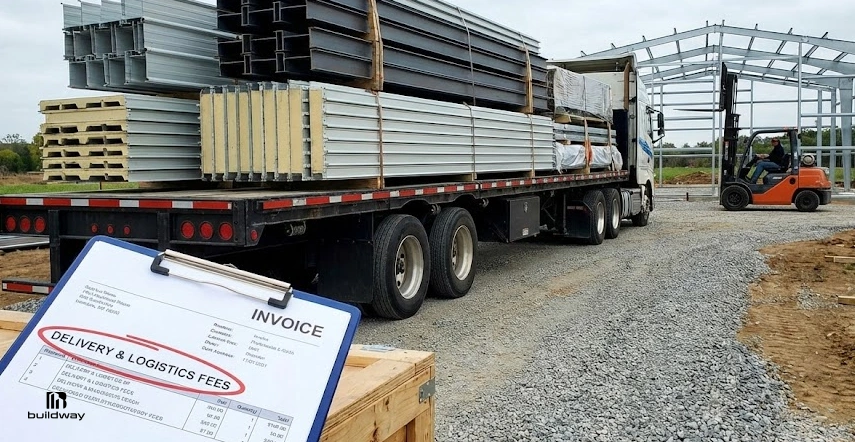
Metal building kits are heavy, oversized, and require specialized handling. While some manufacturers advertise “free delivery,” that term usually comes with fine print.
Hidden Costs to Watch For:
- “Free” Delivery Zones: Most include delivery within 100–150 miles. Beyond that, expect $3–$8 per mile.
- Rural Access Challenges: Narrow roads, soft ground, or lack of turnaround space can add time and cost. May require smaller vehicles, spotters, or extra coordination.
- Permits for Oversized Loads: Some states charge for wide or tall load permits, depending on the components.
- Fuel Surcharges: These often aren’t visible until the final invoice.
- Unloading Equipment: Most deliveries are curbside. You are responsible for unloading. You may need a forklift, telehandler, or crane on-site.
Real Insight: “We had a buyer who lived 180 miles from the supplier. They assumed delivery was covered. In the end, between fuel, permits, and unloading rental, they spent an extra $3,700.” While some manufacturers advertise ‘free delivery,’ these claims often mask additional hidden building costs buried in the fine print.
3. Installation, Labor & Equipment Costs
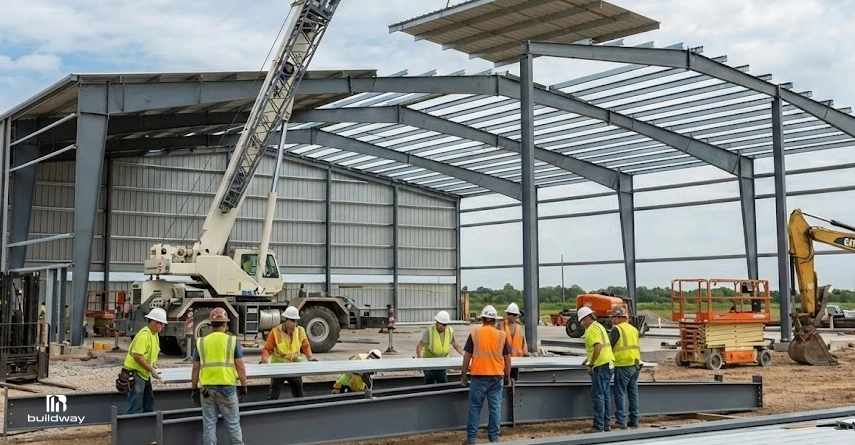
Your building won’t assemble itself. Even experienced DIYers often underestimate how much effort (and muscle) it takes to get that kit from flat-packed to fully standing. Labor and equipment are among the most underestimated hidden costs of steel buildings. Key Labor & Equipment Considerations:
Erection Crews vs. General Contractors:
- Steel erection crews are specialists. They work faster and safer.
- A general GC may take longer and cost more if unfamiliar with prefab kits.
Crane & Lift Rentals:
- Especially for larger buildings, cranes are a must.
- Cost: $500–$1,200/day depending on region and equipment.
Labor Rates:
- Average steel building erection costs range from $6–$12 per sq ft.
- A 2,000 sq ft building? Expect $12,000–$24,000 just for labor.
Weather & Delays:
- Wind, rain, snow, or high temps can delay builds.
- Delay = more cost.
Site Coordination: Think porta-potties, dumpsters, security fencing, etc., all extra.
Buildway Pro Tip: “We always advise clients to get a local erection quote before they commit to a kit. Too many folks buy first, then realize the closest crew is booked for twice their budget.”
4. Engineering, Permits & Code Compliance
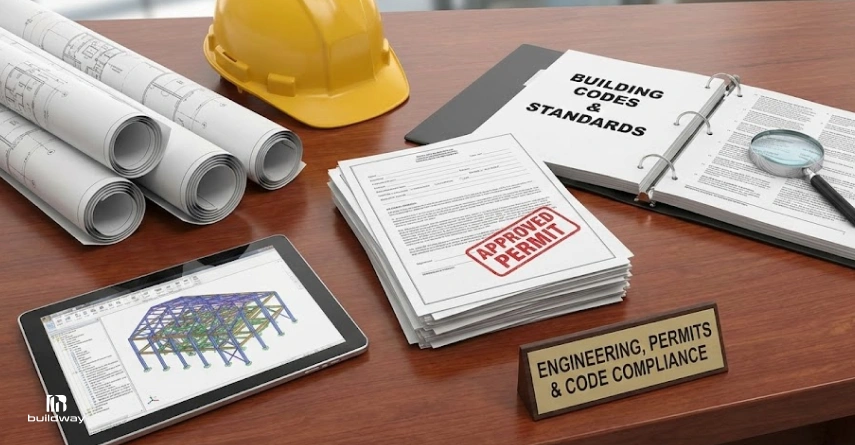
If you want your building to pass inspection (and avoid fines or legal issues), you’ll need to meet local building codes. This includes snow load, wind load, and seismic requirements, which vary by state, and sometimes by zip code. What’s Usually Needed:
Structural Engineering Stamp:
- Required by building departments for plan approval.
- Cost: $800–$2,000+
Architectural Drawings:
- Especially if you’re planning offices, plumbing, or interior buildouts.
- Cost: $1,000–$5,000+
Permit Fees:
- City and county fees for plan review and inspection.
- Cost: $500–$5,000 depending on project size and location.
Revisions & Re-Engineering:
- If you change your design mid-way or fail an inspection, you may need to re-draw and re-submit.
Energy Code Compliance:
- States like California and New York require strict energy calculations and insulation details.
Buildway Note: “We always tell clients: give us your zip code first. We check codes before quoting so you don’t end up paying to redesign after permitting rejects your plans.”
5. Customization & Upgrade Add-Ons
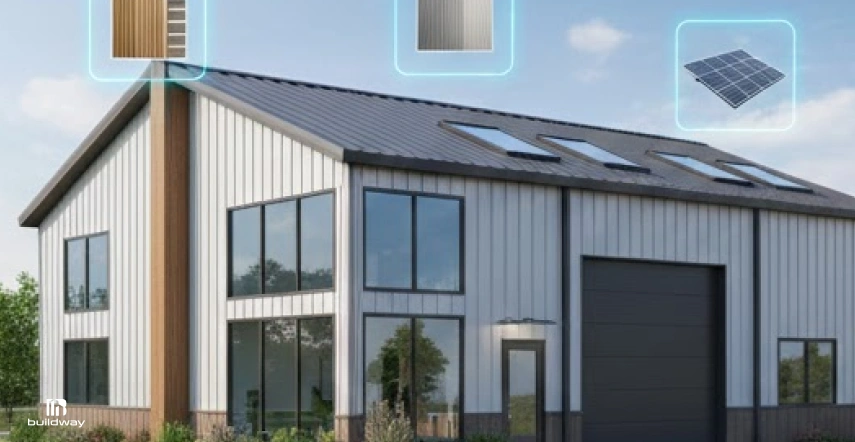
The base kit is like buying a car with no upgrades. Want air conditioning, better windows, or better soundproofing? All extra. Common Add-Ons:
Insulation:
- Vital for energy efficiency and comfort.
- Types: Fiberglass, spray foam, or insulated panels.
- R-Value: The higher, the better for your climate.
- Cost: $1.50–$5/sq ft installed.
Windows, Doors, Skylights:
- Standard kits may include 1–2 roll-up doors.
- Additional framed openings cost more.
Gutters, Vents, Downspouts:
- Often not included unless requested.
- Essential for water drainage and air flow.
Custom Colors, Roof Pitches, Trim Packages:
- Aesthetic upgrades that improve curb appeal and resale value.
Re-Engineering Fees:
- Adding features later often requires re-calculating loads and code compliance.
Pro Insight: “We recommend locking in upgrades during design. Adding them after ordering the kit can cost 25–50% more, plus delay shipping.”
6. Material Price Fluctuations & Timing Risks
Steel is a global commodity. Prices can change weekly, even daily, depending on demand, tariffs, and supply chain issues.
What You Need to Know:
- Quote Expiration:
- Most suppliers honor quotes for 15–30 days.
- After that, prices may increase.
- Price Locks:
- Some manufacturers offer “locked” pricing for a fee.
- Worth considering if your build is 60+ days out.
- Tariff Impacts: U.S. import tariffs on Chinese steel have created volatility in recent years.
- Lead Times: During peak season, fabrication can take 8–12 weeks or more.
Buildway Advice: “Get everything in writing. If your supplier says the price is ‘locked,’ ask how long and what happens if steel prices spike.”
7. Utilities & Interior Build-Out Costs
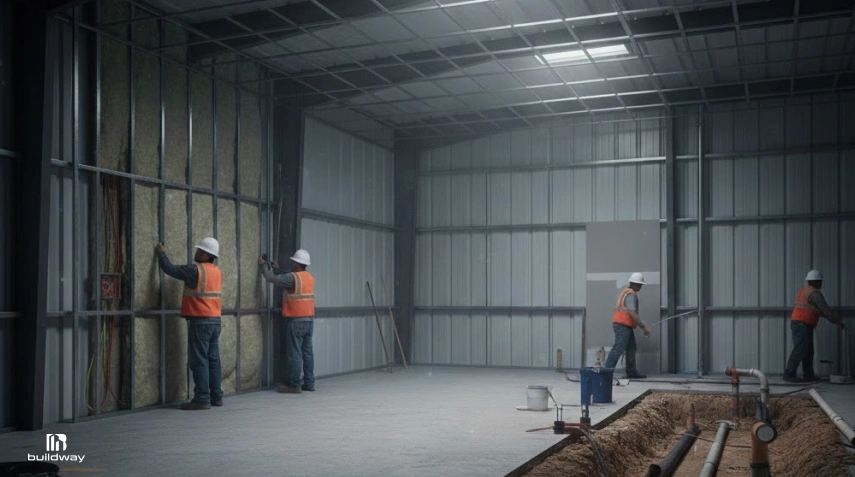
Metal buildings are often just a shell. Making them livable or usable takes significant additional work.
Common Interior Costs:
- Electrical Wiring: This covers lighting, power outlets, electrical panels, and backup generators, with costs typically ranging from $5,000 to $25,000, depending on the size and complexity of the building.
- Plumbing & Water Access: Required for bathrooms, break rooms, and kitchens, with additional costs often coming from trenching and connecting to existing water or sewer lines.
- HVAC or Climate Control: Especially needed in warehouses, ag buildings, or workshops.
- Interior Walls, Offices, Ceilings: Building out office space? Count on drywall, insulation, flooring, paint, etc.
This isn’t a hidden cost in the quote, but it’s the most underestimated. Many buyers spend as much on the interior as they do on the kit.
Hidden Cost Summary Table
| Hidden Cost Category | Typical Cost Range | Why Buyers Miss It |
| Foundation & Site Prep | $8,000 – $25,000+ | Assumed included or DIY |
| Delivery & Logistics | $500 – $5,000+ | Misleading “free delivery” claims |
| Installation & Labor | $5 – $15/sq ft | Kit ≠ assembly |
| Permits & Engineering | $1,000 – $6,000+ | Not mentioned unless you ask |
| Customizations & Upgrades | $3,000 – $15,000+ | Buyers expect standard features |
| Steel Price Volatility | 5% – 20% swings | Quotes expire fast |
| Utilities & Interior Build-Out | $10,000 – $50,000+ | Not included in base quote |
Real-World Buyer Takeaways (Before You Buy)
Before committing to a metal building kit, use the checklist below to avoid unexpected costs and budget overruns. These are the same steps we recommend to Buildway customers every day.
- Ask for a fully itemized quote, not just a per-square-foot price.
- Clearly confirm what’s included and what’s excluded in writing.
- Verify your delivery zone, unloading responsibilities, and whether foundation work is included.
- Get a labor quote from a local steel erection crew before purchasing the kit.
- Set aside a 15–25% contingency budget to cover unforeseen expenses.
- Lock in your steel pricing and delivery timeline to avoid market-related increases.
- Confirm engineering stamps, drawings, and permit requirements specific to your location.
Following these steps upfront can save you thousands and prevent costly delays once your project is underway.
Avoid Costly Surprises
Don’t let a low sticker price fool you. Metal building kits are a great investment, but only when you know what you’re really paying for.
- Need help reviewing a quote? Request a second-opinion from Buildway’s experts.
- Want a checklist of all hidden costs? Download our Metal Building Cost Guide.
Plan ahead, ask questions, and build with confidence.
FAQ’s
1. Are metal building kits cheaper than traditional construction?
Yes, generally. Metal building kits are typically more affordable than traditional construction, but only when you’re comparing equivalent costs. Be sure to account for all hidden expenses to get a true comparison.
2. What’s the most commonly overlooked hidden cost?
Site preparation and foundation work. These essential components are almost never included in the kit price and can significantly impact your budget if not planned for in advance. Much like the hidden costs of buying a manufactured home, metal building kits often exclude site work, utilities, and interior finishes.
3. Can I install a metal building myself?
Yes, but it’s challenging. While self-installation is possible, it often requires specialized equipment and some professional help, especially for complex or heavy components.
4. How accurate are per-square-foot price estimates?
Not very. These figures are often used for marketing purposes and don’t reflect the full cost. Instead, focus on the total installed cost to understand the actual investment required.
5. How much contingency should I budget?
Plan for 15–25% extra. A contingency buffer is especially important if you’re building in a remote area or have custom requirements, where unexpected costs are more likely.