
When planning a new steel building, one of the first big decisions is whether to go with a prefabricated (prefab) kit or a fully custom-engineered solution. Prefab vs custom building both offer durability, flexibility, and long-term value, but the cost difference between them can be significant, and often misunderstood.
In our day-to-day work at Buildway, we’ve helped countless clients navigate this exact decision. From small business owners needing a 5,000 sq. ft. storage facility to developers constructing large warehouses, we’ve seen how pricing confusion slows down decision-making.
In this blog, we’ll break down the real cost comparison of prefab steel buildings vs custom builds, including hidden fees, build time, and customization trade-offs, so you can make an informed decision based on your budget and goals.
Prefab vs Custom Steel Buildings: Why the Cost Confusion Exists?
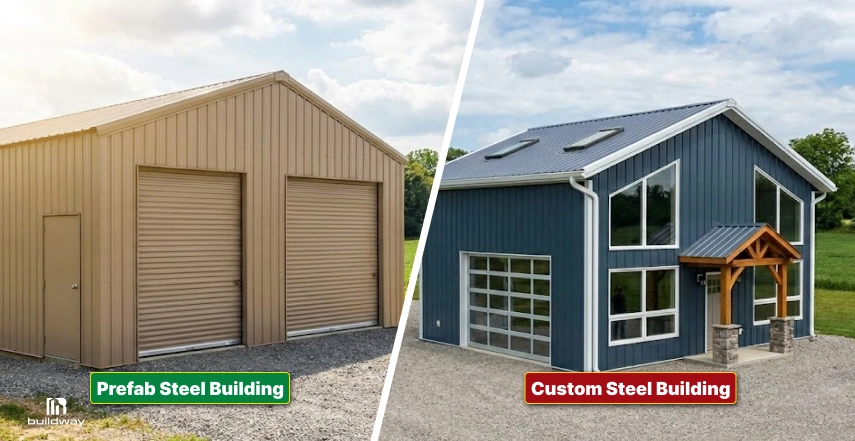
When people start comparing prefab steel buildings to custom-designed ones, they often expect a clear price-per-square-foot answer, but it’s not that simple. The truth is, you’re rarely comparing two identical things. Pricing models, what’s included in the quote, and even terminology can vary significantly between suppliers. This creates confusion, especially for first-time buyers trying to make an informed budget decision.
- Differences in Pricing Models: Prefab kits are often advertised as a flat per-square-foot price, while custom buildings require project-specific engineering that makes square-foot pricing more variable. This means that prefab prices appear cheaper upfront, but may not reflect the true installed cost.
- Why Quotes Vary So Widely: We’ve seen prefab steel building quotes start around $10–$16 per sq. ft., while custom-engineered options can go from $25 to $45+ per sq. ft. depending on location, design, and material upgrades. That’s a big range and it doesn’t always include the same things.
What’s Usually Not Included in Advertised Prices
What surprises most first-time buyers is how many essential costs are not included in advertised prefab prices. Most advertised prices leave out:
- Foundation & site prep
- Permits & inspections
- HVAC, electrical, plumbing
- Freight, unloading, and assembly labor
Tip: Always ask what’s included in your quote. Many prefab kits don’t include on-site construction.
What we often see with clients is that they’re comparing a material-only prefab quote to a fully installed custom building, which isn’t a fair comparison. If you’re considering a kit approach, it’s worth understanding how much you actually save once labor, freight, and site work are added. We break that down in our guide on DIY metal building kits and real-world savings.
What Does “Prefab Steel Building” Really Mean?
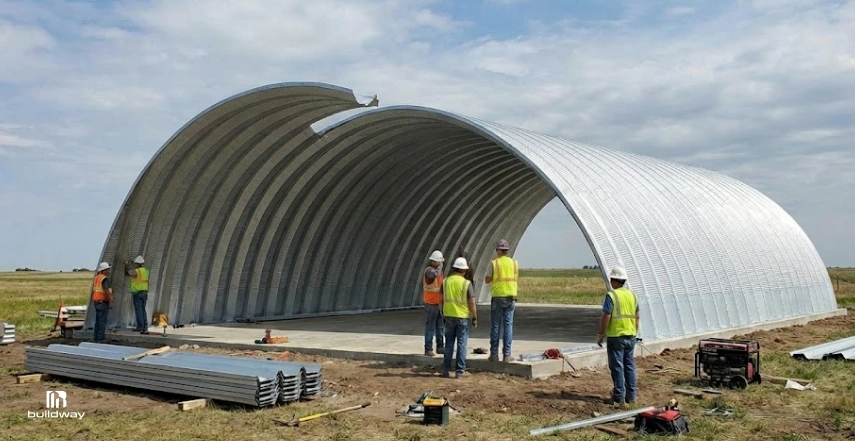
Prefab steel buildings are factory-built kits. All the framing components (columns, beams, roof panels, etc.) are pre-cut, drilled, and ready for bolt-together assembly. They’re standardized for efficiency, which cuts down engineering and production costs.
Why Modular Steel Kits Cost Less
The biggest savings come from:
- Standardized designs (less custom engineering)
- Bulk material sourcing
- Faster production and delivery
- Lower labor costs during assembly
Prefab kits are ideal for speed and affordability, but they come with design limitations.
Common Prefab Use Cases
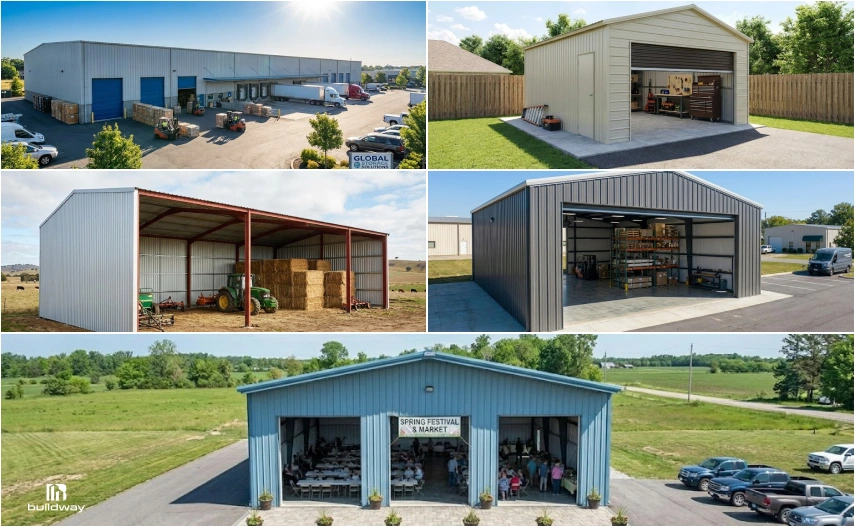
- Storage buildings
- Garages and workshops
- Agricultural shelters
- Small warehouses or distribution centers
- Churches and community halls
If your building doesn’t need custom floor plans, complex loading requirements, or unique architectural elements, prefab is likely sufficient.
What Is a Custom Steel Building?
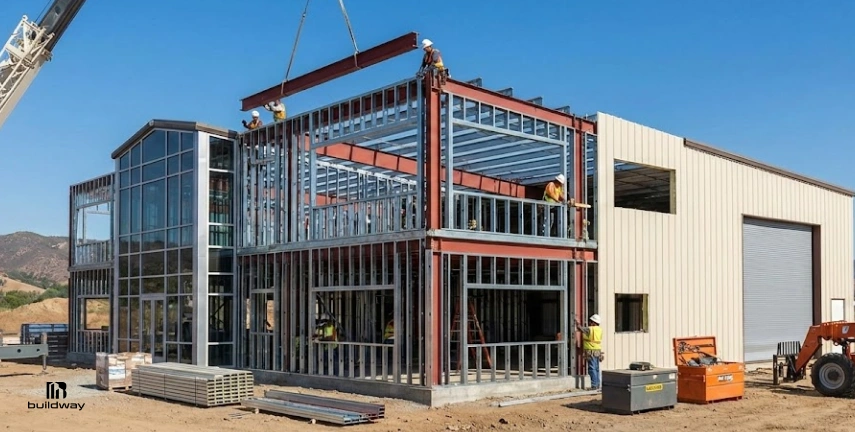
Custom steel buildings are designed from the ground up, based on your exact needs. They often require:
- Structural calculations for wind/snow loads
- Custom framing or truss layouts
- Non-standard roof slopes or clear spans
- Integration of architectural finishes (brick, stucco, curtain walls)
Custom builds also allow for more complex mechanical, HVAC, and electrical planning.
Projects That Truly Require Custom Steel Buildings
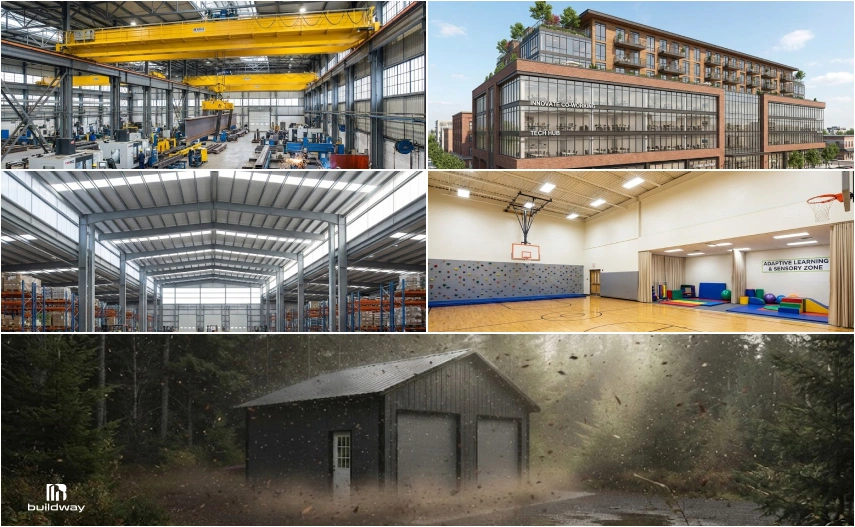
- Manufacturing facilities with overhead cranes
- Multi-use commercial buildings with mixed zones
- Tall-clear-span warehouses
- Schools or gyms with open space and specialty needs
- Buildings in high-load or hurricane-prone zones
If performance, zoning compliance, or operational functionality are critical, going custom is often the smarter long-term investment.
Real Cost Comparison: Prefab vs Custom Steel Buildings
To help you make a more informed decision, here’s a breakdown of typical cost ranges for both prefab and custom steel buildings based on current U.S. market averages. Keep in mind that these figures are general estimates. Actual costs can vary depending on factors like location, design complexity, and site conditions.
Prefab / Kit Steel Building Costs
| Building Size | Kit Price (Material Only) | Estimated Total Installed Cost |
| 2,400 sq. ft. | $12–$15 / sq. ft. | $25–$35 / sq. ft. |
| 5,000 sq. ft. | $10–$14 / sq. ft. | $22–$32 / sq. ft. |
| 10,000+ sq. ft. | $9–$12 / sq. ft. | $20–$30 / sq. ft. |
Included:
- Structural steel framing
- Roof and wall panels
- Basic fasteners and drawings
Not included:
- Foundation
- Labor for assembly
- Electrical, plumbing, HVAC
- Permits and delivery
Real World Example: One recent client came to us planning a 6,000 sq. ft. prefab warehouse because the kit price looked far cheaper. Once we factored in foundation upgrades, freight, local labor, insulation, and permits, the total cost landed only about 10% below a custom option. In their case, the custom building made more sense because it allowed future expansion and met local code without retrofits. That’s a situation we see more often than people expect.
Custom Steel Building Costs
Custom building prices depend heavily on location, code requirements, and complexity.
| Building Type | Estimated Total Cost (Installed) |
| Basic custom warehouse | $28–$40 / sq. ft. |
| Mixed-use commercial | $35–$55 / sq. ft. |
| Complex industrial facility | $50–$75+ / sq. ft. |
Expect to pay 30–50% more than prefab for custom design, but you’re getting engineered flexibility and long-term ROI.
Prefab vs Custom Cost Comparison Chart
Still unsure which option is the better fit for your project? This side-by-side comparison chart breaks down the key differences between prefab and custom steel buildings: not just in cost, but also in build time, flexibility, and long-term value. Use it as a quick reference to weigh your priorities and determine which path makes the most sense for your needs.
| Factor | Prefab Building | Custom Building |
| Initial Material Cost | Lower | Higher |
| Engineering Fees | Minimal (standard plans) | High (site-specific) |
| Construction Time | Faster | Slower |
| Customization | Limited | Extensive |
| Long-Term Flexibility | Moderate | High |
| Best For | Budget projects, speed | Complex, code-heavy builds |
Choosing between a prefab and custom steel building comes down to your priorities. Prefab kits offer quick, cost-effective solutions, while custom builds give you full control over functionality and compliance.
If you’re still weighing your options, request a quote or reach out for a consultation. We’re here to help you make the right call for your project.
Build Time & Labor Differences
One of the biggest mistakes we see is underestimating how delays affect overall project cost, not just the schedule. In this section, we break down how build times and labor needs differ between prefab kits and fully custom steel structures, so you can plan more accurately from day one.
1. Prefab Assembly Timelines: Because parts arrive ready-to-assemble, prefab buildings are 50–70% faster to erect. A 5,000 sq. ft. prefab building can go up in 2–4 weeks, depending on crew availability.
2. Custom Engineering & Construction Timelines: Custom builds take longer due to:
- Permitting delays
- Custom fabrication lead times
- Site coordination
Expect 3–6 months from design to completion for most custom commercial buildings.
In short, if speed is a top priority, prefab is the faster route. But for projects with more complex requirements, custom builds may be worth the longer timeline to ensure everything fits your needs from the ground up.
Steel Building Customization: What You Pay More For?
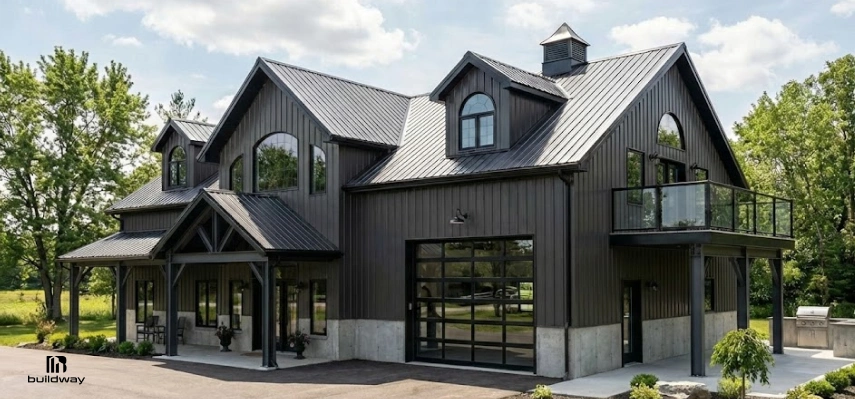
While steel buildings are known for their affordability and efficiency, customization is where costs can start to climb. Whether you’re adding functional upgrades or aesthetic features, even small changes can have a noticeable impact on your budget. In this section, we’ll break down the types of customizations available and what tends to drive costs up the most, so you can plan smarter and avoid surprises.
Limited Customization in Prefab Metal Structures
Prefab steel building kits are designed for efficiency and repeatability, which means customization options are typically limited to surface-level choices. Most prefab systems allow for:
- Color selection
- Basic insulation packages
- A small range of roof styles
However, once you move beyond these basics, costs rise quickly. Structural changes such as adding extra doors, loading bays, increased ceiling height, or non-standard layouts, are often expensive, restricted, or not supported at all within prefab systems.
High-Cost Custom Features to Watch
Certain design and performance upgrades consistently drive costs higher, especially in custom steel buildings. These include:
- Mezzanines and second-story structures
- Custom façade or architectural exterior treatments
- Enhanced roof loads for snow, wind, or specialized equipment
- Integrated heating, cooling, plumbing, and electrical systems (often called MEP in construction)
- Large open interiors without interior columns (often called clear-span buildings)
- High-end interior and exterior finishes
Depending on the scope and complexity, these features can add $5–$20+ per square foot to the overall project cost.
Hidden & Additional Costs That Impact Final Price
This is where budgets usually go wrong. Not because of bad intentions, but because these costs aren’t discussed early enough. Even with a clear quote in hand, there are often overlooked expenses that can significantly affect the final cost of your steel building project. Below are some of the most common hidden or additional costs buyers encounter during planning and construction.
1. Foundations & Site Prep
Before any steel goes up, you’ll need a properly prepared site and a foundation engineered to meet local building codes and soil conditions. These can add $4–$10 per square foot, depending on:
- Grading and excavation needs
- Soil type and stability
- Concrete depth and reinforcement requirements
Skipping this in early estimates is one of the most common pricing oversights. Foundation mistakes are one of the fastest ways to blow a steel building budget. Choosing the wrong foundation can cost thousands later, which is why we recommend understanding your options before finalizing your design.
2. Permits & Inspections
Permitting and code compliance are non-negotiable and costs vary widely by location. In most areas, expect to pay between $1,000 and $5,000+ for:
- Building permits
- Structural or civil engineering stamps
- Required inspections during and after construction
Always confirm permit requirements early in the process to avoid delays or penalties.
3. HVAC, Insulation & Utilities
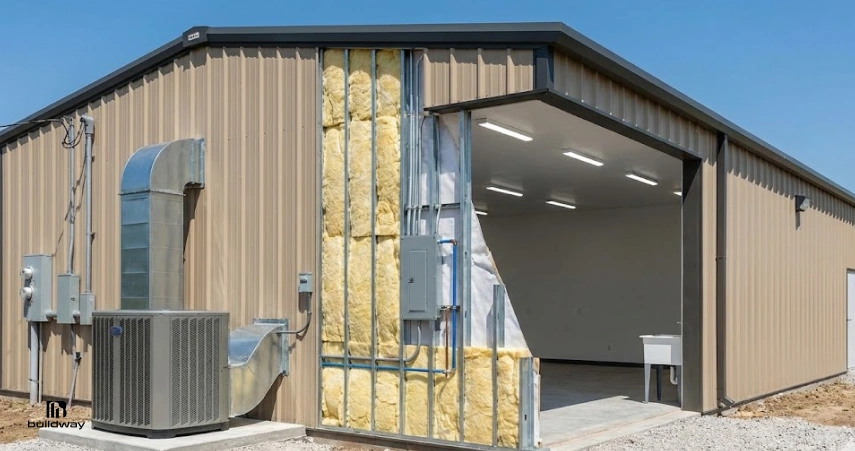
Climate control and energy efficiency play a big role in long-term operating costs and the upfront investment can be substantial.
- Insulation packages: $2–$4 per sq. ft., depending on R-value and method (e.g., batt, spray foam)
- HVAC systems: Can range from a few thousand to tens of thousands, depending on building size and usage
- Plumbing and electrical: Highly project-specific, especially for custom builds
Prefab kits typically exclude these systems, so it’s critical to budget for them separately.
4. Freight & Logistics
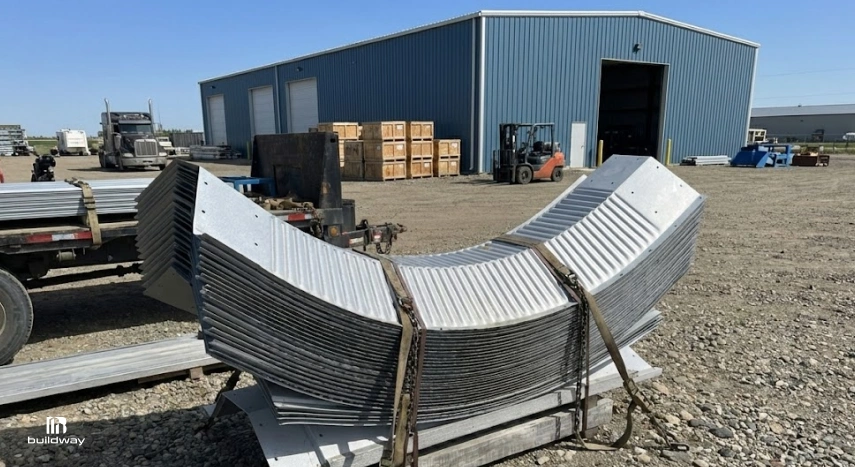
With rising fuel prices and variable factory locations, delivery costs have become a more significant part of the total budget. Factors that can increase freight costs include:
- Distance from the manufacturing plant
- Fuel surcharges
- Site accessibility (e.g., rural locations, narrow roads, crane access needs)
It’s wise to request an estimated delivery cost upfront, especially if your site is remote or hard to reach.
How to Choose Between Prefab vs Custom Steel Buildings?
Not sure which option is right for your project? The best choice depends on your budget, timeline, and how much flexibility you need. Use the checklist below to quickly compare prefab and custom steel buildings based on the most important decision factors.
| Decision Factor | Go Prefab If… | Go Custom If… |
| Budget | Under $35/sq. ft. | $40+/sq. ft. budget |
| Timeline | Need it built in 1–2 months | Can wait 3–6 months |
| Design Complexity | Simple structure | Complex use case |
| Local Zoning | Standard code area | Strict zoning/load codes |
| Future Flexibility | Fixed layout is fine | May expand or modify later |
Hybrid Option: Some clients use a prefab base with custom design features (like exterior finishes or interior layouts). We can guide you through that blended approach.
The right choice isn’t about prefab vs custom, it’s about choosing the option that won’t force costly fixes later.
Ready to Move Forward?
- Get Your Steel Building Cost Estimate: Request a Quote from Buildway
- Schedule a Free Consultation: Speak with a steel building expert about your needs
- Download: Prefab vs Custom Building Cost Checklist (PDF)
Use this tool to compare your project requirements against real-world costs.
FAQs: Prefab vs Custom Buildings
1. Are prefab steel buildings cheaper per square foot?
Yes, prefab buildings are typically 20-40% cheaper in terms of material costs compared to custom builds. However, the total installed cost can still add up once you factor in foundation work, labor, insulation, and utilities.
2. What customization features add the most cost?
The most expensive upgrades tend to be:
- Structural changes (e.g., clear spans, taller walls, extra bays)
- Snow/wind load enhancements
- High-end finishes or architectural façades
- Integrated HVAC or MEP systems
These can add $5–$20+ per square foot, depending on the scope.
3. Do prefab steel building kits include installation labor?
No, prefab kits usually include materials only. Labor is a separate cost and must be coordinated with a local contractor unless your supplier offers bundled installation services.
4. How long does custom engineering add to the timeline?
Expect 2–4 additional weeks for custom engineering and permitting. More complex designs or stricter local codes can extend this further.
5. Can prefab steel buildings be customized later?
To a limited extent, yes. You can add:
- Insulation
- Interior partitions
- HVAC systems
However, making major structural changes (like increasing height or expanding floor space) after installation is often expensive or impractical.
6. What’s the average lead time for prefab vs custom steel buildings?
- Prefab kits: Typically ship in 4–8 weeks, depending on manufacturer backlog.
- Custom buildings: May take 10–16+ weeks, depending on design complexity and approvals.
7. Do steel building kits come with foundation designs?
Most prefab kits include basic anchor bolt plans, but not full foundation drawings. For full site-specific foundation plans, especially for custom buildings, you’ll need an engineer.
8. Is a prefab steel building strong enough for commercial use?
Yes, many prefab buildings are engineered to meet local commercial codes. However, if your project has unique structural demands, high foot traffic, or zoning requirements, custom may be the safer bet.
9. Which option is better for future expansion?
Custom steel buildings offer more flexibility for planned growth. While some prefab designs allow for add-ons, expanding after the fact can be challenging if the original design wasn’t built with expansion in mind.
10. Can I combine prefab and custom elements in one project?
Yes, many successful projects use a hybrid approach. You might start with a prefab structure and add custom components like mezzanines, façade upgrades, or custom interiors. This can balance speed and cost with functionality.