
When people picture a steel building, they often imagine a plain metal box: maybe gray, maybe beige, maybe boring. Yet structural steel commands nearly 59% of the U.S. non-residential construction market revenue. In reality, modern steel buildings are modular, highly adaptable structures that can be customized in dozens of ways to meet your functional needs and design preferences.
With the right steel building parts and accessories, you can personalize a steel building to reflect how you plan to use it, where it’s located, and what kind of comfort and performance you expect.
At Buildway, we work with hundreds of clients across the U.S. every year and one thing is clear: accessories make the difference between a basic shell and a space that feels truly finished. So let’s walk you through the customization options that matter most based on real-world building experience.
Steel Buildings Don’t Have to Look Generic!
One of the most common misconceptions we see in people is that they think all steel buildings look the same. Flat, metallic, industrial. But that’s only true if you skip the personalization phase.
The reality is: steel buildings are intentionally designed to be modular. This modularity allows owners to easily swap or upgrade steel building parts without needing a complete redesign. That means they can be enhanced after manufacturing, during installation, or years down the road with minimal disruption to the core structure.
What Personalization Really Means?
Customizing a steel building doesn’t mean gutting the design or re-engineering your frame. It means selecting the steel building parts and features that:
- Improve energy efficiency
- Enhance aesthetics and curb appeal
- Boost resale value
- Adapt the space to your day-to-day needs
In our experience, personalization is most successful when it’s part of the early planning conversation. It’s a lot more cost-effective to prep for accessories before install than to retrofit them later.
Why Do People Want to Customize Steel Buildings?
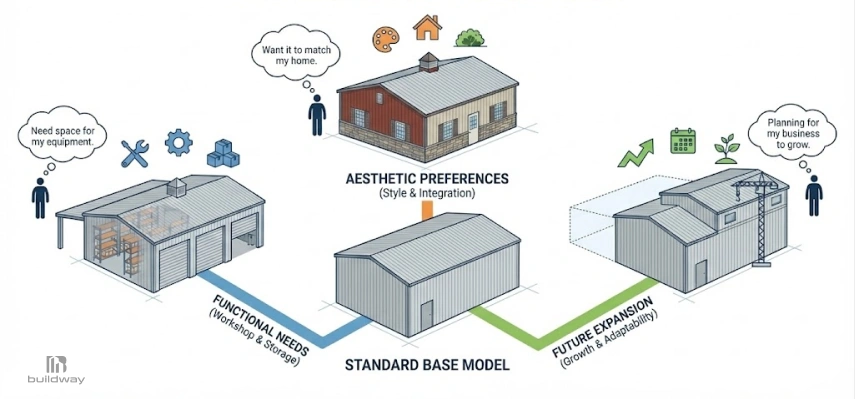
Let’s be honest, most steel buildings do start as basic structures. That’s the point. They’re efficient, cost-effective, and fast to build. But that doesn’t mean you want to live or work inside something that looks like a shipping container.
What We Hear from Owners
After years in the steel building industry, we’ve noticed patterns in the questions and pain points people bring to us:
- “How do I keep it from feeling like a warehouse?”
- “Can I add windows later?”
- “What’s the best way to add comfort without spending a fortune?”
- “I wish I had thought about insulation earlier…”
These aren’t just aesthetic concerns, they’re about livability, efficiency, and long-term value. The good news is that steel building accessories solve most of these issues, without the need for structural redesign or excessive spending.
Choosing the Right Steel Building Parts for Exterior Customization
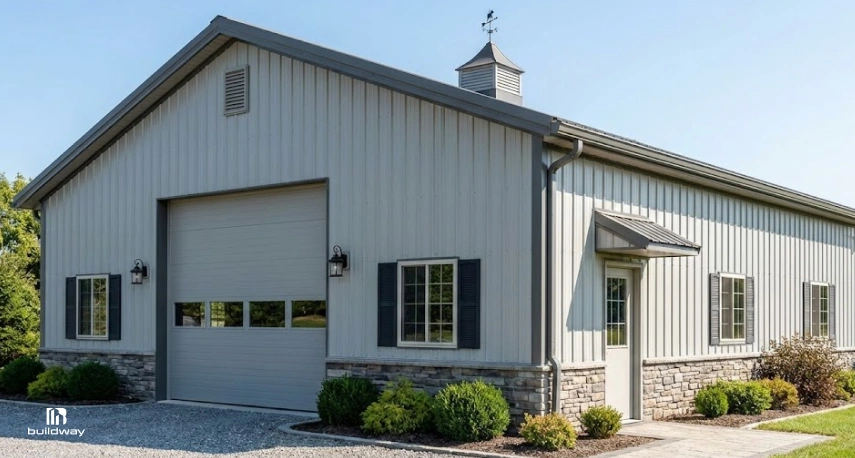
The outside of your building is your first chance to make an impression and the best opportunity to improve function before installation even begins. Your building’s exterior is shaped by key steel building parts like doors, window frames, gutters, and finish panels:
1. Custom Doors & Entry Frames
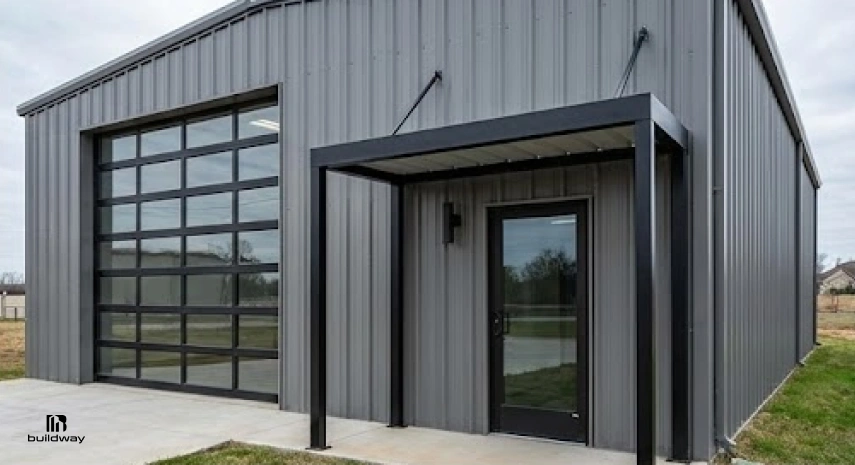
The door is one of the most-used steel building parts and plays a major role in form and function. It also says a lot about what the building is for.
We offer pre-engineered door frames across all building types (Cold-Formed, I-Beam, Quonset) for:
- Standard 4×7 service doors
- Roll-up doors for workshops and garages
- Sliding or hangar doors for large equipment
- Overhead sectional doors for commercial or ag buildings
Our door frames are designed to fit your exact specs, and they’re reinforced for long-term durability.
Clients often ask us if they can “just add the doors later.” You can, but you’ll spend a lot more on cutting, reframing, and labor.
Tip: Frame for the doors you want up front, even if you plan to install them later.
2. Window Frames & Natural Light Add-Ons
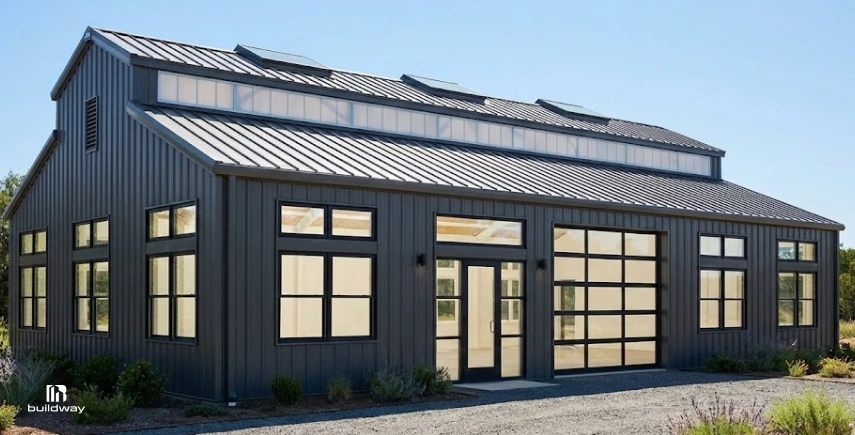
Let’s talk about the #1 regret we hear from customers post-build: not enough natural light.
Steel buildings, by default, don’t include windows unless you plan for them. But adding the right steel building parts like window frames and light panels transforms how your building feels and functions.
Our options include:
- Aluminum window frames (self-flashing, thermal or non-thermal break)
- Translucent Light-Transmitting Panels (LTPs) for ceilings (I-Beam)
- Skylights: Up to 20 sq. ft. of sunlight per panel (Quonset only)
Natural light not only brightens the space. It reduces your energy usage and makes the interior feel far less industrial.
We’ve worked on multiple buildings where people had to retrofit windows with awkward framing or cut-outs. Pre-framed window integration is always smoother and more cost-effective.
3. Color, Trim, and Finish Options
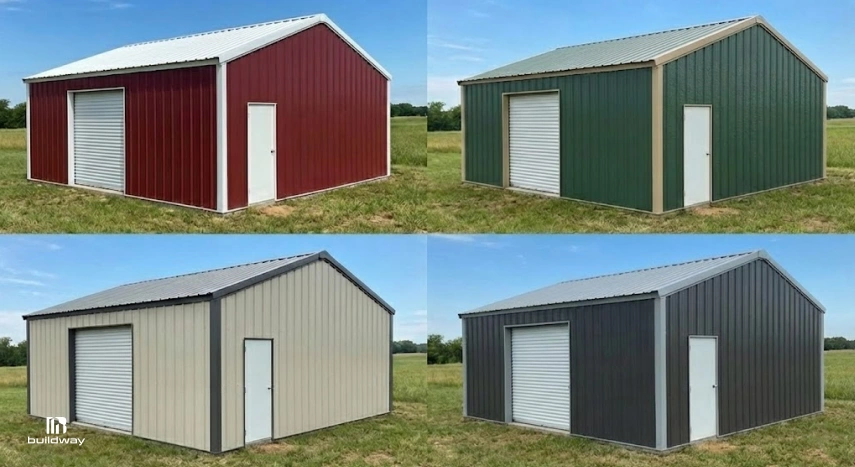
One of the easiest and most affordable ways to make your building feel like “yours” is with color and trim. At Buildway, we offer a curated set of durable Galvalume Plus™ steel colors across Cold-Formed, I-Beam, and Quonset models:
- Light Gray
- Beige
- Blue-Gray
- Off-White
- Tan
- Red
- Dark Green
- Dark Brown
You can personalize colors on:
- Walls
- Roof
- Jambs
- Corners
- Gables
- Eaves
You can also mix-and-match two-tone schemes with contrasting gutters and trim for a high-end visual effect.
Design Tip: Even just switching to a matte or textured panel finish makes a building feel more modern and intentional, not prefab.
4. Gutters & Downspouts
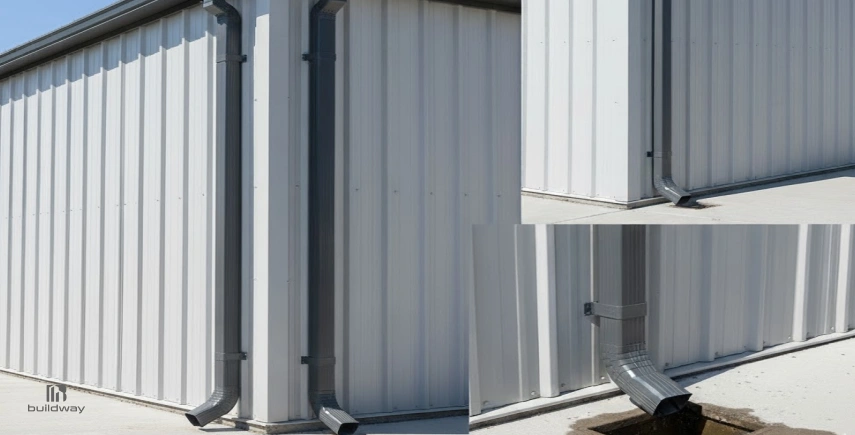
They may not grab attention, but gutters and downspouts are vital for protecting your steel building. By efficiently channeling rainwater away from the structure and foundation, they help prevent erosion, leaks, and long-term structural damage.
We provide integrated drainage systems that:
- Collect and direct rainwater
- Protect the concrete slab/foundation
- Prevent erosion or flooding around the perimeter
All our systems are matched to your chosen building type for a seamless install.
Lesson Learned: One of our customers had to redo a foundation within 5 years because water wasn’t draining properly. It’s a simple fix up front. Don’t skip this step.
Interior Custom Accessories You Might Need
Once the exterior is complete, the interior steel building parts and features truly shape how your space looks and functions on a daily basis. From insulation and wall panels to lighting and climate control, these accessories transform your building from a basic shell into a comfortable, efficient, and purpose-built space.
Buildway Insight: We always remind clients, the interior is where you live, work, or store valuable assets. Prioritizing these upgrades makes all the difference in long-term satisfaction.
1. Insulation Packages
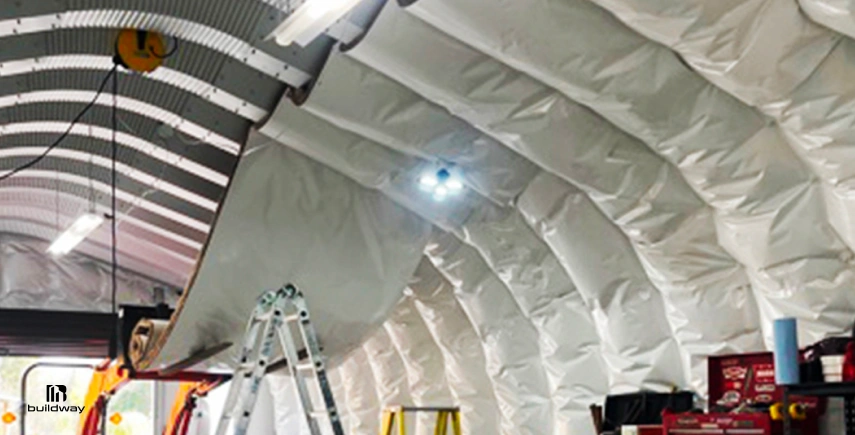
We offer heavy-duty blanket insulation that’s tailored for walls, ceilings, and floors. You can choose from:
- Standard fiber-based blanket insulation
- Spray foam upgrades
- Vapor barrier liners
Insulation does not only control temperature, it prevents condensation, protects equipment, and lowers energy bills.
Real-Use Example: A client running a home gym in their steel building saw summer temps drop 18°F after we added full-wall insulation and ridge vents.
2. Wall Liner Panels
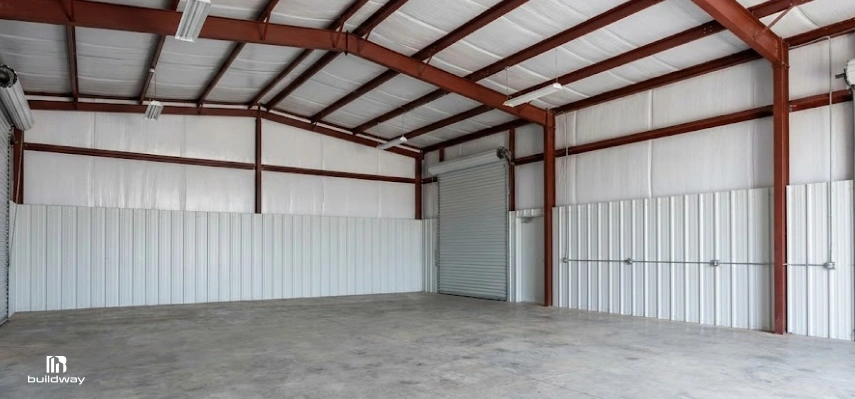
Our interior wall liner panels are made of durable 29-gauge steel and install directly onto framing. They provide a clean, finished look from floor to ceiling and are ideal for:
- Workshops
- Garages
- Commercial storage
- Studios or gyms (with optional acoustic upgrades)
Want drywall instead? No problem. We also offer framing kits if you’re planning a traditional wall finish.
3. Lighting, Electrical & Climate Support
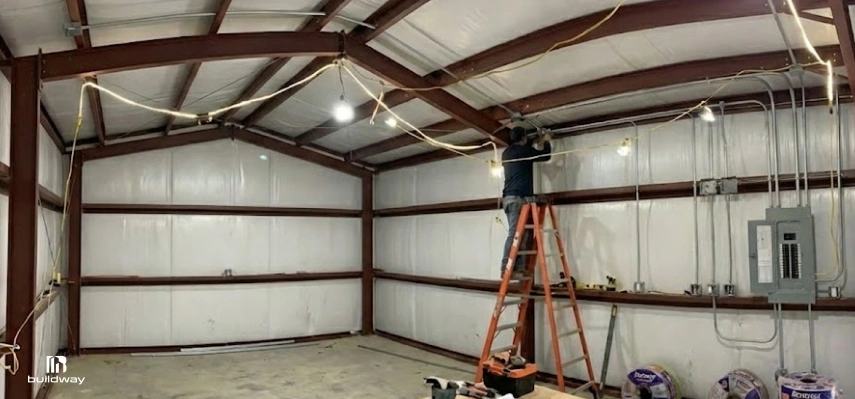
A functional building needs more than walls and a roof. We help you prep for lighting, ventilation, and climate systems from day one, ensuring your space is bright, comfortable, and efficient.
- Pre-cut electrical openings
- Mini-split HVAC prep kits
- Ridge vents & exhaust fans
- LED lighting kits
You can also install Univalent Roof Ventilators (for large spaces) or wind-powered turbine vents (for Quonset models).
Functional Add-Ons by Use Case
Every steel building has a job to do and the most effective customizations are those that directly support how you plan to use the space. Choosing accessories based on function ensures you get the performance, durability, and comfort you need from day one. Here’s how to align your upgrades with your building’s primary use:
1. Workshops & Garages
- Reinforced walls for heavy-duty equipment or vehicle lifts
- Tool mounting systems for organized workflows
- Extra-wide roll-up doors for seamless access
2. Commercial or Office Buildings
- Glass storefront entries for a professional appearance
- Canopies and awnings for shade and protection
- ADA-compliant doors and entry accessories for accessibility
3. Agricultural & Storage Buildings
- Lean-tos and open-air shelters for additional covered space
- Interior partitions to separate functions or storage zones
- Enhanced ventilation systems for airflow and equipment protection
Pro Tip: It’s easy to get distracted by flashy features, but the most valuable accessories are the ones that serve your actual needs. Start with function, then layer in design.
What owners commonly regret including what we see echoed online
After reading through dozens of steel building Reddit threads, here are the most common regrets:
- Not insulating early enough
- Skipping windows
- Underestimating power and lighting needs
Lesson: The smartest builders think ahead. What feels like a “small” upgrade today might become a major retrofit expense later.
How to Choose the Right Accessories for Your Steel Building?
Choosing the right accessories doesn’t only mean adding features, it’s making smart, strategic decisions that enhance the building’s performance, comfort, and long-term value. Every steel building serves a different purpose, which means your accessory choices should be guided by function first, then aesthetics and budget.
Here’s how we recommend approaching the customization process to ensure you get the most out of your investment:
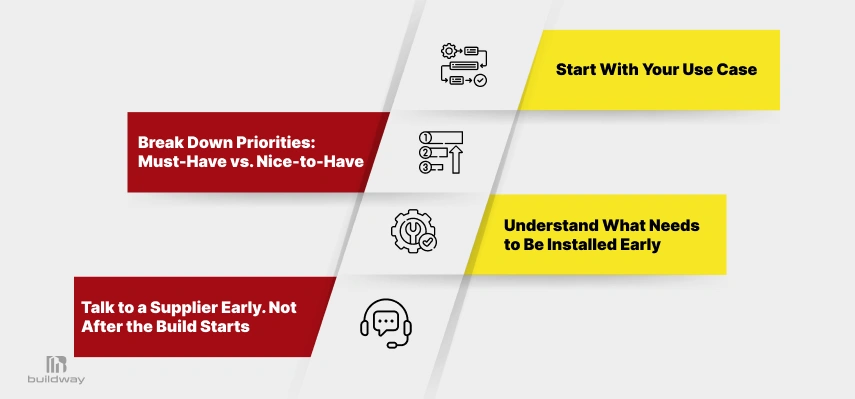
1. Start With Your Use Case
Is your steel building going to be a workshop, garage, office, gym, storage unit, or agricultural shed? Your intended use should directly inform your accessory list.
- Workshops may need reinforced walls, extra lighting, or exhaust fans.
- Offices or studios benefit from better insulation, windows, and climate control.
- Ag buildings often need ventilation upgrades, lean-tos, and partitions.
We always recommend tailoring your accessory package to how you’ll use the building daily, not just how it looks on paper.
2. Break Down Priorities: Must-Have vs. Nice-to-Have
Not every upgrade needs to happen on day one. Start by dividing your list into essentials and future add-ons.
Must-Have Examples:
- Insulation
- Door and window frames
- Electrical and HVAC rough-ins
- Gutters and drainage systems
Nice-to-Have Later:
- Interior liner panels
- Decorative trim and paint
- Shelving or tool systems
- Awnings or canopies
Pro Insight: Planning for future add-ons during the design phase (like framing openings or adding conduit pathways) will save you thousands in rework costs later.
To better understand how these choices impact your overall project cost, check out our guide on how to accurately budget for a metal building before requesting quotes.
3. Understand What Needs to Be Installed Early
Some accessories must be planned before or during installation to avoid costly retrofits. For example:
- Foundation systems should match site conditions and accessory loads.
- Insulation is far easier to install before interior wall panels go up.
- Window and service door frames should be part of the framing layout.
Missing these early-stage details often leads to patchwork fixes that compromise quality or cost more long-term.
4. Talk to a Supplier Early. Not After the Build Starts
The biggest mistake we see? Waiting too long to consider accessories. By then, certain options may be harder to implement or require major modifications.
Working with a knowledgeable steel building supplier early allows you to:
- Optimize your layout
- Ensure code compliance for all systems
- Save time and budget with smarter planning
- Avoid last-minute design changes
Buildway Advantage: Our team helps clients think through accessory needs from day one, because we’ve seen what happens when people don’t. Planning ahead isn’t just smart, it’s essential.
Every steel building has potential. The right accessories make it functional, comfortable, and completely tailored to you. By taking a use-case-driven approach, planning early, and prioritizing what matters most, you’ll build a space that not only meets your needs today, but evolves with you tomorrow.
Personalize a Steel Building That Works for You
Steel buildings don’t have to be cold, generic spaces. With the right combination of accessories, you can create a building that’s functional, beautiful, and totally unique to you.
Remember, these structures are designed for flexibility. With just a bit of planning, you can create something that doesn’t just meet code, but meets your goals, your lifestyle, and your vision. With careful planning and the right steel building parts, you can create a space that’s tailored to your lifestyle and long-term goals.
Want to Explore Accessories?
Steel Building Customization FAQs
1. Can steel buildings be customized after installation?
Yes, steel buildings can be customized post-installation by upgrading steel building parts, but doing so often requires extra labor. Pre-planning accessories during the design phase ensures cleaner integration and lowers your overall costs.
2. Are steel building accessories expensive?
Not necessarily. Many accessories like insulation, window frames, gutters, or trim color options are cost-effective and deliver high value. The key is to separate your must-haves from your nice-to-haves and build a tiered budget around your primary use case.
3. Do custom accessories impact permits or building codes?
Yes, certain accessories can affect your permit requirements and must comply with local codes. This includes HVAC units, ADA-compliant entries, electrical installations, and fire-rated materials. Work with your supplier to ensure every upgrade is code-compliant from the start.
4. What’s the most important accessory to plan early?
Insulation should be the first accessory you plan. It impacts temperature control, moisture prevention, and energy efficiency. Ideally, insulation should be considered before pouring your foundation to allow for proper prep and install.
5. Can I add windows or doors later on?
Yes, but it’s more efficient to frame for doors and windows during the initial build. Retrofitting can be labor-intensive and may affect the structural integrity or weather-sealing of your building. If you’re unsure, pre-framing openings now gives you the flexibility to install later.
6. What accessories improve energy efficiency the most?
The top energy-saving accessories include:
- Heavy-duty insulation (walls, ceilings, and floors)
- Window frames with thermal breaks
- Translucent light-transmitting roof panels
- Ridge vents and turbine ventilators
- LED lighting kits
These upgrades help reduce energy use, improve comfort, and lower long-term operating costs.
7. What’s the easiest way to customize the look of my steel building?
Start with color and trim options. Buildway offers a range of steel panel colors (light gray, beige, blue-gray, red, green, etc.) and contrasting trims. Combining tones or choosing a matte/textured finish can instantly enhance curb appeal, without structural changes.
8. Are foundation accessories customizable too?
Yes. Our prefab foundation systems are tailored to different site conditions, whether you’re dealing with frost, uneven soils, high water tables, or remote locations. Planning the right slab type ensures long-term structural integrity and can reduce install time.