
Tired of dealing with columns that disrupt your layout or block equipment movement? Interior supports often limit how a space can function, making it harder to work efficiently or adjust as needs change, especially in warehouses, arenas, hangars, and workshops.
For business owners, the absence of interior support is not only a design detail, it means smoother equipment movement, optimized workflow, and a layout that adapts as your operations grow. That flexibility can translate into lower overhead, faster throughput, and improved ROI.
Recent MBCEA Building of the Year winners include facilities with clear spans up to 190 feet and eave heights over 100 feet, proving the scalability of column-free designs for maximum flexibility.
That’s where clear span steel buildings come in. With no interior columns, they offer wide-open space, adaptable layouts, and long-term value across countless industries.
In this blog, we’ll cover:
- What clear span buildings are
- How they’re built
- Common costs and use cases
- Key pros and cons
- How they compare to other building types
Let’s dive in and see if a clear span structure is the right fit for your project.
What Are Clear Span Steel Buildings?
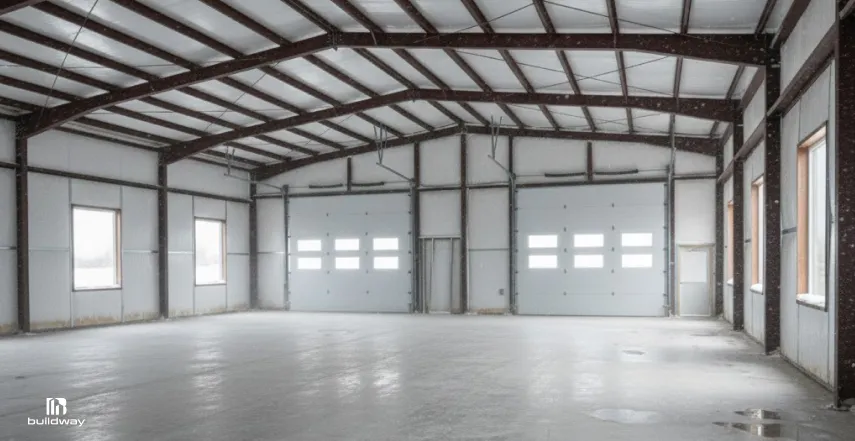
At their core, clear span steel buildings are structures designed to span wide distances without using any interior support columns. That means you get 100% usable floor space. Ideal for storing large equipment, managing workflow, or accommodating dynamic layouts.
This design is especially valuable in industries where uninterrupted floor space increases productivity like logistics, aviation, and manufacturing.
Key Feature: No Interior Columns
This single benefit sets them apart: maximum usable interior space. With no columns obstructing movement or design, you’re free to use the space however you want Today and in the future.
Visual Comparison
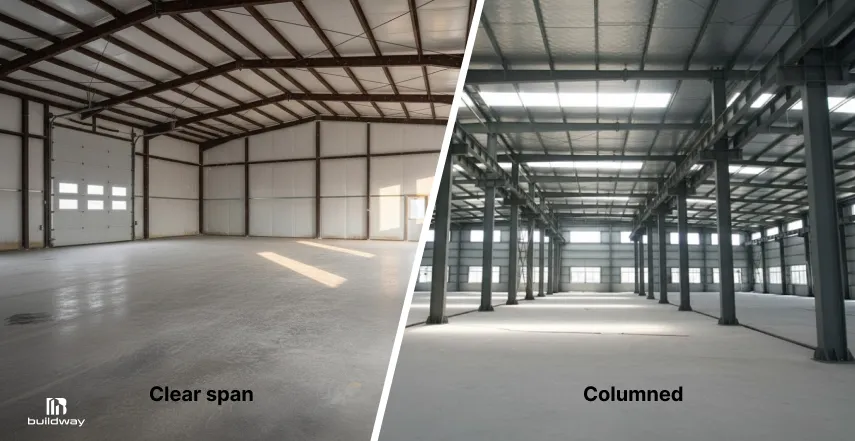
Imagine two buildings:
- Clear span: A wide, open interior with nothing in the way.
- Columned: Regularly spaced columns that limit layout flexibility.
The difference is huge when it comes to machinery, vehicles, or open floor needs.
How Clear Span Steel Buildings Work (Step-by-Step)
Clear span steel buildings use rigid steel frames to support the roof without any interior columns. This engineering allows for wide, open interiors without compromising strength or stability. Here’s a quick look at how the structure works:
- Rigid Steel Frames: The backbone of a clear span structure. These frames are designed to carry the weight of the roof across wide distances.
- Rafters: Sloped beams that connect the frame’s sides and support the roof. Their strength is key to spanning large widths.
- End Walls: The front and back walls of the building, which may include doors, windows, or cladding panels.
Why Steel Spans Wider than Wood: Steel offers far greater strength-to-weight ratios than wood. That’s why clear span steel buildings can reach widths of 300 feet or more, while wood buildings top out much earlier.
Typical Width Ranges:
- 100–200 ft: Great for sports facilities, manufacturing, and logistics.
- 300+ ft: Specialized industrial or aviation needs.
- 30–80 ft: Common for agriculture, workshops, and garages.
Clear span steel buildings achieve their open design through smart structural engineering. With strong steel frames and no interior supports, they can span impressive widths while staying durable, efficient, and highly versatile.
Why People Choose Clear Span Buildings
Many buyers point to one clear advantage of clear span steel buildings: flexibility. The open design makes it easier to adjust layouts, move equipment, and repurpose the space as needs change.

Pain Points Solved:
These buildings remove the common limitations found in traditional structures with interior columns.
- No columns blocking movement: The open layout allows forklifts, livestock, aircraft, and other large equipment to move freely without obstruction.
- Interior can evolve as needed: The flexible design makes it easy to adjust layouts, add new zones, or scale operations over time.
- More resale appeal: A clear, open space is easier for future buyers or tenants to repurpose for different uses, adding to its overall value.
Key Benefits
Beyond solving layout issues, clear span steel buildings offer practical advantages that support long-term efficiency.
- Built for large equipment and vehicles: Wide-open interiors make daily operations smoother and reduce bottlenecks in high-traffic work areas.
- Future-proof floor plans: As your needs grow or change, the space can adapt. No costly structural changes required.
- Open, modern interior look: The column-free design creates a clean, professional atmosphere while maximizing usable space.
As operations scale or shift focus, the open design means companies can retool, reconfigure, or expand zones without starting from scratch, making clear span buildings a strategic long-term asset.
In short, people choose clear span steel buildings because they remove today’s layout frustrations while preparing the space for tomorrow’s needs. The combination of open interiors, operational efficiency, and long-term adaptability makes them a practical choice for a wide range of industries.
Common Uses of Clear Span Steel Buildings
Clear span buildings serve diverse industries where open space enhances performance and flexibility. Clear span steel buildings are trusted across a wide range of industries that rely on open, adaptable interiors. Their column-free design supports efficient movement, large equipment, and flexible layouts making them ideal for both commercial and industrial needs.
| Use Case | Description |
| Warehouses & Logistics | Easy pallet movement, forklift operation, and space optimization. |
| Agriculture | Livestock shelters, barns, riding arenas with no posts in the way. |
| Aircraft Hangars | Plane wings and maintenance require open interiors. |
| Sports Facilities | Gyms, basketball courts, indoor soccer fields. |
| Manufacturing & Workshops | Uninterrupted workflow and machinery placement. |
These versatile structures are chosen for their ability to adapt to demanding environments and evolving operational needs. No matter the industry.
Clear Span vs Multi-Span Buildings
Choosing between a clear span and a multi-span steel building comes down to how you plan to use the space and how much flexibility your layout demands. Each option has its strengths, but the right fit depends on your operational needs, equipment size, and budget.
| Feature | Clear Span | Multi-Span |
| Interior Columns | None | Yes |
| Layout Flexibility | High | Moderate |
| Ideal for Large Equipment | Yes | No |
| Cost per Sq Ft | Higher | Lower |
| Expansion | Easier | More Complex |
While multi-span buildings may save money upfront, the layout restrictions can lead to higher operational costs over time due to inefficiencies or expensive modifications. Clear span buildings cost more upfront but often deliver more long-term value, especially for businesses that evolve over time.
How Much Do Clear Span Steel Buildings Cost?
Cost is one of the most common questions when considering a clear span structure. While these buildings typically come with a higher upfront price, that cost reflects the engineering, materials, and flexibility they offer, especially when compared to traditional designs with interior supports.
Cost Factors:
Several variables influence the total cost of a clear span steel building. Here are the most important ones to consider when budgeting your project:
- Building width: Wider spans need more robust framing.
- Height: Taller buildings require more material and engineering.
- Local conditions: Snow loads, wind speeds, and seismic zones affect design.
- Customization: Doors, windows, insulation, and finishes all add cost.
Important Note: There’s no flat cost per square foot because every building is custom-engineered. But you can expect to pay more than a similar-sized multi-span or post-frame building, while getting far more usable space.
While clear span buildings may cost more initially, they reduce the need for future structural changes, allow layouts to adapt with your operations, and support better resale value, making them a smart investment for businesses thinking long-term. For those looking to lower initial expenses, exploringDIY metal building kits can reveal just how much you could save without sacrificing quality.
Maximum Clear Span Widths Explained
A common question during the planning phase is how wide a clear span steel building can go, especially without interior supports. The answer depends on your use case, engineering requirements, and site conditions. Below is a general guide to typical width ranges and what they’re best suited for.
| Width Range | Common Uses |
| 30–80 ft | Agriculture, small warehouses, garages |
| 100–200 ft | Sports facilities, large manufacturing |
| 300+ ft | Aircraft hangars, specialty industrial projects |
The ability to span large widths without interruption makes these buildings ideal for aviation, large-scale logistics, and future-ready industrial operations.
What Limits the Width?
While clear span steel buildings can reach impressive widths, several key factors determine how far they can go without interior supports. These include structural demands, engineering constraints, and local site conditions:
- Structural load requirements: Heavier roof loads from snow, equipment, or climate can limit span potential.
- Engineering capabilities: The complexity of the design must match the span; wider buildings need more advanced structural engineering.
- Local building codes: Codes related to wind, snow, and seismic zones may restrict width to ensure safety and compliance.
- Soil and site conditions: Poor soil quality or uneven terrain may require additional foundation work or design adjustments.
A qualified steel building engineer will help you balance width with practicality and cost.
Pros and Cons of Clear Span Steel Buildings
Clear span steel buildings offer clear functional advantages, but they’re not without trade-offs. If you’re weighing this type of structure for your project, it’s important to understand both the benefits and the challenges, especially when it comes to long-term use, cost, and setup. Let’s break it down:
Pros of Clear Span Steel Buildings
These advantages make clear span buildings a top choice for businesses and industries that rely on open, adaptable space.
- 100% Usable Floor Space: No columns means nothing gets in the way. Every inch of the interior is usable for storage, operations, or movement boosting efficiency.
- Open Interiors Support Better Layouts: The freedom to design your floor plan without structural limitations allows for smoother workflows and easier reconfiguration as your needs evolve.
- Ideal for Large Equipment and Machinery: From aircraft and agricultural vehicles to factory machines, large-scale equipment can move and operate freely inside a clear span structure.
- Built for the future: Layouts can evolve without structural changes, making the building usable for decades of changing business needs.
Cons of Clear Span Steel Buildings
Despite their strengths, there are a few considerations to keep in mind before committing to a clear span design.
- Higher Upfront Cost: The structural demands of wide, unsupported spans increase material and engineering costs, especially as width grows.
- Requires Precision Engineering: To ensure structural integrity, these buildings must be carefully designed and engineered, which may add time to the planning phase.
- Transport and Installation Can Be Complex: Because of their large frame sizes, clear span buildings often require specialized transport and equipment during delivery and construction.
Clear span steel buildings offer unmatched space and flexibility, but they aren’t always the right fit for every budget or site. Weighing the pros and cons side by side can help you determine whether the added value justifies the investment for your specific use case.
Clear Span Steel vs Wood Buildings
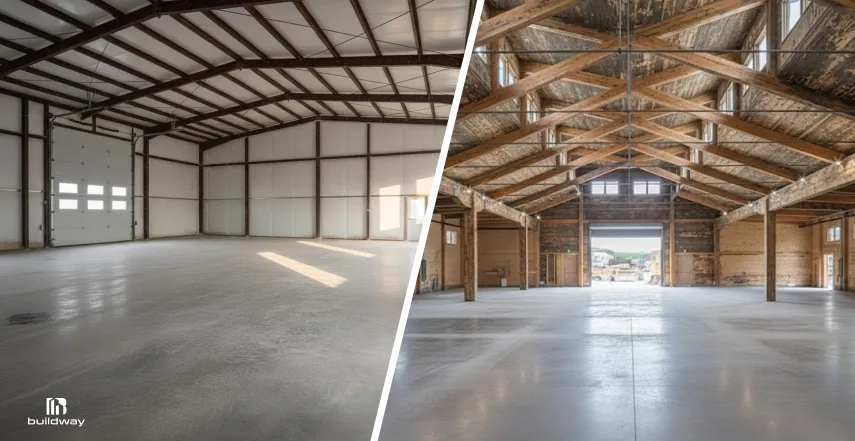
When choosing between steel and wood for a large structure, the right material depends on your priorities: strength, span, durability, and long-term value. If you’re unsure which material holds up better over time, this comparison breaks down what fails first.
| Feature | Steel | Wood |
| Max Span Width | Up to 300+ ft | ~50–80 ft |
| Fire Resistance | High | Low |
| Maintenance | Minimal | Ongoing (rot, pests, warping) |
| Lifespan | 40–60+ years | 20–40 years |
| Insurance | Often cheaper | Often higher due to fire risk |
One often-overlooked benefit of steel buildings is how favorably insurers view them. Thanks to fire resistance and structural reliability, steel buildings typically come with lower premiums and fewer coverage restrictions compared to wood. Steel buildings also tend to retain value better, making them a stronger long-term investment.
Is a Clear Span Steel Building Right for You?
If you’re planning a building project and need wide-open, unobstructed space that can grow with your needs, a clear span steel building could be the ideal fit. Not sure yet? Ask yourself:
- Do you need a completely open interior with no support columns?
- Will you be working with large equipment, vehicles, or livestock?
- Is long-term adaptability and layout flexibility important to you?
- Are you willing to invest more upfront for better efficiency and ROI down the line?
If most of your answers are yes, a clear span structure is well worth considering.
Clear span steel buildings offer unbeatable flexibility, efficient use of space, and long-term value, especially for industries that rely on open layouts and heavy equipment. While they may cost more upfront, their versatility and performance often pay off in the long run.
Considering a Clear Span Steel Building for Your Next Project?
Clear span structures are long-term infrastructure investments designed to grow with your business. If layout flexibility, equipment movement, and future scalability are priorities, it may be time to explore an engineered solution tailored to your goals.
- Request a Custom Quote Based on Your Specs
- Connect with a Steel Building Specialist
- Review Engineered Options That Fit Your Industry
No sales pressure. Just clear answers and expert guidance to help you move forward with confidence.
FAQ: Clear Span Steel Buildings
1. What does “clear span” mean in construction?
A clear span refers to a building design where the interior space is completely open, with no support columns or posts between the walls. This allows for maximum usable floor space, making it ideal for storage, machinery, sports, or aviation needs.
2. Are clear span buildings safe?
Yes, clear span buildings are very safe when properly engineered. They are designed to meet or exceed local and international building codes, including those for snow loads, wind resistance, and seismic activity.
3. Can clear span buildings be expanded later?
Yes, most clear span steel buildings are modular and can be expanded in the future. This makes them a flexible option for growing businesses or evolving operational needs.
4. How long do steel clear span buildings last?
Steel clear span buildings can last 40 to 60 years or more with proper maintenance. Their longevity depends on environmental exposure, quality of materials, and upkeep.
5. Do clear span buildings meet local building codes?
Yes, clear span buildings are engineered to comply with all applicable local, state, and international codes. This includes zoning, snow load, wind speed, and seismic requirements specific to your site.
6. What is the maximum width for a clear span steel building?
Clear span steel buildings can span up to 300 feet or more without interior columns. Standard commercial widths range between 30 to 100 feet, but custom engineering can push beyond that for large industrial or aviation structures.
7. Are clear span buildings more expensive than traditional structures?
Yes, clear span buildings typically have a higher upfront cost due to the engineering required to support wide spans without columns. However, they offer better long-term value through increased usability and flexibility.
8. What are the most common uses for clear span steel buildings?
Clear span buildings are commonly used for warehouses, aircraft hangars, riding arenas, manufacturing plants, and sports facilities. Their open interiors make them perfect for operations that require unobstructed space.
9. Can clear span buildings be insulated or climate-controlled?
Absolutely. Clear span buildings can be fully insulated and climate-controlled. Options include wall and roof insulation, HVAC systems, and energy-efficient coatings, depending on your use case.
10. What type of foundation is needed for a clear span steel building?
Most clear span buildings are installed on a reinforced concrete slab or pier foundation. The exact foundation type depends on the size of the building, soil conditions, and local codes.
11. How long does it take to construct a clear span steel building?
Construction timelines vary, but many clear span buildings can be erected in a matter of weeks once the foundation is prepared. Prefabricated kits significantly reduce on-site labor time compared to traditional builds.
12. Is a permit required for a clear span steel building?
Yes, most municipalities require permits for erecting any permanent structure, including clear span steel buildings. Always check with your local building department before starting your project.