
Planning a building project comes with a big decision early on: what material will stand the test of time? Steel sounds like the obvious answer. It’s strong, clean, and trusted across industries. But once you start digging into forums or talking to people with experience, the doubts start showing up:
“Does steel actually hold up long-term?”
“What about rust or wear over time?”
These are valid concerns. Strength on day one doesn’t guarantee performance decades later. This blog breaks down what you really need to know about steel building durability. How it compares to wood and concrete, what affects lifespan, and when steel may not be the best fit. No fluff. Just straight answers based on real-world performance.
What People Actually Mean by “Durability”
The real meaning of durability is how well a building holds up over the years. Through moisture, weather, daily wear, and changing conditions, without constant repairs or surprises. A truly durable structure should perform reliably for decades with the right design and care.
- Structural Lifespan (Years vs. Decades): A durable material stands the test of time. While many assume all steel buildings last forever, their lifespan can vary based on design, usage, and maintenance. Most engineered steel buildings last 40 to 100+ years, depending on specs and environmental conditions.
- Resistance to Weather & Disasters: Durability includes how a material responds to wind, snow, earthquakes, and fire. Steel buildings are often engineered to withstand natural disasters better than wood, but not all steel buildings are created equal.
- Corrosion and Rust Risk: Steel’s biggest enemy? Rust. But with galvanized coatings, paint systems, and proper drainage, corrosion can be delayed or entirely avoided.
- Maintenance Frequency and Predictability: Steel buildings require less frequent maintenance compared to wood, but they do need inspections, especially in high-moisture or coastal areas.
- Performance Over Time (Not Just Day One): Unlike wood, steel doesn’t warp, crack, or shift. And unlike concrete, it’s flexible enough to withstand dynamic loads like earthquakes without crumbling
Durability ≠ maintenance-free. It means performance stays consistent and predictable for decades.
Steel Building Lifespan: Reddit Claims vs Reality
If you’ve spent any time browsing building forums or Reddit threads, you’ll know there’s no shortage of opinions on steel buildings. Some buyers share great experiences while others raise concerns that leave people second-guessing their choice. It’s a space where real skepticism comes through, and it highlights the questions many people are already asking.
Common Reddit Concerns
- “Steel buildings rust and collapse in 50 years.”
- “It’s cheap metal that won’t hold up.”
- “Moisture will eat it alive.”
These concerns often stem from DIY kits or low-grade imports, not properly engineered structures.
- Realistic Steel Building Lifespan: A properly designed, maintained steel building can last 60 to 100+ years. Major steel producers back this up with 50-year warranties on coatings and materials.
- Why Some Steel Buildings Fail Early: Early failures usually come down to poor design, cheap thin-gauge steel, or lack of protective coatings, not the steel itself.
- Why Engineered Steel Outlasts Expectations: Pre-engineered steel systems are built to meet or exceed IBC (International Building Code) and are tailored for local environmental conditions. These systems regularly outperform both wood and concrete in lifespan and structural integrity.
Fact: Most steel building failures are spec-driven, not material-driven.
Steel vs. Wood Buildings: Durability Head-to-Head
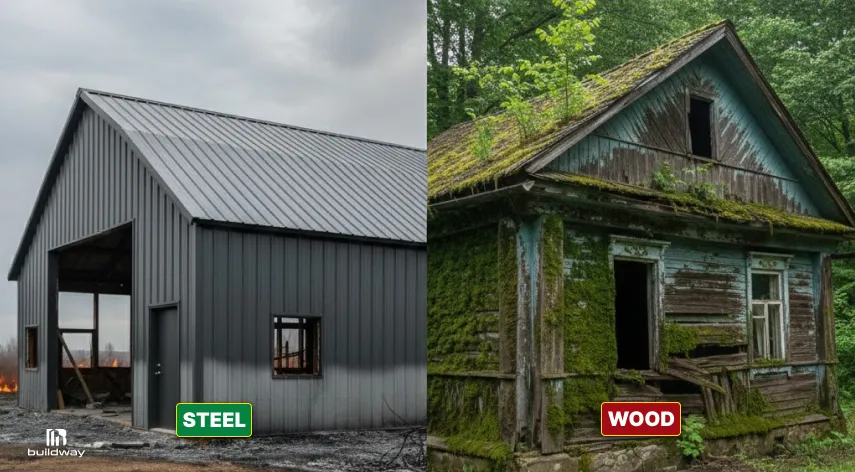
When it comes to long-term durability, steel and wood perform very differently. Each has its own strengths and weaknesses, especially when exposed to moisture, pests, fire, and structural stress over time. Here’s how they stack up in the areas that matter most.
Moisture Damage: Rot, Mold, and Pest Resistance
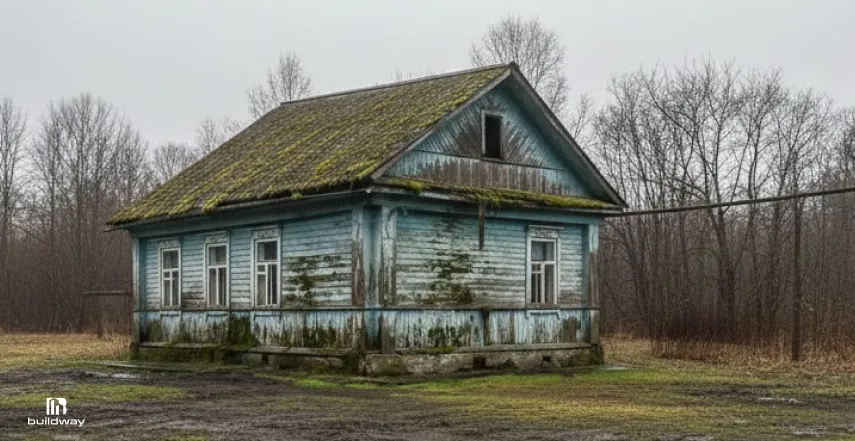
Wood is naturally porous, which makes it highly vulnerable in wet or humid climates.
- Rot is common in areas with frequent rainfall or poor ventilation, often requiring major repairs within a few decades.
- Mold and mildew thrive in humid environments and can weaken structural integrity while creating health risks.
- Termites and other wood-boring insects can cause serious damage that often goes unnoticed until it’s too late.
- Steel is not affected by moisture in the same way: it doesn’t rot, mold, or attract pests, making it far more resilient in damp or insect-prone regions.
Fire Resistance: Steel Doesn’t Burn
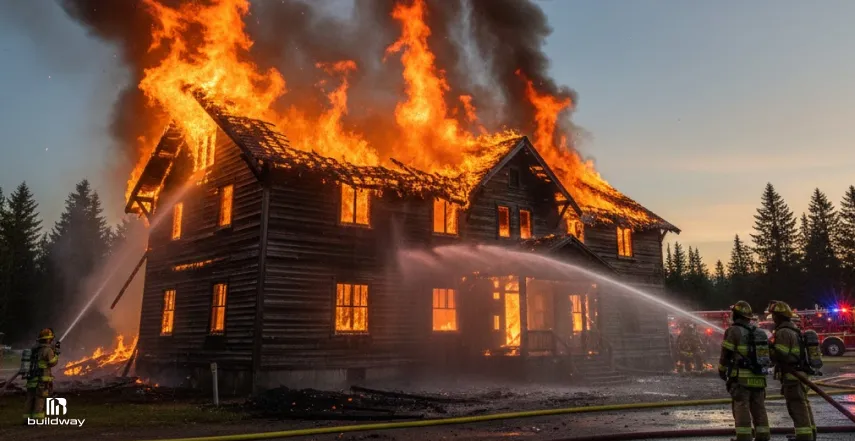
One of the most critical differences between steel and wood is how they respond to fire.
- Wood is combustible, which makes wooden structures more vulnerable to fire damage.
- Steel is non-combustible, meaning it won’t ignite or contribute to the spread of flames.
- Insurance premiums are often lower for steel buildings due to their reduced fire risk, making them more cost-effective over time.
Structural Stability: Warping, Cracking, and Shifting Over Time
Materials move and change with the environment, but how much they move can affect your building’s performance.
- Wood expands and contracts with temperature and humidity changes, leading to structural movement over time.
- Warping and cracking are common in wood, especially in climates with wide seasonal swings.
- Structural drift and shifting can create uneven loads and long-term instability.
- Steel remains dimensionally stable, maintaining its shape and strength year-round, which helps preserve the building’s integrity over decades.
30–50 Year Maintenance Timelines
Wood buildings often need major renovations every 20–30 years due to moisture damage, structural shifts, or pest issues. Steel buildings, by contrast, often go 30+ years with minimal upkeep.
Verdict:
- Steel wins on resistance and predictability.
- Wood wins on familiarity and lower upfront costs, not longevity.
Steel vs. Concrete Buildings: Longevity Tradeoffs
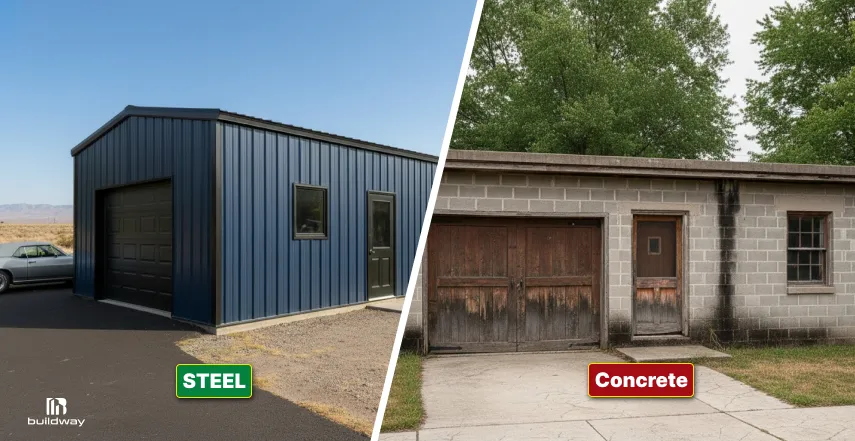
Concrete has a reputation for being rock-solid and long-lasting and in many ways, it is. But when you take a closer look at how it performs over time, especially in challenging environments, some clear trade-offs start to appear. It’s not as maintenance-free or fail-proof as it might seem on the surface.
1. Concrete Cracking and Rebar Corrosion: Over time, concrete can crack. If moisture reaches the steel rebar inside, corrosion begins, weakening the structure from the inside out.
2. Flexibility vs. Brittleness: Concrete is strong but brittle. It doesn’t flex well, which can be an issue in seismic zones. Steel is more forgiving and recovers better from shock and vibration.
3. Seismic and Freeze-Thaw Performance: In earthquake-prone or cold climates, concrete can underperform due to:
- Brittle failure in quakes
- Surface spalling from freeze-thaw cycles
Steel buildings are often engineered for seismic flexibility and thermal movement.
Repair Difficulty Over Decades
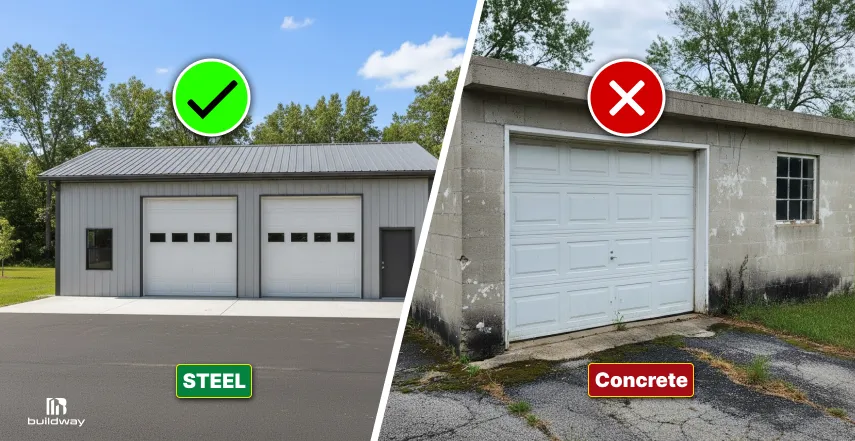
While concrete is often seen as a permanent solution, maintaining it over the long haul can be complex and costly.
- Concrete repairs are typically more invasive, especially when damage involves internal components like rebar corrosion or deep cracks.
- Identifying problems early can be difficult, which means minor issues often go unnoticed until they require major structural intervention.
- Steel is generally easier and less expensive to repair, with modular panels, coatings, or fasteners that can be replaced or maintained without extensive demolition.
- In the long run, concrete can be more expensive to fix, even though it initially seems like the more solid choice.
Reddit-style takeaway: Concrete feels permanent, but steel is often easier to maintain and more predictable when it comes to long-term repairs.
How Steel Buildings Perform in Extreme Conditions
Steel buildings aren’t one-size-fits-all, they can be specifically engineered to handle the unique demands of high-risk environments. From hurricane zones to heavy snow regions and seismic areas, modern steel systems are designed to meet or exceed local building codes and performance standards.
- High Winds & Hurricanes: Steel buildings can be rated to handle wind speeds of 120–180+ mph when properly engineered. Connections and anchoring systems matter most here.
- Heavy Snow Loads: Regions with heavy snowfall require structures designed to carry snow loads up to 70+ psf. Steel buildings excel due to their high strength-to-weight ratio.
- Earthquakes: Steel flexes under stress, allowing it to absorb seismic forces. This gives it an edge over brittle materials like concrete or masonry.
- Fire Exposure: While steel can lose strength at extreme temperatures, it doesn’t burn. Protective coatings and fire-rated assemblies can enhance fire resistance further.
Trust your specs, not just the stories. Always verify that your building meets or exceeds IBC and ASCE 7 standards.
The Biggest Durability Risk for Steel Buildings: Rust & Corrosion
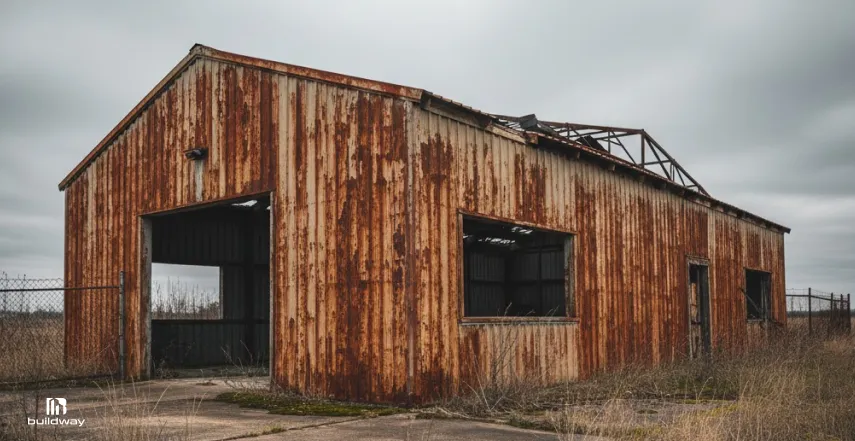
Rust is one of the most common concerns buyers have about steel buildings and it’s a fair one. Yes, steel can rust, especially in harsh or poorly maintained environments. But that doesn’t mean it’s a dealbreaker. With the right coatings, design choices, and maintenance, rust is a manageable issue, not an inevitable failure.
1. When Rust Actually Becomes Structural: Surface rust is cosmetic. Structural corrosion happens over years, often due to standing water, leaks, or exposure in high-risk zones.
2. Galvanization, Coatings, and Modern Panel Systems: Today’s steel comes with:
- Zinc galvanization (G-90+)
- Painted coatings (Kynar 500, SMP)
- Rain-screen or drainage systems
- These prevent corrosion from ever starting.
3. High-Risk Environments: Steel buildings in coastal, agricultural, or industrial zones need extra protection:
- Double-coated panels
- Proper ventilation
- Routine inspections
Corrosion is a design + maintenance issue, not an inherent material flaw.
Maintenance Reality Check: Steel vs. Other Buildings
Long-term durability finally comes down to how much work it takes to keep it in good shape. Maintenance needs vary widely between steel, wood, and concrete, and those differences have a major impact on long-term cost, downtime, and unexpected repairs.
| Feature | Steel | Wood | Concrete |
| Inspection Frequency | Every 1–3 years | Annual | Every 3–5 years |
| Common Repairs (30 yrs) | Gasket/seal, re-coating | Rot, termite, repainting | Crack patching, spalling |
| Cost Predictability | High | Low | Medium |
| Surprise Failures? | Rare | Frequent | Moderate |
Over time, steel buildings tend to be the most predictable and manageable to maintain. Wood often brings frequent and unexpected issues, while concrete repairs can be infrequent but costly when they arise. For many owners, steel’s lower surprise factor makes long-term planning much easier.
When Steel Buildings Are Not the Most Durable Choice
Steel buildings are known for their strength and long-term reliability, but that doesn’t mean they’re the best fit in every situation. There are specific scenarios where steel can underperform, especially if the design and material choices don’t align with the environment or intended use.
- Poor drainage sites: Prolonged exposure to standing water near the foundation can lead to accelerated corrosion, especially if the base isn’t sealed or elevated properly.
- Highly corrosive environments: Coastal areas, chemical plants, or farms with high ammonia levels can break down protective coatings unless specialized systems are used.
- Ultra-low-budget kits: Inexpensive kits with thin-gauge steel, poor connections, and minimal coatings often show signs of wear much sooner than engineered systems.
- Neglected maintenance: Even steel needs periodic inspections and upkeep. Buildings that go decades without attention can develop rust, loose fasteners, or degraded seals.
- Incorrect material selection for the climate: Using basic steel panels in high-moisture, freeze-thaw, or high-UV zones without upgraded finishes can reduce lifespan significantly.
Steel can last 50–100+ years, but only when the right specs, coatings, and installation methods are used for the site conditions.
Are Steel Buildings the Most Durable Option Long-Term?
When built and maintained to proper specifications, steel buildings consistently outperform wood and often outlast concrete, especially in environments that demand reliability and low upkeep.
- Lifespan of 40 to 100+ years
- Strong performance in extreme conditions like wind, snow, and seismic activity
- Lower lifetime maintenance costs compared to wood or concrete
- Built-in resistance to pests, fire, moisture, and structural shifting
Wood may be the traditional go-to, and concrete might seem more permanent at first glance, but when it comes to combining strength, longevity, and long-term control over maintenance, steel stands out as the most balanced and dependable option.
Pro Tip: Don’t Just Compare Price. Compare Specs.
Not all steel buildings are created equal. Before you make a decision, make sure to ask about:
- Engineering specifications tailored to your location
- Coating systems and corrosion protection
- Suitability for your climate and environment
- Warranty coverage and what it actually includes
Want to be sure you’re making the right call?
- Download Our Steel Building Durability Checklist.
- Read our detailed blog on: Metal vs Wood Buildings: What Fails First?
- Compare Steel Building Specs for Your Climate. Get a Free Consultation.
FAQ: Steel Building Durability
1. How long do steel buildings last?
Steel buildings can last 40 to 100+ years, depending on the quality of engineering, local environmental conditions, and regular maintenance. Most pre-engineered steel systems are designed with longevity in mind and can easily outlast traditional wood-frame structures.
2. Do steel buildings rust over time?
Steel buildings can rust if not properly protected, but modern solutions like galvanized steel, protective coatings, and well-designed drainage systems significantly reduce corrosion risks. With proper design and upkeep, rust is rarely a structural concern.
3. Are steel buildings more durable than wood buildings?
Yes, steel buildings are generally more durable than wood. Steel resists fire, pests (like termites), mold, and moisture damage. It also doesn’t warp or crack over time, making it a better long-term investment in most climates.
4. Is concrete more durable than steel?
Concrete may feel more solid, but it can crack, suffer from rebar corrosion, and is harder and more expensive to repair. Steel is more flexible and easier to maintain, especially in seismic zones or freeze-thaw environments.
5. How much maintenance do steel buildings need?
Steel buildings require inspections every 1 to 3 years and occasional maintenance like re-coating or replacing gaskets. Compared to wood and concrete, steel offers more predictable and lower lifetime maintenance costs.
6. Can steel buildings withstand earthquakes and hurricanes?
Yes. Engineered steel buildings can be designed to withstand earthquakes, high winds, and extreme weather, meeting or exceeding International Building Code standards. Flexibility in steel framing helps it absorb seismic energy better than rigid materials like concrete.
7. What causes early failure in steel buildings?
Most premature failures in steel buildings are due to poor design, thin-gauge materials, or lack of protective coatings, not because of the steel itself. Always choose engineered steel systems rated for your environment.
8. Are steel buildings good in coastal or high-moisture areas?
Yes, but they must be designed for it. Coastal and high-moisture environments require upgraded coatings and proper ventilation to prevent long-term corrosion. When specified correctly, steel buildings perform well even in harsh climates.
9. Are steel buildings fireproof?
Steel buildings are non-combustible and will not ignite like wood. While extreme heat can reduce steel’s structural strength, proper insulation and fire-rated designs can mitigate these effects.
10. What’s the biggest durability risk for steel buildings?
The primary durability risk is corrosion, especially in environments with poor drainage or chemical exposure. However, modern panel systems, galvanization, and coatings make this risk manageable with proper design and maintenance.