
Did you know there are 2,500 metal building manufacturers in North America alone? If you’re trying to choose a steel building kit for a garage, workshop, or storage you’ve probably already felt the confusion:
- What size do I need?
- Which roof style is best?
- What’s actually included in the quote?
- How do I compare suppliers?
In this blog we’ll walk you through a step-by-step decision framework so you can move forward with clarity, avoid costly mistakes, and get the best steel kit for your project.
What You’ll Get from This Guide:
- A simple framework to make confident choices.
- Answers to real buyer questions.
- A downloadable checklist to bring to your supplier consultation.
Why Choose a Steel Building Kit for a Smart Investment?
If you’re planning a garage, workshop, or storage building, there’s a reason more buyers today choose a steel building kit over traditional construction. These kits offer a powerful mix of strength, flexibility, and long-term value that’s hard to match with wood or block builds.
What Is a Steel Building Kit?
A steel building kit (or metal building kit) is a pre-engineered set of structural components columns, beams, wall panels, and fasteners designed to be shipped and assembled on-site. Think of it like IKEA, but for full-sized buildings.
Key Benefits of Choosing a Steel Building Kit
Steel building kits are increasingly popular for residential, commercial, and agricultural projects and for good reason. When you choose a steel building kit, you’re investing in a solution that’s strong, cost-effective, and long-lasting.
Here are the top reasons why thousands of smart buyers are making the switch:
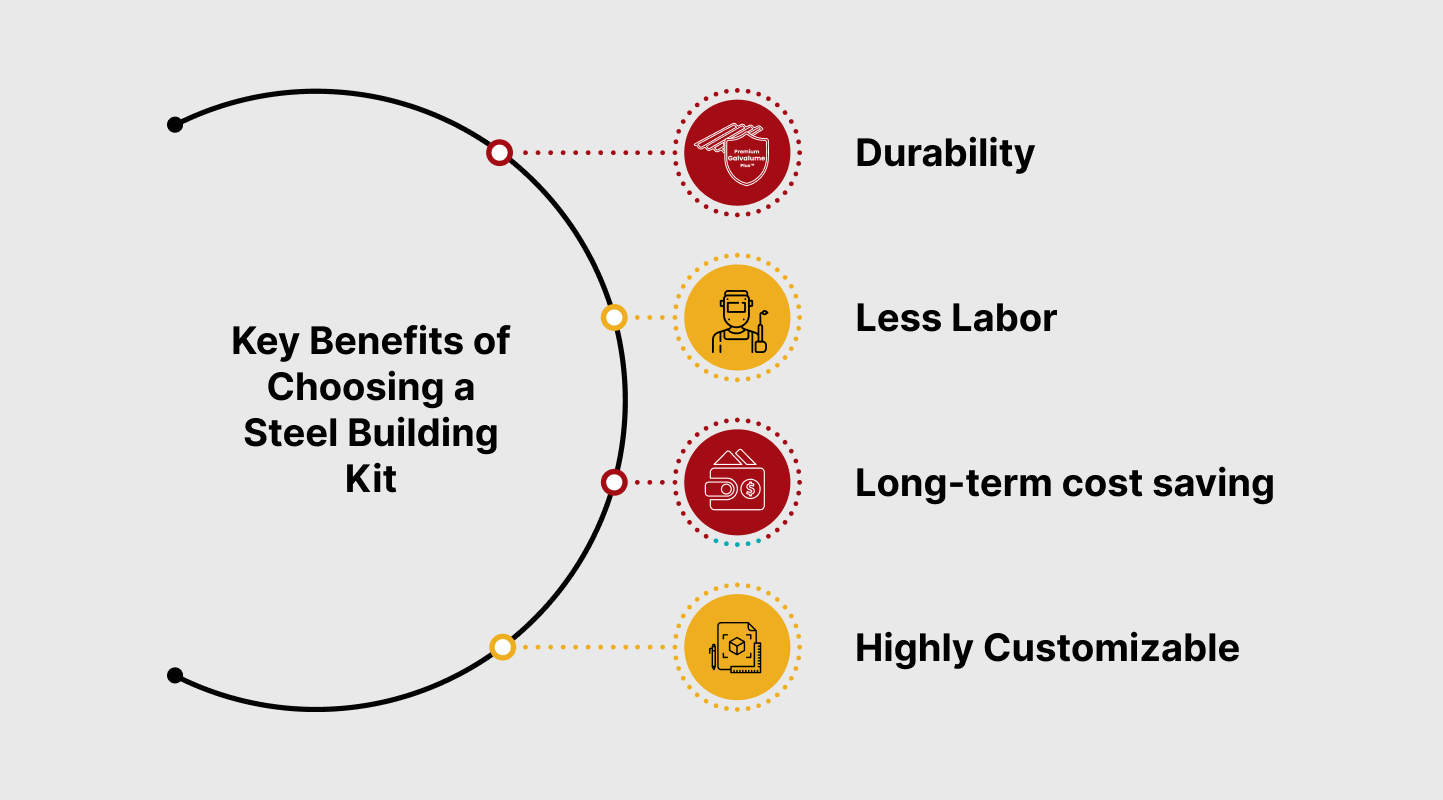
- Durability: Steel is inherently resistant to rot, warping, termites, and mold: all common issues with wood-framed structures. This durability means fewer repairs and a longer lifespan, even in challenging climates.
- Less Labor: Pre-engineered steel building kits come with prefabricated components, which means less on-site cutting and faster assembly. With fewer materials and simplified construction, you’ll reduce labor costs and speed up your project timeline.
- Long-Term Cost Savings: While steel kits may cost the same upfront as traditional builds, they offer long-term savings through lower maintenance, better energy efficiency, and greater durability, all leading to a stronger return on investment.
- Highly Customizable for Any Use: Steel kits offer wide-ranging customization options. You can choose your roof style, door and window placements, exterior finishes, insulation types, and even trim colors, tailored to your specific needs.
Important Considerations Before You Buy
While steel building kits offer major advantages, it’s important to be aware of a few critical factors before making a purchase:
- Site Preparation Is Crucial: Even the best-designed kit won’t perform well if the site isn’t properly prepared. Make sure your land is cleared, leveled, and ready with the right foundation plan before ordering your building.
- Local Codes and Permits Matter: Every city and county has different zoning laws and building codes. Wind loads, snow loads, roof pitch, and even building height can affect what’s approved. Always check local requirements early in the planning process.
- Pricing Can Vary Significantly: Not all quotes are apples-to-apples. Some vendors may offer lower base prices but exclude key components like doors, windows, or engineering drawings. Compare total value and not just the number at the bottom of the quote.
Questions You Should be Asking When Trying to Choose a Steel Building Kit
If you’re in the early stages and trying to choose a steel building kit, chances are you’ve got a few questions or maybe a lot of them. And you’re not alone.
Buyers often head into this process thinking only about size or price. But the smartest decisions come from asking the right questions, ones that help you avoid costly mistakes down the road.
Let’s break down the most common questions buyers ask and the ones you should be asking if you want to get the best value from your investment.
Many of these questions come straight from real buyers on Reddit, forums, and supplier FAQs:
- “What size steel building kit do I need for a 2-car garage?”
- “How much does a metal building cost and what affects the price?”
- “What’s included in the kit? Just the frame, or doors and insulation too?”
- “Are there local zoning/code issues I need to check?”
- “How do I compare manufacturers fairly?”
- “What’s the biggest mistake people make when selecting metal buildings?”
- “What about future expansion or resale value?”
We’ll answer most of these below in our step-by-step decision framework.
How to Choose a Steel Building Kit Step by Step
Feeling overwhelmed by all the options? Choosing a steel building kit can feel like navigating a maze of sizes, roof types, codes, and quotes.
That’s why we’ve laid out a clear, step-by-step decision framework to help you cut through the noise and choose the right steel building kit for your specific needs.
Follow the steps below:
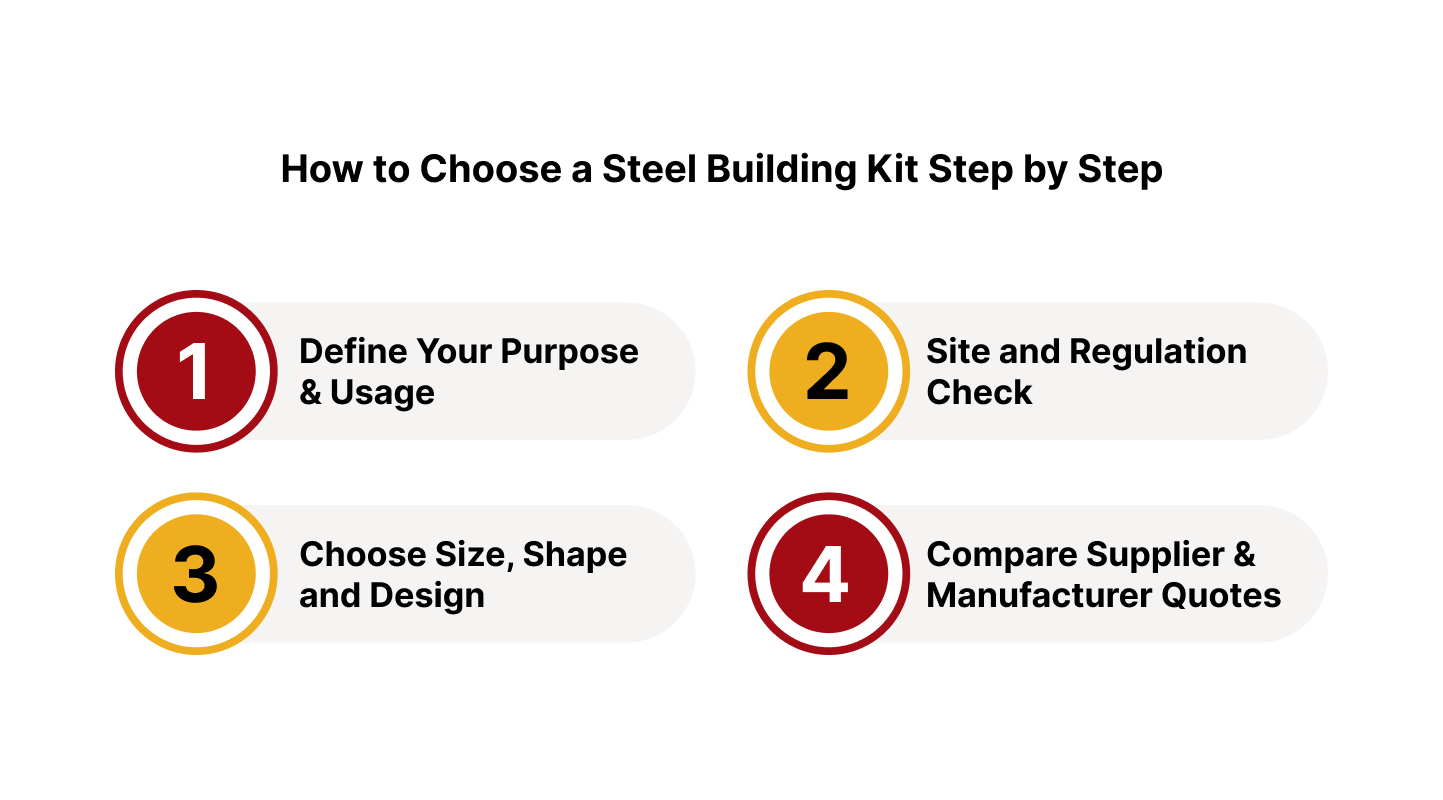
Step 1. Define Your Purpose & Usage
- Are you building a garage, workshop, commercial space, or storage unit?
- For garages: Consider vehicle height, door clearance, and walk-around space
- Think ahead: Will you expand? Add more bays? Use it year-round?
Checklist Tip:
Write down your core needs:
- Vehicle size?
- Number of bays?
- Do you need insulation, electricity, or water access?
Step 2. Site & Regulation Check
- Zoning laws: Setbacks, height limits, roofing restrictions
- Local building codes: Wind load, snow load, seismic zoning your kit must match
- Site prep: Your land must be cleared, graded, and ready with a foundation plan
- Build timeline: Lead times can affect pricing and availability
Quick Tip: Call your county building office BEFORE you order anything
Step 3. Choose Size, Shape & Design
- Dimensions: Width, length, and height allow for doors, movement, and storage
- Roof Styles:
- Gable / A-frame (most common for garages)
- Arch-style (better for snow shedding)
- Doors & Windows: Roll-up doors, man doors, skylights, custom openings
- Aesthetic Options: Trim colors, wainscot, insulation, cladding
Example: A 30′ x 40′ garage fits two cars plus workshop space comfortably.
Step 4. Compare Supplier & Manufacturer Quotes
Not all quotes are created equal. Ask: What’s actually included?
- Structural frame, panels, fasteners, drawings
- Windows, doors, trim, accessories
- Delivery fees, permit support, installation guidance
- Custom engineering for your climate/code
Real Buyer Insight: “These companies are ruthless… they will sell 1 building for $62k then an hour later sell the same building for $123k.” – Reddit user on r/HomeImprovement
That’s why it’s essential to request detailed, line-by-line quotes from multiple suppliers and confirm exactly what’s included. Don’t fall for a low upfront price that hides major add-ons later.
Watch Out For:
- Hidden costs
- Exclusions (e.g., doors or insulation not included)
- Bait-and-switch pricing (as seen on Reddit)
Ask every supplier:
“Is this a full kit, or frame-only? Is it engineered for my site’s load requirements?”
If you want a clearer breakdown of what a complete package should include, see our guide on what exactly comes in a metal building kit.
Looking for a supplier that includes everything upfront? No hidden fees or bait pricing? Buildway offers all-in-one steel building kits engineered to your local codes, with transparent quotes, stamped drawings, and real customer support. Get yours now.
Step 5. Budgeting & Total Cost Analysis
Major Cost Drivers:
- Size
- Steel gauge
- Finish and accessories
- Site prep and slab
What to Watch For:
- Thin gauge = cheaper but weaker
- Some kits skimp on trim or hardware
- Cheapest quote may mean surprise fees later
- Don’t forget: Slab/foundation, delivery, installation, and permits
Pro Tip: Ask for a line-item breakdown of your quote.
Step 6. Timeline, Delivery & Installation Logistics
- Lead times vary. Some take 6–12 weeks
- Delivery access: Is your site ready for a large truck?
- DIY vs Contractor: Some kits come with manuals, but you’ll need tools and likely a small crew
- Support: Does the supplier offer build support or guidance?
Mistake to Avoid: Ordering your kit before your foundation is ready.
Step 7. Final Check & Long-Term Considerations
- Warranty: Be it structural, paint or rust. Get it in writing
- Maintenance: Rinse exterior yearly, check for corrosion or leaks
- Future Upgrades: Can you easily add a mezzanine, doors, or bays later?
Think Ahead: Buy for the next 10–20 years, not just today’s needs.
Need Help? Drop a comment or message with your project details such as size, intended use, or location and we’ll provide tailored guidance to help you move forward with the right kit or simply request a quote from us.
Conclusion & Next Steps
Choosing the right steel building kit includes making a smart, informed decision that aligns with your needs, site conditions, future plans, and long-term value. When you take the time to define your goals, understand local regulations, and compare suppliers fairly, you’re far more likely to avoid costly mistakes and end up with a building that serves you well for decades.
Your Next Steps:
To move forward with clarity and confidence:
- Download the Complete Buyer’s Checklist: Use it as a step-by-step guide during supplier consultations.
- Contact at Least 3 Reputable Suppliers: Ask detailed questions and request itemized quotes.
- Compare Total Value. Not Just Price: Look at what’s included, warranty, customization, and support.
- Choose Your Steel Building Kit With Confidence: Make a decision that supports your purpose, budget, and long-term plans.
- Check out the top mistakes buyers make when choosing a steel building kit and avoid the most expensive pitfalls.
Ready to start gathering quotes? Add Buildway.com to your shortlist. Their kits are fully customizable, code-compliant, and backed by excellent customer support making them a smart choice for anyone serious about building right the first time.
FAQs: Fast Answers to Buyer’s Most Asked Questions
1. How much does a steel building kit cost per square foot?
The cost of a steel building kit can vary widely depending on several factors including the size of the building, the gauge (thickness) of the steel, the level of customization, any accessories included, and how much site preparation is required. To get an accurate estimate, it’s best to request detailed quotes from multiple reputable suppliers.
2. Can I install a steel building kit myself?
Yes, many prefab steel building kits are designed for DIY installation. However, you’ll need the right tools, at least one helper, and a properly prepared site. Some kits may also require assistance from a licensed contractor for certain steps like foundation or electrical work.
3. What steel gauge should I choose for my building?
The right steel gauge depends on your building’s size, location, and intended use. Thicker steel (lower gauge number) offers greater strength and durability, especially for heavy snow or wind loads. Always ask your supplier for certified engineering specifications tailored to your local code requirements.
4. Do I need insulation in my metal building?
Not necessarily, you only need insulation if the building will be heated, cooled, or used year-round. For workshops, living spaces, or humid climates, insulation prevents condensation and improves comfort. For cold storage or mild regions with little temperature swing, it’s optional. Ask your supplier if your kit is rated for cold storage or insulated use based on your location.
5. What are the most common mistakes when buying a steel building kit?
Some of the biggest mistakes steel building buyers make include:
- Choosing solely based on the lowest price
- Ignoring local zoning or permit requirements
- Underestimating site preparation and foundation needs
- Not planning for future expansion or additional usage
Avoiding these pitfalls can save you time, money, and major headaches down the road.
6. Is the steel building kit frame-only or a full build-out?
That depends on the supplier. Some kits include only the structural frame, while others come as complete packages with doors, windows, fasteners, insulation, and full assembly instructions. Always confirm what’s included in the quote before purchasing.